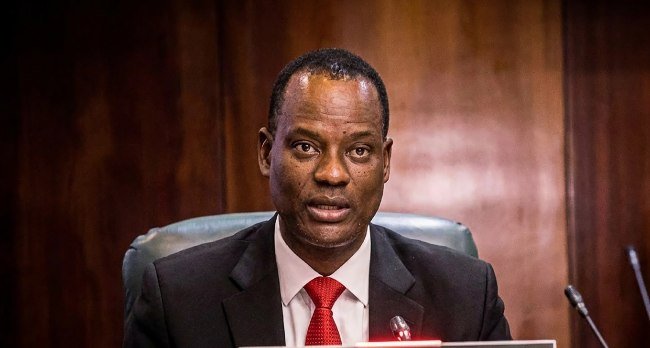
The Federal Government has inaugurated a technical subcommittee to review the implementation of the 2025 Tax Acts and propose amendments for inclusion in the 2027 Finance Bill.
The panel is expected to identify ambiguities, unintended consequences, compliance bottlenecks and reforms that could improve investment and competitiveness.
Finance Minister and Coordinating Minister of the Economy Taiwo Oyedele said the review would focus on areas including Value Added Tax thresholds, withholding tax, capital-gains treatment and multiple taxation.
The new tax laws, including the Nigeria Tax Act 2025, Nigeria Tax Administration Act 2025, Nigeria Revenue Service Establishment Act 2025 and Joint Revenue Board Establishment Act 2025, took effect on January 1, 2026.
Oyedele said implementation had revealed areas requiring clarification and refinement.
He stressed that the exercise was not intended to reverse the reforms but to improve them based on experience.
The subcommittee is chaired by the Permanent Secretary of the Federal Ministry of Finance and co-chaired by Tax Advisory Committee Chairman Albert Folorunsho.
Its membership includes more than 20 representatives from government agencies, professional bodies, the organized private sector and major accounting firms.
Participating institutions include the Central Bank of Nigeria, Nigeria Customs Service, Nigeria Revenue Service, Debt Management Office, Joint Revenue Board, Budget Office of the Federation and the Federal Ministry of Justice.
Private-sector and professional representation includes the Manufacturers Association of Nigeria, NACCIMA, ICAN, ANAN, CITN, Nigerian Bar Association, Deloitte, EY, KPMG and PwC.
The committee has six weeks to conclude its assignment.
It will draft the Finance Bill 2027, revised Withholding Tax Regulations and an amended Significant Economic Presence Order.
Oyedele said the review would also examine wider fiscal policy, public financial management, debt, transparency, capital markets and cross-border capital flows.
The government said it had received 134 submissions from across the six geopolitical zones in response to its call for public input.
Stakeholders raised issues including VAT thresholds, multiple taxation, digitalization, tax refunds, taxpayer rights, safeguards for small businesses and investment incentives.
Oyedele warned that complexity itself imposed costs on businesses and said the government should choose simpler approaches where two options produced the same outcome.
He also cautioned against allowing withholding tax to become an additional cost on working capital, particularly in an economy with already high financing costs.
The committee is expected to recommend changes that balance revenue mobilization with fairness, competitiveness and ease of compliance.