The Federal Government has dismissed allegations that it spent over N8 trillion outside the approved budget, insisting that all public expenditures are made within the constitutional and legal framework governing public finance in Nigeria.
The clarification follows public commentary referencing the International Monetary Fund’s (IMF) 2026 Article IV Consultation Report, which some critics interpreted as evidence that the government had operated a “shadow budget” by spending approximately two per cent of the country’s Gross Domestic Product (GDP) outside legislative approval.
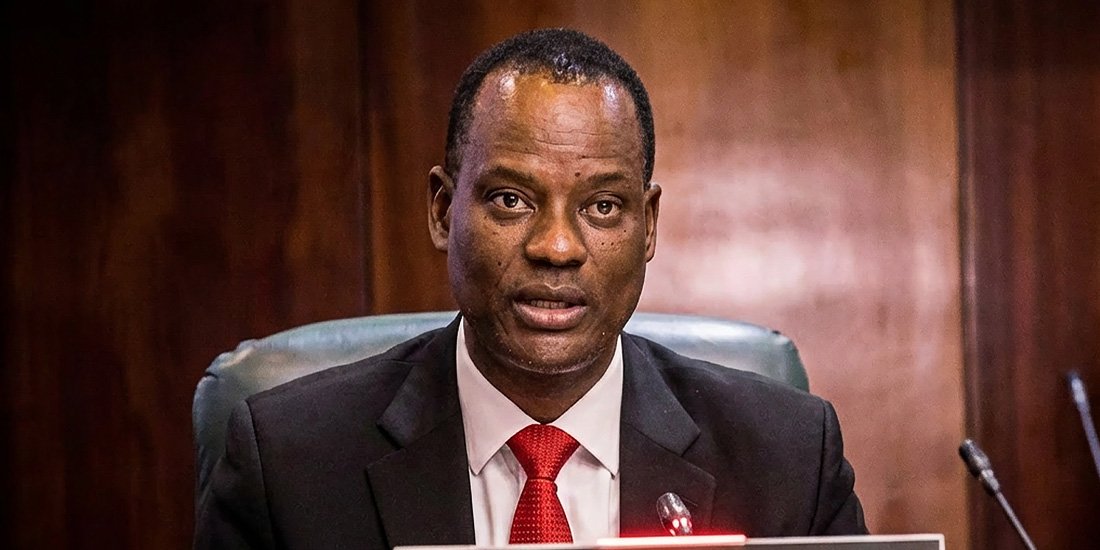
In a statement signed by the Minister of Finance and Coordinating Minister of the Economy, Taiwo Oyedele, the government described the claims as inaccurate and misleading, stressing that no public funds are expended outside the constitutional provisions established for public financial management.
According to the statement, Sections 80 to 83 and 162 of the 1999 Constitution (as amended) require that all federal expenditures be made pursuant to Appropriation Acts, Supplementary Appropriation Acts or other statutory authorisations approved by the National Assembly.
The government explained that multi-year capital projects, which often span several budget cycles, are implemented under existing laws that permit capital rollovers where applicable, noting that such projects should not be misconstrued as expenditures outside the budget.
“It is inaccurate to suggest that trillions of naira have been secretly spent outside legislative approval. Such allegations should identify the specific projects purportedly executed without appropriation or legal authority and provide credible evidence in support of the claim,” the statement said.
The Finance Ministry further clarified that Nigeria’s public finance framework includes several statutory transfers, first-line charges and intervention mechanisms established through Acts of the National Assembly.
These include statutory allocations to development commissions and government agencies, cost-of-collection deductions by designated revenue-generating agencies, capital expenditures approved under separate budgets for certain agencies and the Federal Capital Territory, as well as legally authorised interventions for national priorities such as security, infrastructure, disaster response and debt servicing.
According to the government, these expenditures are neither secret nor illegal, adding that they are disclosed in official fiscal reports and remain subject to oversight, audit and accountability mechanisms.
The statement also rejected suggestions that the reported amount represented an increase in Nigeria’s fiscal deficit, explaining that the deficit is determined by the relationship between total government revenue and total expenditure rather than the financing mechanism for specific projects.
It noted that the IMF’s observations related primarily to the comprehensiveness, timing and presentation of fiscal reporting rather than the legality of government spending.
The government said Nigeria was already implementing reforms to improve the alignment of its budget presentation with international fiscal reporting standards.
It recalled that President Bola Tinubu, while presenting the 2026 Appropriation Bill to the National Assembly on December 19, 2025, had urged lawmakers to discontinue the practice of operating multiple and overlapping budgets in favour of a single, harmonised budget framework.
The Federal Government reiterated its commitment to prudent fiscal management, transparency and accountability, noting that recent reforms have strengthened budget credibility, revenue administration, treasury management and the digitalisation of government financial processes.
According to the statement, these reforms have received recognition from the IMF, other multilateral institutions, international credit rating agencies, investors and global media organisations.
While acknowledging the importance of public debate in a democratic society, the government urged stakeholders to base their contributions on verified facts and a proper understanding of Nigeria’s constitutional and fiscal framework.
It reaffirmed its commitment to working with the National Assembly, oversight institutions, development partners and the Nigerian public to strengthen fiscal governance in line with international best practices.