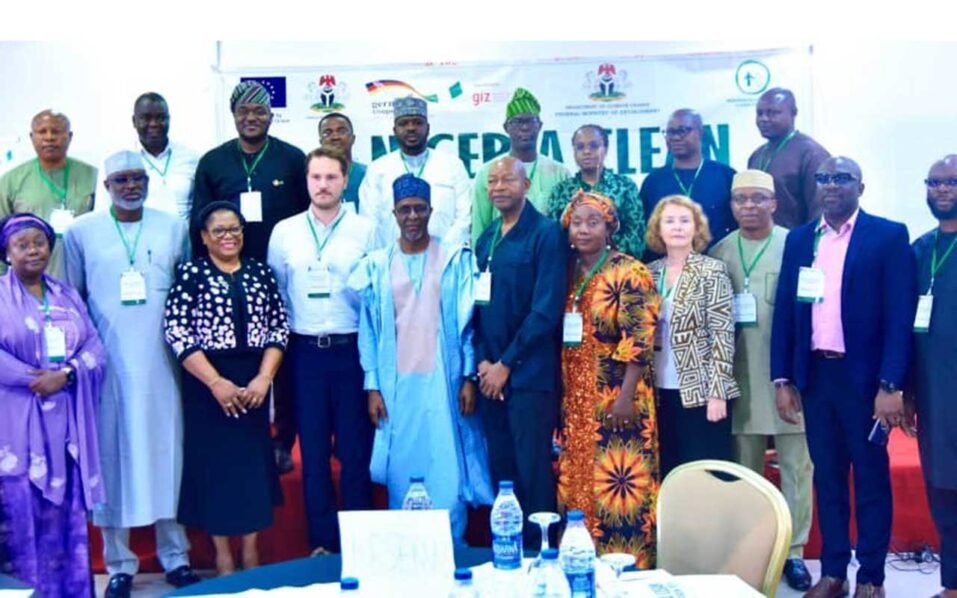
Nigeria now has the policy architecture in place for a shift to clean cooking technologies, the federal government says, but with about 167 million Nigerians still lacking access to clean cooking, officials are stressing that the real work lies in implementation rather than further policy debate.
Speaking at an inception workshop in Abuja on integrating e cooking into the National Clean Cooking Policy Implementation Plan, Permanent Secretary of the Federal Ministry of Environment Dr Salihu Usman, represented by Director of Climate Change Dr Iniobong Abiola Awe, said government has done its part by laying the policy groundwork, and that what happens next depends on collective commitment from development partners, the private sector, academia and civil society. He said adopting e cooking technologies would help Nigeria meet its climate commitments while improving public health, promoting renewable energy, creating green jobs and strengthening domestic manufacturing of cooking equipment, and urged stakeholders to build scalable financing mechanisms that make clean cooking solutions affordable for millions of households.
Permanent Secretary of the Federal Ministry of Power Mahmuda Mamman, represented by Director Dr Sunday Owolabi, described the scale of the access gap as a major public health and development challenge, and said e cooking offers a route to reducing deforestation and greenhouse gas emissions while improving energy access, appealing to development partners, financial institutions and private investors to mobilise more financing for affordable clean cooking technologies.
Country Director of the Africa Group of Negotiators Experts Support (AGNES) Nigeria Dr David Awolala argued clean cooking has outgrown its old framing as a household energy issue, calling it a national priority that cuts across health, environment, energy, climate action and economic development, since millions of households still rely on firewood, charcoal and kerosene. He said successful implementation depends on affordable appliances, reliable electricity, supportive policy, innovative financing, consumer education and effective institutional coordination, and stressed that solutions need to move from policy conversation into practical investment at scale. He pointed to Nigeria’s emerging carbon market framework as an opportunity to attract investment and expand access to modern cooking technology, and announced that AGNES Nigeria’s country office formally opens on July 1, 2026.
Other voices at the workshop pushed for specific groups to be centred in the transition. Head of Secretariat of the Rural Women Energy Security Initiative Jumaima Ella urged policymakers to put rural women at the centre of the shift, arguing that no rural woman should be left behind since clean energy access improves health, education and economic opportunity, and pledged her organisation’s support through grassroots engagement. Regional Carbon Policy Lead for West Africa at BURN Manufacturing Sola Fatoba commended Nigeria’s leadership on clean cooking and disclosed that BURN has invested nearly $10 million in a clean cookstove factory in Kano, reaffirming the company’s commitment to supporting Nigeria’s energy transition. The workshop closed with the formal inauguration of the National E Cooking Steering Committee, which will coordinate implementation of the clean cooking policy going forward.