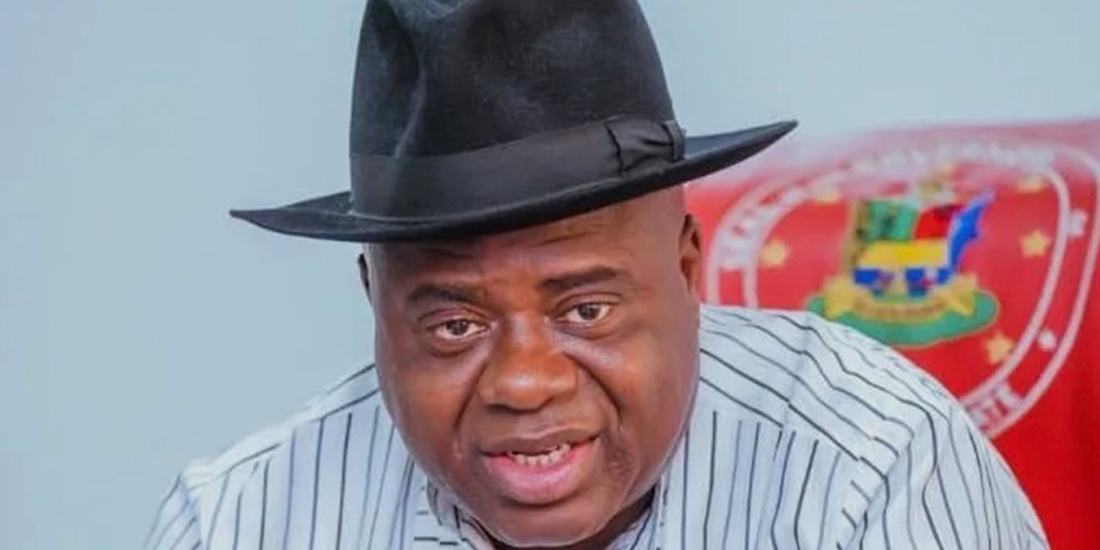
Bayelsa State Governor Douye Diri has challenged former Cross River governor Donald Duke’s assessment that the Lagos–Calabar Coastal Highway cannot be constructed through Bayelsa because of the region’s swamps.
Duke had argued during an Arise Television interview that the terrain around Bayelsa and Yenagoa would make the project impracticable, suggesting that extensive bridge construction might be required. The planned 750-kilometer federal road is intended to pass through Lagos, Ogun, Ondo, Edo, Delta, Bayelsa, Rivers, Akwa Ibom and Cross River states.
In a response issued through Chief Press Secretary Daniel Alabrah, Diri said Duke’s position overlooked recent infrastructure developments in Bayelsa. He argued that difficult terrain presented engineering and financial challenges but did not make major road construction impossible.
Diri cited the Nembe–Brass, Sagbama–Ekeremor–Agge and Yenagoa–Oporoma road projects, which he said had been undertaken through swamps and mangrove environments in the state’s three senatorial districts. He also pointed to a 630-metre bridge across the River Nun at Angiama in Southern Ijaw Local Government Area.
Further examples offered by the governor included dual carriageways in New Yenagoa City and the phases of Glory Drive. He said these projects showed that roads could be developed through difficult ground conditions with appropriate construction methods.
Diri accused Duke of allowing politics to influence his criticism, an allegation that remains the Bayelsa governor’s interpretation of the former governor’s remarks. Duke’s original concern focused on the physical challenges and scale of structures that might be necessary along the proposed route.
The governor argued that the highway could improve connections between coastal communities and open new opportunities for commerce and regional development. He said the Ijaw National Congress had advocated such a route since the 1990s and credited President Bola Tinubu’s administration with advancing the proposal.
Diri also linked his decision to join the All Progressives Congress to what he described as the need to secure development for his people. He warned against allowing election-period political differences to derail infrastructure with potential public benefits.
The disagreement does not, by itself, settle questions about the project’s cost, environmental impact, design or construction timetable. It does, however, place the feasibility of engineering across swamp terrain at the centre of the public debate.