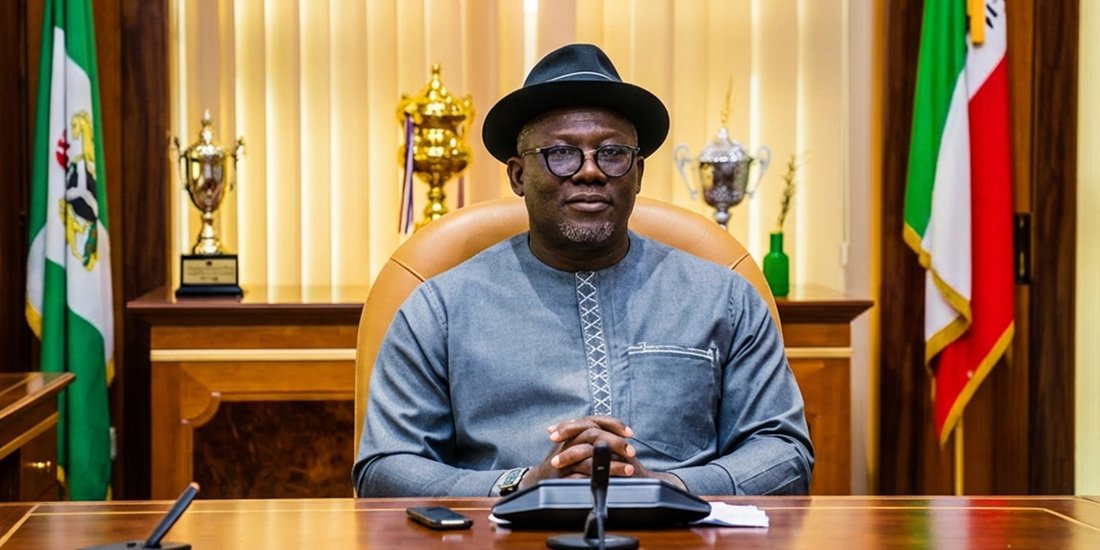
Since assuming office on May 29, 2023, Governor Sheriff Oborevwori has presided over one of the most financially buoyant periods in Delta State’s history. Driven by increased Federation Account Allocation Committee (FAAC) disbursements following the removal of fuel subsidy, higher crude oil receipts and improved internally generated revenue, the state’s financial resources have grown at an unprecedented pace.
Between 2023 and 2025 alone, Delta State received an estimated ₦1.36 trillion in FAAC allocations, while internally generated revenue contributed more than ₦400 billion over the same period. When grants, reimbursements, capital receipts and other income are considered, the state’s total resources are significantly higher.
At the same time, approved budgets expanded rapidly, rising from ₦561.8 billion in 2023 to ₦724.9 billion in 2024, before approaching the one trillion naira mark in 2025. By 2026, the state’s budget had climbed to a record ₦1.729 trillion, making Delta one of Nigeria’s biggest public spenders.
The sharp increase in government revenue has naturally raised expectations among citizens. Many expected accelerated infrastructure development, improved healthcare and education, expanded economic opportunities, modern water systems, stronger support for agriculture and visible improvements in living standards across the state’s urban and riverine communities.
While the administration points to completed flyovers, road construction, school rehabilitation, healthcare projects and security interventions under its M.O.R.E Agenda, some residents, civil society organizations and opposition figures argue that the scale of development has not matched the magnitude of public spending.
These critics contend that many communities still struggle with deteriorating roads, inadequate healthcare facilities, unemployment, flooding, unreliable public utilities and limited industrial growth. They argue that the state’s increased fiscal capacity should have produced more transformative and widely distributed development outcomes.
Questions have also been raised in some quarters about the transparency of public procurement and the concentration of major government contracts. Some critics and sources within the state have alleged that politically connected individuals and companies associated with influential figures have benefited disproportionately from public contracts.
At present, however, no publicly available court judgment, audit report or official investigative finding has established that members of Governor Oborevwori’s immediate family improperly received or controlled the majority of state contracts. Those allegations therefore remain unverified and should be distinguished from established facts.
That distinction does not diminish the importance of the broader accountability questions. Given the scale of public resources available to Delta State, governance experts argue that citizens are entitled to greater transparency regarding how contracts are awarded, who ultimately owns companies executing public projects, how much has been paid, and whether projects are delivered on time, within budget and to the required standard.
Publishing comprehensive procurement records, beneficial ownership information for contractors, budget implementation reports, project completion audits and up-to-date audited financial statements would allow independent verification of how public funds have been spent and help strengthen public confidence.
The central issue confronting Delta State is therefore larger than allegations involving any individual. It is whether unprecedented public revenues have translated into measurable improvements in the quality of life of ordinary citizens.
As Delta continues to rank among Nigeria’s highest recipients of federal allocations, the debate is likely to shift from how much money government receives to what that money has achieved. Ultimately, the administration’s legacy will be judged not by the size of its budgets or the volume of its revenues, but by tangible improvements in infrastructure, public services, employment, poverty reduction and economic opportunity across the state.
For a government that has managed one of the largest revenue windfalls in Delta State’s history, transparency, measurable outcomes and independent accountability will remain the benchmarks by which its performance is assessed.
This report is the first in a comprehensive investigative series examining the finances of Delta State under the Oborevwori administration. Subsequent editions will take a closer look at major capital projects, procurement processes, contract awards, budget implementation, debt obligations, project execution, and the ownership structure of companies that have benefited from government contracts.
The series will also examine whether public expenditure has translated into measurable improvements in infrastructure, healthcare, education, job creation, and the overall welfare of Deltans. Where concerns or allegations arise, they will be assessed against official records, procurement documents, audited accounts, company filings, and responses from the relevant authorities to ensure fairness, accuracy, and balance.
Our objective is not merely to report how much money has been received or spent, but to follow every significant public naira from allocation to implementation and, ultimately, to determine whether taxpayers have received value for money.
The next installment will focus on the award and execution of major infrastructure contracts since May 2023, identifying the contractors involved, examining procurement records where available, and assessing the progress and quality of project delivery across Delta State.