Delta State has unveiled a roadmap to unlock nearly 3,000 megawatts of installed electricity generation capacity, with plans to establish a state electricity regulatory commission and a rural electrification agency as part of efforts to deepen private sector investment in the power sector.
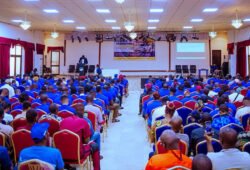
The roadmap was unveiled at the Delta State Economic and Investment Summit in Asaba, where key energy sector stakeholders, including Transcorp Power, Manitoba Power, Infrastructure Credit Guarantee Company, and the Presidential Initiative on Compressed Natural Gas and Electric Vehicles, pledged investments to strengthen the state’s electricity market. Consultant to the Delta State Government on Electricity Market Development, Uche Okafor, said the Delta State Electricity Sector Law has laid the legal foundation for a competitive electricity market capable of attracting private investment, and that the immediate priority after the summit would be establishing the Delta State Electricity Regulatory Commission and the Delta State Rural Electrification Agency, which she said would ensure investor confidence by guaranteeing returns on investment while protecting consumers from exploitation. “The Delta State Electricity Sector Law provides the platform to build an electricity market that serves industries, investors and consumers. One of the immediate steps after this summit is the establishment of the Delta State Electricity Regulatory Commission and the Delta State Rural Electrification Agency. The government is ready. It has been ready since 2024 when it passed the Electricity Sector Law. We can now move forward to establish the institutions that will drive investments across the electricity value chain,” she said.
Chief Executive Officer of Transcorp Power Ughelli, Peter Ikenga, described Delta as uniquely positioned to become Nigeria’s energy hub, citing its abundant gas reserves and nearly 3,000 megawatts of installed generation capacity, saying the remaining challenges lie in investments in gas feedstock, transmission expansion and stronger distribution networks. “Transcorp is ready to collaborate with the Delta State Government from gas production to generation, transmission and distribution. Delta State can become the number one economic engine in Nigeria and indeed West Africa,” he said.
Emmanuel Jakpa of Manitoba Power said electricity generation is no longer the country’s major challenge, stressing that distribution bottlenecks have left significant power stranded. “There is over 3,000 megawatts of installed capacity, but there is stranded power because of bottlenecks in distribution. Delta has already created the legal framework for private investment and we are prepared to invest aggressively to close that gap,” he said. Sumeet Singh of PowerGas Nigeria said the company’s decade long operations in Delta have demonstrated the reliability of gas in sustaining industrial production, disclosing that more than 20 factories in the state currently rely on the company’s gas supply to generate electricity independently of the national grid.
Representing the Presidential Initiative on Compressed Natural Gas and Electric Vehicles, Tari Mayo Bright revealed that discussions have begun with the Delta State Government to establish compressed natural gas refueling stations, electric vehicle charging hubs, conversion centers and training institutes, saying Governor Sheriff Oborevwori has directed immediate implementation of the initiative, since Delta’s real challenge lies not in gas availability but in infrastructure integration. Executive Director of InfraCredit, Daniel Muller, assured investors that adequate long term financing is available for viable infrastructure projects, saying Nigeria’s pension industry, with assets exceeding 31 trillion naira, is well positioned to fund bankable investments in gas infrastructure, electricity distribution and industrial energy projects.
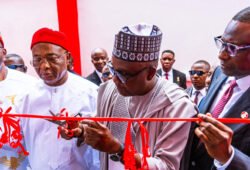
Managing Director of the Niger Delta Development Commission, Samuel Ogbuku, urged local and international investors to take advantage of the improved security and investment climate across the Niger Delta, saying the Renewed Hope Agenda has transformed the region into a peaceful and attractive investment destination. Vice President Kashim Shettima, addressing the summit, said Nigeria’s economic outlook has improved significantly under the current administration, citing a rise in foreign reserves from about 3 billion dollars to 52 billion dollars, and described Delta as one of Nigeria’s most promising investment destinations, urging stakeholders to harness the state’s vast economic potential.
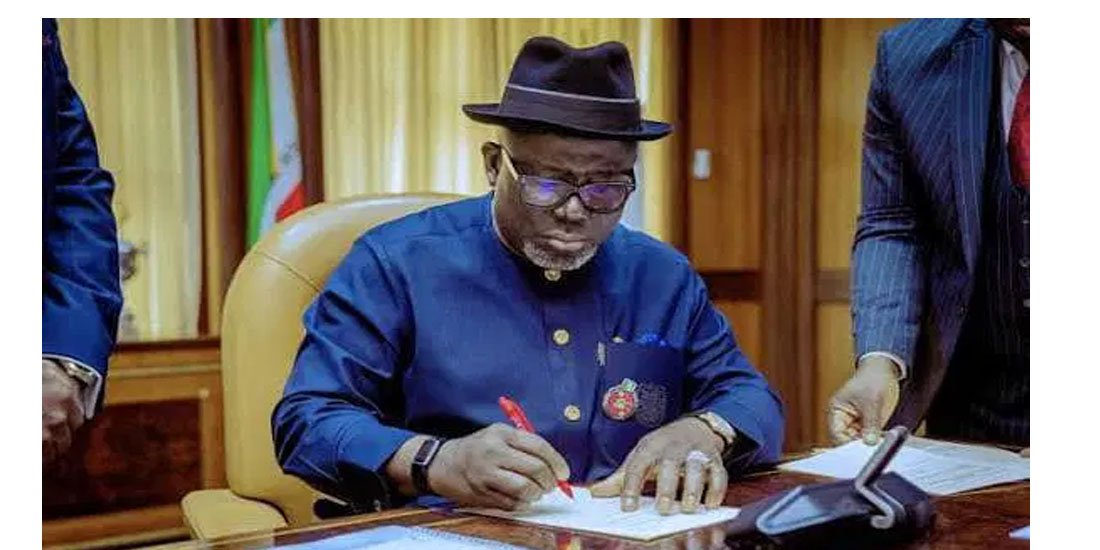
Governor Oborevwori assured prospective investors that Delta remains safe for business, stressing that his administration has maintained fiscal discipline while executing major infrastructure projects without borrowing from commercial banks, and said the state is determined to diversify its economy beyond oil through strategic investment and prudent financial management. Delivering the keynote address, World Trade Organization Director General Ngozi Okonjo Iweala said Delta has the potential to become Nigeria’s fourth industrial hub if it successfully harnesses its human capital and growing digital infrastructure, urging the state government to prioritise execution, maintenance culture, digital infrastructure, improved ports and private sector participation to drive sustainable economic growth.