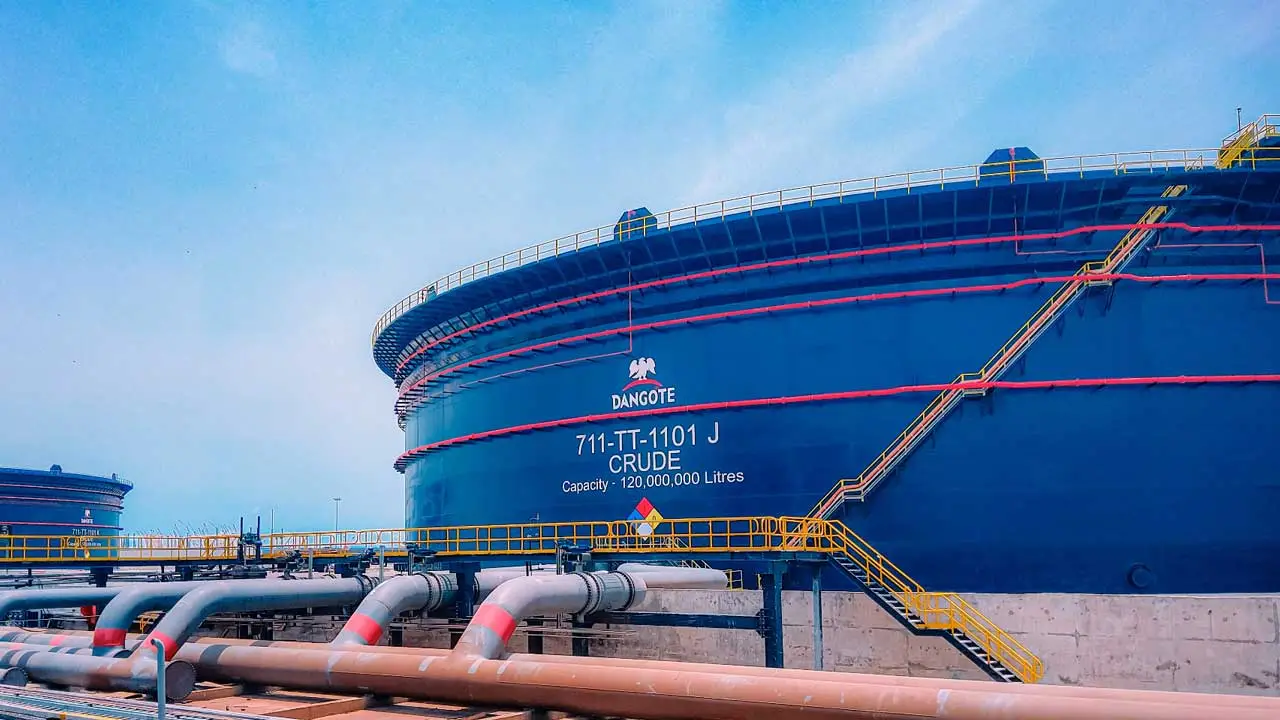
Nigeria has achieved one of the most dramatic supply-side transformations in its downstream petroleum history, slashing its reliance on foreign-refined petrol by more than 85 percent within six months, as the Dangote Petroleum Refinery’s rising output fundamentally reshapes the country’s energy import equation.
An analysis of data from the Nigerian Midstream and Downstream Petroleum Regulatory Authority covering the period from October 2025 to March 2026 revealed that the 650,000 barrels per day refinery supplied 54.32 percent of Nigeria’s total petrol consumption during the period, effectively ending decades of near-total dependence on imported refined products.
Total national petrol consumption during the six-month window reached 10.277 billion litres. Of that figure, the Dangote Refinery injected 5.582 billion litres into the domestic market, a contribution that ranged from 31.23 percent of national consumption in October 2025 to a peak of 72.30 percent in March 2026, as the facility overcame technical challenges and pushed capacity utilization to a record 93.62 percent.
The trajectory was steep and consistent. In October 2025, Nigeria’s daily petrol consumption stood at 57.74 million litres, with the refinery contributing 18.03 million litres. By January 2026, as national consumption climbed to 60.2 million litres daily, the refinery’s output had ramped up to 40.1 million litres per day, capturing a 66.6 percent market share for the month. Even during December 2025, when consumption peaked at 63.7 million litres daily due to festive season travel demand, the refinery delivered nearly one billion litres in a single month.
The impact on import volumes was equally dramatic. Daily petrol imports fell from 42.2 million litres in December 2025 to a historic low of 3.0 million litres in February 2026. Over the full six-month period, total import volumes collapsed from 1.44 billion litres in November 2025 to just 182.9 million litres in March 2026, the 85 percent reduction underpinning a logistical transformation in how petroleum products reach Nigeria’s more than 22,681 retail outlets.
By the close of the first quarter of 2026, Nigeria’s domestic sufficiency rate for petrol had climbed to over 87 percent, with local refineries led by the Dangote plant supplying the vast majority of the 47.3 million litres consumed daily. The NMDPRA has responded by significantly scaling back import licenses, and the country’s distribution network of over 25,000 tanker trucks now loads almost exclusively from domestic depots rather than waiting for offshore vessels to discharge imported fuel at coastal ports.
The government-owned Port Harcourt and Warri refineries remained in shutdown throughout the period, leaving the private facility to carry virtually the entire burden of domestic supply. Beyond petrol, the refinery’s sustained high capacity utilization, averaging 74 percent across the six-month window, ensured that secondary products including diesel also reached the market consistently, with domestic diesel supply peaking at 10.9 million litres daily in January 2026.
By March 2026, NMDPRA data showed that of the 40.1 million litres supplied daily to the Nigerian market, 34.2 million litres came from domestic sources, with the remaining 5.9 million litres from imports actively being phased out, positioning Nigeria on the cusp of becoming a net exporter of refined petroleum products for the first time in its history.