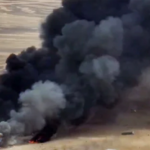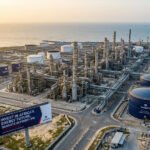
Global fuel shortages could persist beyond the end of the United States-Iran conflict because damaged refining infrastructure, deferred maintenance and depleted inventories will take time to restore, Dangote Refinery Chief Executive David Bird has said.
Bird said the current disruption was affecting not only crude supply but also refining capacity and finished-product availability.
He argued that the market entered the conflict with refinery utilization already high, leaving limited spare processing capacity to absorb outages and damage across the Middle East.
According to him, countries would also need to rebuild inventories once hostilities ease, while governments increasingly reassess strategic fuel-security requirements.
The Dangote refinery has benefited from the tighter international market for petrol, diesel and aviation fuel as conflicts involving Iran and the United States, as well as Russia and Ukraine, disrupted refining and export flows.
Bird said the plant was operating at full capacity and that the stronger market had materially improved the funding outlook for its Vision 2030 expansion.
The refinery plans to double capacity to 1.4 million barrels per day by 2029 under a $14.3 billion expansion program.
The proposed expansion will include additional petrochemical and refining units designed to broaden the range of products manufactured locally and reduce dependence on imported petrochemicals.
Dangote Refinery’s first-half 2026 financial results showed an after-tax profit of $1.82 billion compared with a $476 million loss for the whole of 2025.
Bird said the stronger operating performance had changed the financial premise supporting the expansion program.
The comments underline how the refinery’s growing scale is increasingly tied to both Nigerian supply conditions and international product markets.
Even if the geopolitical conflict moderates, Bird’s assessment suggests that the downstream market could remain tight while damaged facilities are repaired, deferred maintenance is completed and countries rebuild stocks.
That environment could continue to influence refining margins and product prices well after military activity subsides.