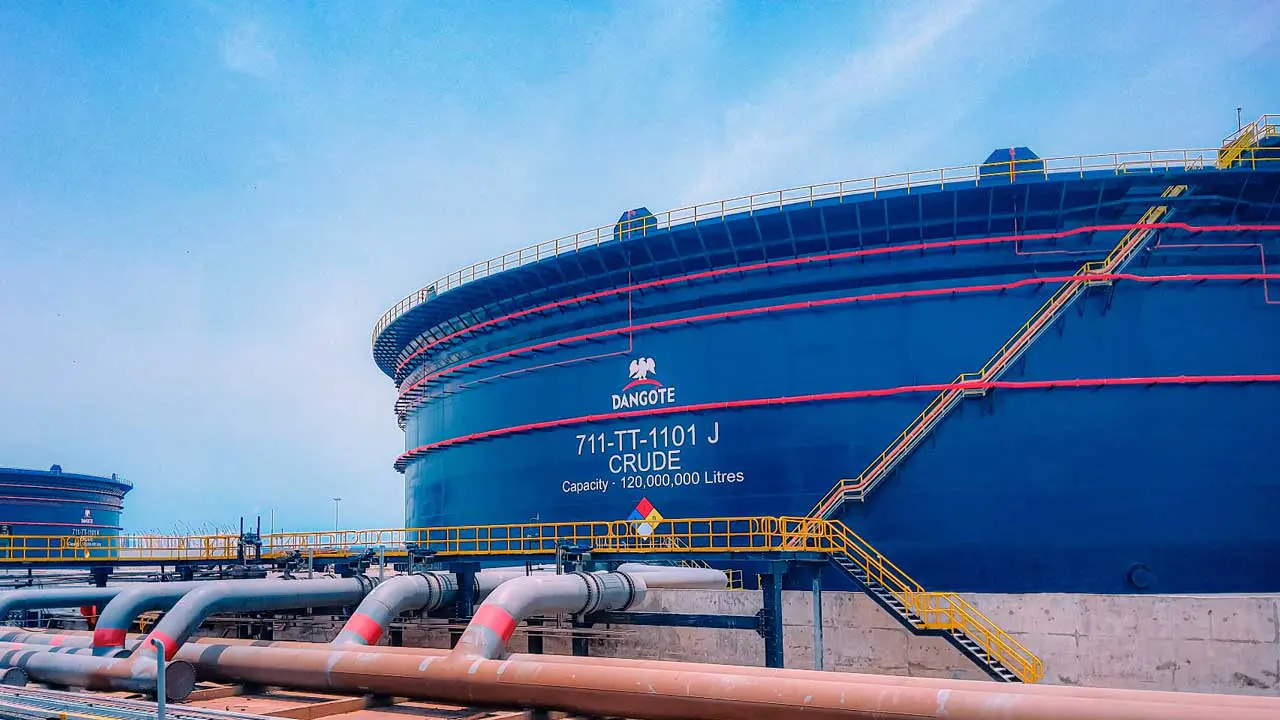
The Dangote Petroleum Refinery has emerged as the world’s largest single exporter of aviation fuel, following a significant increase in production capacity and exports, according to a report by S&P Global.
The development comes after the 650,000-barrels-per-day refinery reached full operational capacity in February, enabling it to capitalize on global supply disruptions caused by the Middle East conflict and expand its footprint in international petroleum markets.
As part of its growth strategy, the refinery is set to invest an additional $10 billion in an ambitious expansion programme aimed at increasing its processing capacity to 1.4 million barrels per day, a move that would further strengthen its position as one of the world’s largest refining hubs.
Record Jet Fuel Exports
S&P Global Commodities at Sea data showed that the refinery became the world’s largest single exporter of aviation fuel in April after ramping up production to meet rising global demand.
Chief Executive Officer of the refinery, David Bird, said the facility swiftly responded to shortages in the aviation fuel market by increasing output following disruptions linked to the Middle East conflict.
According to Bird, the refinery’s operational model differs from traditional oil-producing country refineries because it relies on a diverse range of crude oil sources and operates as a merchant refinery serving international markets.
“This is not a traditional refinery that simply processes one crude stream. It operates more like major refining hubs in Europe and Asia,” Bird said.
Expansion to Increase Global Reach
The planned expansion is expected to significantly broaden the refinery’s crude sourcing options and processing capabilities. The facility currently refines about 40 crude oil grades but aims to increase that number to over 100, allowing it to process supplies from Africa, the Middle East, the United States and other oil-producing regions.
S&P Global noted that the expansion would make the refinery capable of processing volumes equivalent to nearly 90 percent of Nigeria’s current crude oil production, requiring greater diversification of feedstock sources.
Bird disclosed that the refinery has increasingly relied on U.S. WTI Midland crude to supplement domestic supply and expects to incorporate heavier crude grades as capacity expands.
New Industrial Projects
Beyond refining operations, Dangote is pursuing additional petrochemical and industrial projects to diversify its product portfolio. Planned developments include a new linear alkylbenzene plant, a diesel hydrotreater, and a 750,000-metric-tonne-per-year propane dehydrogenation plant that will convert imported liquefied petroleum gas into polypropylene.
The company is also exploring opportunities to improve regional fuel distribution through strategic infrastructure investments across Africa.
Plans are underway for a storage facility in Namibia linked to Zambia by pipeline, while discussions are ongoing for additional oil storage and logistics projects in Djibouti and Cameroon.
Focus on Export Markets
According to Dangote Group Vice President for Oil and Gas, Devakumar Edwin, approximately half of the refinery’s current output is exported, with all additional production from the expansion expected to target international markets.
The refinery is also moving away from a predominantly spot-market trading model toward long-term supply agreements with governments, national oil companies, and major distributors.
Bird said the company is seeking to establish direct off-take arrangements to ensure stable demand and reduce reliance on short-term sales.
The refinery has already received growing interest from several African countries and recently concluded a supply arrangement with Ethiopian Airlines.
Public Listing Planned
To support its expansion plans, the refinery is preparing for an Initial Public Offering (IPO) expected later this year. Edwin said the company is targeting a valuation of about $40 billion and plans to list between five and ten percent of its shares on the Nigerian stock market, while also considering potential listings on international exchanges, including those in London and Dubai.
Industry analysts believe the expansion could further strengthen Nigeria’s role in global energy markets, increase foreign exchange earnings, and position the Dangote Refinery as one of the most influential refining and petroleum products export hubs in the world.