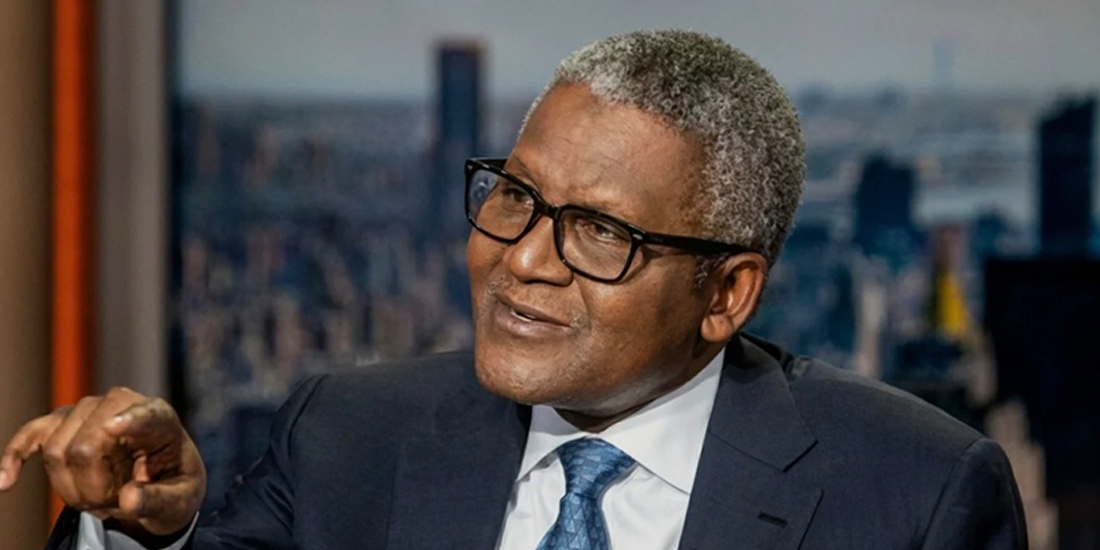
Aliko Dangote has added approximately $6.5 billion to his personal wealth since the start of 2026, pushing his net worth to an estimated $36.5 billion according to Bloomberg Billionaires Index data and extending his commanding lead as the richest person on the African continent, with the growth driven primarily by the rising valuation of the Dangote Petroleum Refinery and the sustained performance of his listed manufacturing companies.
The increase represents a year-to-date gain of approximately 22 percent, placing Dangote at 61st on the Bloomberg global wealth ranking as of June 10, 2026. Bloomberg identified the 650,000 barrel-per-day refinery in Ibeju-Lekki, Lagos, as the single largest contributor to his fortune, estimating the facility’s value at roughly $20 billion based on construction cost, while noting that the actual market value could be substantially higher if the refinery were independently assessed on commercial terms rather than investment expenditure. Dangote’s 92.3 percent ownership stake in the facility made it the dominant component of his net worth.
In addition to the refinery, his fortune drew from controlling stakes across several publicly listed companies including Dangote Cement, where Bloomberg estimated his ownership at approximately 86 percent of Africa’s largest cement producer, Dangote Sugar Refinery, and NASCON Allied Industries. His fertilizer business, with annual production capacity of up to 2.8 million tons of urea, also contributed significantly to the overall valuation.
The trajectory of Dangote’s wealth in 2026 reflected a broader validation of the industrial manufacturing model he had championed through decades of investment. Beginning his business career with a modest trading enterprise funded by a loan from his uncle after graduating from Egypt’s Al-Azhar University, he built the Dangote Group into one of Africa’s largest conglomerates with interests spanning cement, sugar, salt, fertilizer, petrochemicals, agriculture, and energy across more than a dozen countries.
Analysts said the refinery’s emergence as a functioning industrial asset had been the decisive factor in revaluing his empire upward, describing its contribution to reducing Nigeria’s dependence on imported petroleum products and its growing exports of refined goods as commercially significant developments that gave institutional investors and market observers a clearer basis for assessing what had previously been a largely aspirational project.
Meanwhile, Dangote’s Aliko Dangote Foundation distributed thousands of rice bags to host communities around the group’s cement plants in Ibese, Itori, and Ijebu-Igbo in Ogun State, reaching 53 communities as part of its annual National Food Intervention Program. Foundation CEO Zouera Youssoufou said the exercise reflected the organization’s view that sustainable development extended beyond business operations to include deliberate investment in community resilience, particularly during periods of inflation and declining household purchasing power.