Cuban President Miguel Diaz-Canel has accused the United States of deliberately manufacturing justifications for military intervention against Cuba as diplomatic tensions between the two countries deepened following a new wave of American sanctions targeting key sectors of the Cuban economy and security establishment.
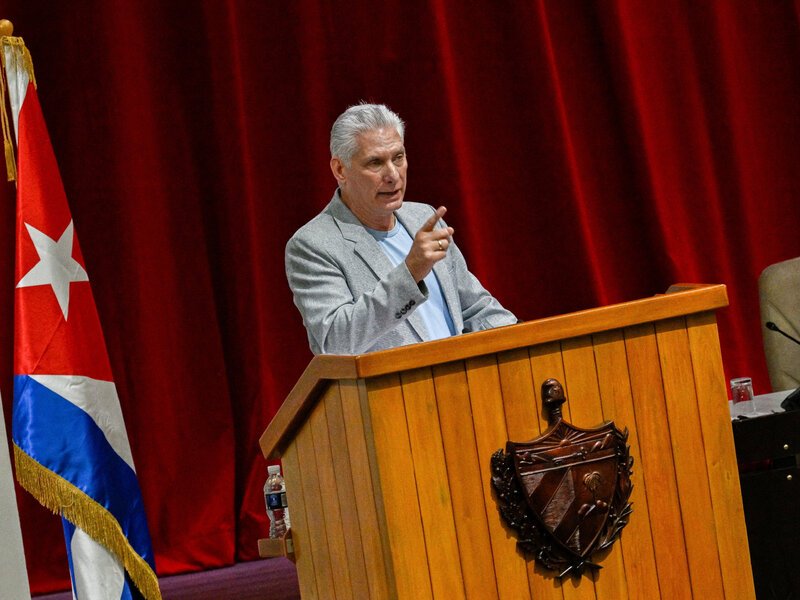
Diaz-Canel made the allegation at an international solidarity event in Havana marking the centenary of late revolutionary leader Fidel Castro, where he challenged Washington’s continued classification of Cuba as an extraordinary and unusual threat and argued that there was no legitimate basis for any form of military action against the island nation.
He accused the US government of increasingly relying on the language of war in managing international disputes and linked American foreign policy toward Cuba to broader geopolitical pressure on Venezuela and other countries Washington regarded as adversaries in Latin America.
Cuban Foreign Minister Bruno Rodriguez Parrilla separately condemned what he described as dangerous American threats of military action, warning that such rhetoric violated international law and risked destabilizing the Caribbean region.
Despite the sharp language, Diaz-Canel maintained that Cuba was not seeking conflict and remained open to dialogue with Washington, provided such engagement was based on mutual respect and non-interference. Relations between the two countries have remained strained since the 1959 Cuban revolution, with successive American administrations maintaining economic embargoes and diplomatic pressure over governance and human rights concerns.