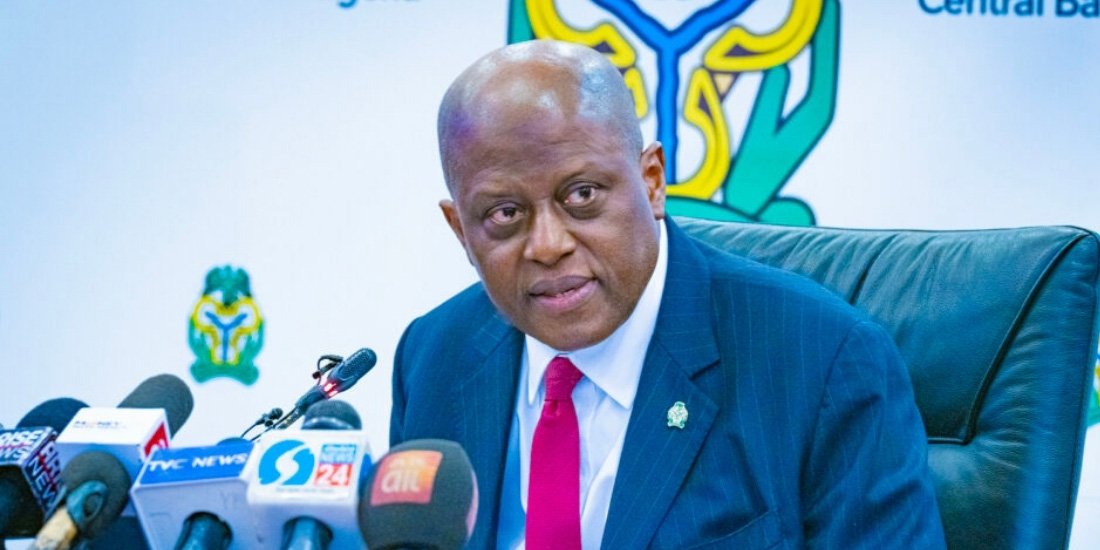
Central Bank of Nigeria Governor Olayemi Cardoso says the country’s net foreign reserves have climbed to $40 billion, up from about $3 billion when he took office in 2023, with gross external reserves now around $52 billion, providing roughly 10 months of import cover, a milestone he unveiled the same day the CBN issued sweeping new operational rules tightening oversight of Bureau De Change operators.
Speaking at the BusinessDay CEO Forum in Lagos, Cardoso said diaspora remittances are on track to reach $1 billion monthly by year end and that the foreign exchange market has grown liquid enough to largely run itself with minimal central bank intervention. Anybody that wants to argue about what the impact of these reforms have been, go and look at the results, he said, recalling that the net reserves figure sat around $3 billion when he started, a number JP Morgan once published that triggered panic in the system, compared with the roughly $40 billion range today. He said today’s reserve level, about 10 months of import cover, has meaningfully strengthened Nigeria’s external buffers and made the country more attractive to foreign investors, since import cover is exactly what investors weigh when deciding whether a currency position is worth taking, and credited the same reforms with restoring confidence in Nigeria’s payment system, noting Nigerians can now use their naira cards seamlessly while travelling abroad, a sharp change from years when cards were routinely rejected overseas.
Cardoso credited the reserve build up partly to a deliberate push on diaspora remittances, recalling that the CBN set itself a goal of doubling remittance inflows between the start of his tenure and year end and hit that target, working closely with banks and visiting multiple countries despite considerable early scepticism, with remittances now above $600 million and on pace to reach roughly $1 billion monthly by year end, an effort he said remains ongoing. He pushed back on suggestions that the growing reserve stockpile should be deployed aggressively to defend the naira, arguing reserves exist primarily as a buffer against external shocks rather than for routine market intervention, and that today’s market liquidity lets buying and selling largely take care of itself with minimal CBN interference, a shift from the earlier era when participants depended almost entirely on the central bank for liquidity.
On banking sector reform, Cardoso said the recapitalisation exercise, which raised about N4.65 trillion in fresh capital, has meaningfully strengthened the industry’s resilience, but stressed that supervisory oversight will continue well beyond the capital raise itself, since a strong banking sector requires sustained attention rather than a one time fix. As inflation eases and interest rates gradually decline, he said, banks should be better positioned to channel more credit toward productive sectors, particularly small and medium enterprises, while continuing to build capacity to manage the risks that come with it. He urged Nigerian businesses to seize the improving macroeconomic environment rather than watch from the sidelines, warning that foreign investors are already positioning to capture emerging opportunities created by the country’s hard won stability, and cautioned local business leaders against what he called muscle memory, the assumption that the economy will simply revert to old conditions. I hope that our own leadership in many of these companies and many of the CEOs you have here will recognise that and will not be afraid, and will not hold on to muscle memory, thinking that things are still as they were before, he said, warning that waiting too long to act risks missing the moment entirely.
The same day, the CBN issued detailed operational guidelines for BDCs accessing foreign exchange through the Nigerian Foreign Exchange Market, in a circular signed by Trade and Exchange Department Director Aderinola Shonekan, building on a February 2026 circular that first granted BDCs access to the official market through authorised dealer banks. The new framework introduces a centralised electronic platform, the FX BDC Purchase Tracker, through which every licensed BDC must register and submit real time or same day data on its purchases, giving the CBN systemic compliance oversight, while explicitly barring authorised dealer banks from imposing exclusivity arrangements, referral fees or any condition restricting a BDC’s freedom to choose its counterparty bank. Under the new process, BDCs must submit purchase requests electronically through a designated portal, with multiple weekly requests allowed subject to caps the CBN may prescribe, and only BDCs holding valid, unrestricted licences remain eligible, with operators under suspension or regulatory sanction excluded until those sanctions lift. The guidelines also impose fresh Know Your Customer and Customer Due Diligence obligations on authorised dealer banks, requiring them to obtain and maintain key corporate documents, including operating licences, CAC registration, tax identification numbers and beneficial ownership details, conduct enhanced due diligence for higher risk BDCs, and update records at least annually. The CBN said the measures form part of a broader push to digitise foreign exchange transactions, strengthen oversight and reinforce confidence in the market, warning that any breach of the new guidelines will attract regulatory sanction.