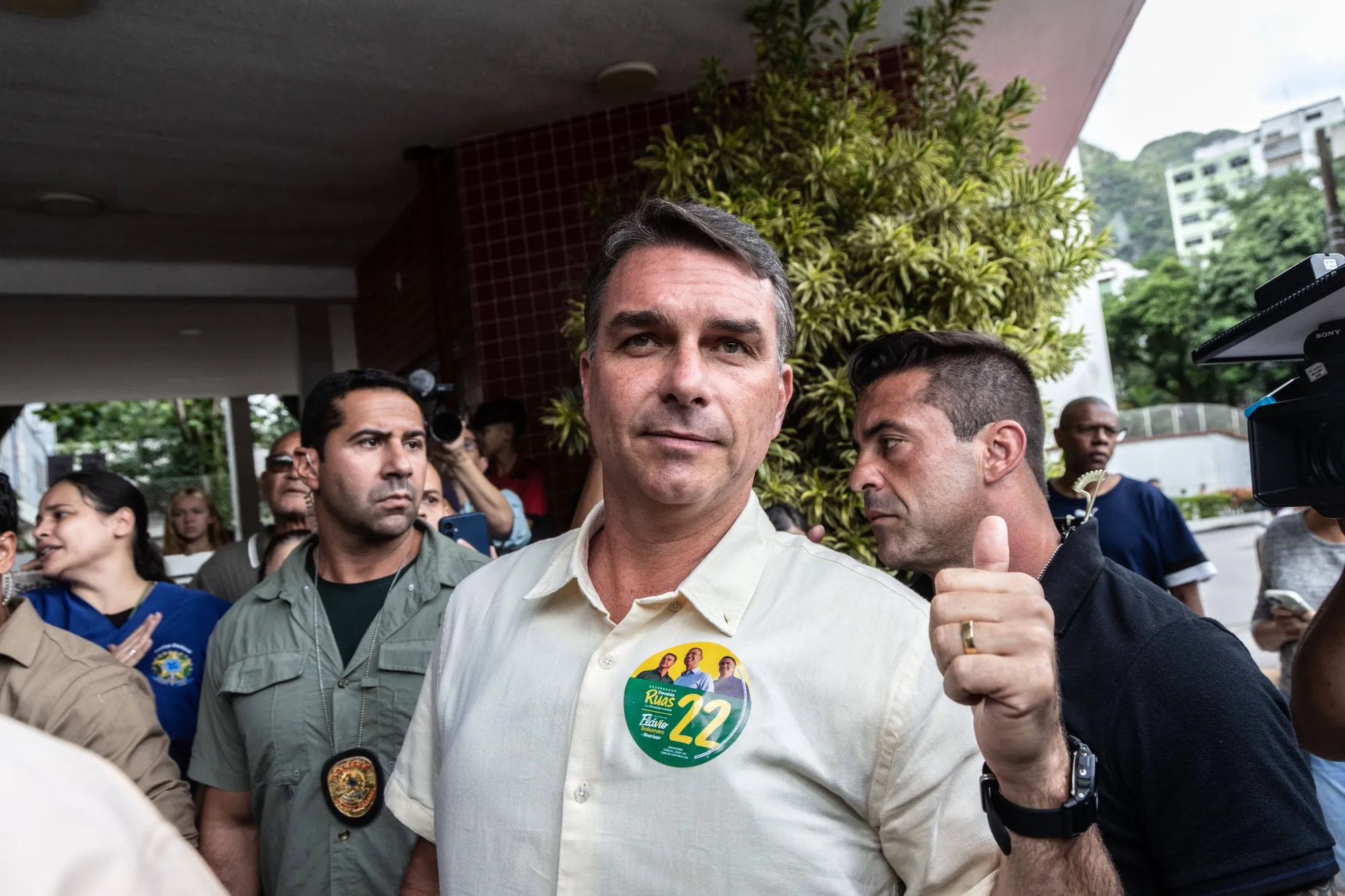
Brazil’s presidential election will be decided in a second-round runoff after far-right candidate Flávio Bolsonaro, son of former President Jair Bolsonaro, secured the highest number of votes in the first round but fell short of the outright majority required for victory.
With more than 99 per cent of ballots counted, Bolsonaro garnered 47.1 per cent of the vote, ahead of incumbent President Luiz Inácio Lula da Silva, who received 45 per cent. The outcome sets up a decisive runoff election scheduled for October 25.
Bolsonaro is widely considered the favourite heading into the second round, with analysts predicting he could benefit from support previously given to other right-wing candidates, including Ronaldo Caiado and Renan Santos, who collectively secured over four per cent of the vote.
The election also underscored the growing influence of Brazil’s conservative movement, as several allies and family members of the Bolsonaro political dynasty recorded victories in congressional and gubernatorial contests.
Among them were Bolsonaro’s wife, Michelle Bolsonaro, and his son Carlos Bolsonaro, who both won Senate seats, while his youngest son, Jair Renan Bolsonaro, secured election to the lower chamber of Congress. Former Infrastructure Minister Tarcísio de Freitas was also re-elected governor of São Paulo State.
Of the 54 Senate seats contested, 34 were won by candidates from right-wing and far-right political parties.
Addressing supporters in Brasília, Flávio Bolsonaro described the results as a turning point in Brazilian politics.
“This marks the end of an era for the Workers’ Party,” he said, arguing that his campaign is focused on Brazil’s future rather than political power.
President Lula, speaking in São Paulo, acknowledged the outcome while expressing confidence ahead of the runoff.
“We have just had a lesson in Brazilian democracy,” he said. “I believed we would win in the first round, but we now have a second round where Brazilians will clearly see the differences between our visions for the country.”
The campaign now enters a critical phase as both candidates seek to win over undecided voters ahead of the final vote that will determine who governs Latin America’s largest economy.