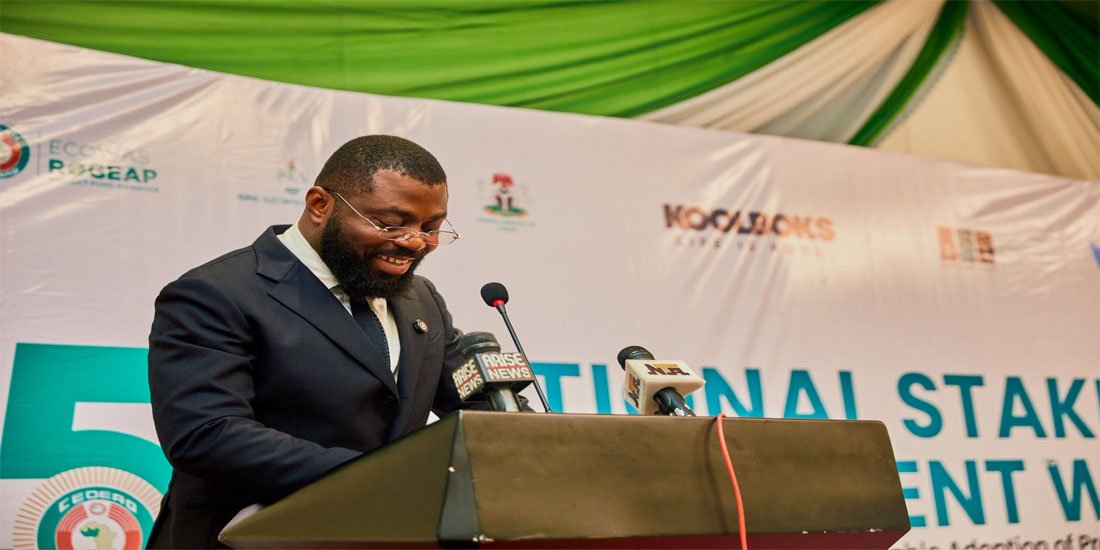
The Bank of Agriculture is replacing outdated lending practices with a technology based financing system intended to reach genuine farmers, improve food production and protect public funds.
Managing Director Ayo Sotinrin said the institution’s new strategy focuses on measurable agricultural outcomes rather than the volume of loans disbursed. He explained that the bank is being repositioned as a commercially managed development finance institution with a public mandate.
The reform rests on three priorities: institutional restructuring, recapitalisation and the redesign of agricultural lending. Sotinrin said he inherited an organisation weakened by obsolete technology, manual processes and years of underinvestment.
Instead of simply upgrading existing systems, the bank carried out a broad digital overhaul. A technical working group led by Ernst and Young, with support from senior technology executives in major banks, designed a new architecture covering core banking, internet and mobile services, electronic payments, identity linked cards, digital wallets and smart point of sale devices.
The new platforms are expected to reduce fraud and ensure that government supported inputs such as fertiliser, seeds and agrochemicals are delivered only to verified beneficiaries through approved suppliers. Artificial intelligence is also being introduced to automate account monitoring, payment reconciliation and loan administration.
A central feature of the new lending model is the use of farmer aggregation companies rather than direct lending to millions of dispersed smallholders. Sotinrin said the cost of recovering small individual loans made the former approach unsustainable.
After screening more than 120 applicants, the bank selected 24 aggregators based on governance, capacity and performance. It plans to expand the network through its 110 branches to reach rural communities that traditional financial institutions rarely serve.
Loans will no longer be disbursed mainly as cash. Most of each facility will be converted into approved farming inputs, while about five per cent will be released as working capital for logistics and related expenses. Repayment terms are also being aligned with production and harvest cycles.
The bank is piloting the Renewed Hope Agricultural Financing Programme with federal support and is developing a Guaranteed Minimum Price Programme to protect farmers when market prices fall below production costs. Under the proposed arrangement, the bank would provide price support and later sell the commodities to processors and manufacturers.
Sotinrin said nearly two million bags of fertiliser and about 34,700 metric tonnes of improved seeds had been facilitated for farmers. He clarified that the bank finances qualified beneficiaries while accredited suppliers deliver the inputs.
Insurance coverage has been incorporated to protect projects against climate and other risks. The bank is also discussing security arrangements for farming communities affected by violence.
Although the institution cannot finance every farmer, Sotinrin said efficient capital deployment, modern technology and stronger partnerships could remove major constraints and build a more sustainable agricultural finance system.
Bank of Agriculture Adopts Digital Model to Expand Credit and Reduce Loan Defaults
The Bank of Agriculture is replacing outdated lending practices with a technology based financing system intended to reach genuine farmers, improve food production and protect public funds.
Managing Director Ayo Sotinrin said the institution’s new strategy focuses on measurable agricultural outcomes rather than the volume of loans disbursed. He explained that the bank is being repositioned as a commercially managed development finance institution with a public mandate.
The reform rests on three priorities: institutional restructuring, recapitalisation and the redesign of agricultural lending. Sotinrin said he inherited an organisation weakened by obsolete technology, manual processes and years of underinvestment.
Instead of simply upgrading existing systems, the bank carried out a broad digital overhaul. A technical working group led by Ernst and Young, with support from senior technology executives in major banks, designed a new architecture covering core banking, internet and mobile services, electronic payments, identity linked cards, digital wallets and smart point of sale devices.
The new platforms are expected to reduce fraud and ensure that government supported inputs such as fertiliser, seeds and agrochemicals are delivered only to verified beneficiaries through approved suppliers. Artificial intelligence is also being introduced to automate account monitoring, payment reconciliation and loan administration.
A central feature of the new lending model is the use of farmer aggregation companies rather than direct lending to millions of dispersed smallholders. Sotinrin said the cost of recovering small individual loans made the former approach unsustainable.
After screening more than 120 applicants, the bank selected 24 aggregators based on governance, capacity and performance. It plans to expand the network through its 110 branches to reach rural communities that traditional financial institutions rarely serve.
Loans will no longer be disbursed mainly as cash. Most of each facility will be converted into approved farming inputs, while about five per cent will be released as working capital for logistics and related expenses. Repayment terms are also being aligned with production and harvest cycles.
The bank is piloting the Renewed Hope Agricultural Financing Programme with federal support and is developing a Guaranteed Minimum Price Programme to protect farmers when market prices fall below production costs. Under the proposed arrangement, the bank would provide price support and later sell the commodities to processors and manufacturers.
Sotinrin said nearly two million bags of fertiliser and about 34,700 metric tonnes of improved seeds had been facilitated for farmers. He clarified that the bank finances qualified beneficiaries while accredited suppliers deliver the inputs.
Insurance coverage has been incorporated to protect projects against climate and other risks. The bank is also discussing security arrangements for farming communities affected by violence.
Although the institution cannot finance every farmer, Sotinrin said efficient capital deployment, modern technology and stronger partnerships could remove major constraints and build a more sustainable agricultural finance system.