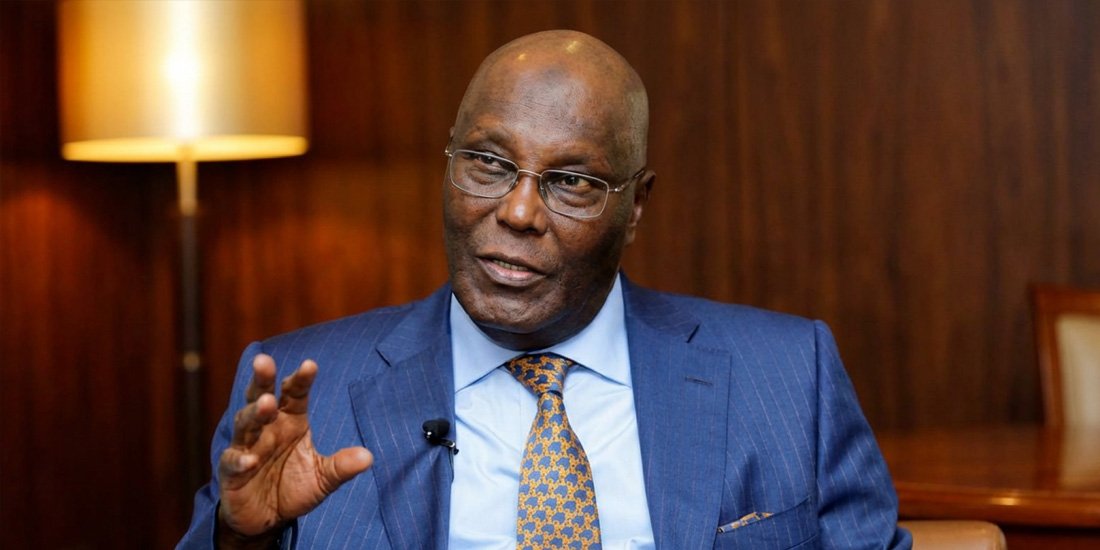
Former Vice President Atiku Abubakar has described a N266.07 billion net foreign-portfolio outflow from Nigerian equities between January and July 2026 as evidence, in his view, of declining investor confidence in the Federal Government’s economic management.
Atiku cited Nigerian Exchange data showing foreign inflows of N513.36 billion and outflows of N779.43 billion during the seven-month period.
He said outflows exceeded inflows in each month and compared the net figure with a smaller outflow in the corresponding period of 2023.
Those market figures may reflect multiple factors, including portfolio rebalancing, global risk conditions, exchange-rate expectations and domestic policy. Atiku’s interpretation is a political assessment rather than a definitive explanation of investor behavior.
The African Democratic Congress presidential candidate also cited reports that federal domestic borrowing had risen sharply to N24.7 trillion within eight months.
He argued that higher government borrowing was crowding private businesses out of the domestic credit market.
Atiku linked the investment data to wider concerns about operating costs, household purchasing power and access to affordable credit.
He said sustainable investment would depend on policy consistency, inflation control, predictable regulation and the prospect of viable real returns.
The former Vice President called for an economic strategy focused on lower business costs, affordable energy and transportation, stronger private-sector production and reduced dependence on government borrowing.
The Tinubu administration has defended its reform program as necessary to address long-standing fiscal, foreign-exchange and investment distortions and has pointed to other indicators as evidence of stabilization.
The competing interpretations are likely to remain central to the 2027 campaign, with opposition parties focusing on household hardship and investment flows while the government emphasizes macroeconomic adjustment and reform gains.