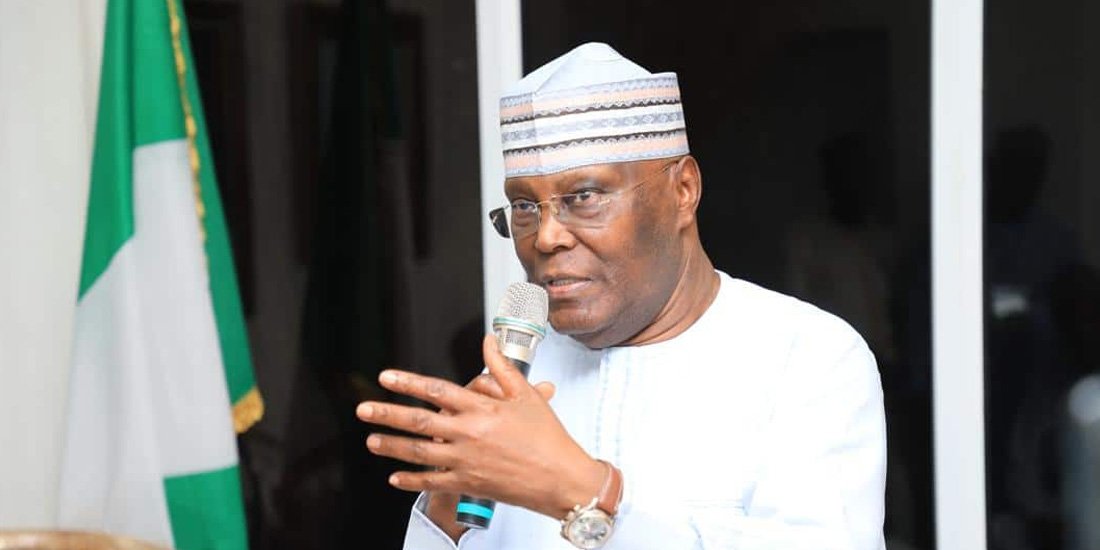
Former Vice President Atiku Abubakar has criticised the Federal Government’s borrowing pattern under President Bola Ahmed Tinubu, describing the government’s unprecedented appetite for domestic borrowing as evidence of fiscal indiscipline that is squeezing businesses and worsening Nigeria’s cost-of-living crisis.
Atiku, in a statement issued on Monday by his Senior Special Assistant on Public Communication, Phrank Shaibu, questioned why the government continued to borrow heavily despite crude oil prices rising substantially above the benchmark used for the 2026 budget.
According to him, the Federal Government budgeted the 2026 fiscal year on an oil price benchmark of $64.85 per barrel. However, he said, instead of increased oil revenues resulting in reduced borrowing and greater economic relief for Nigerians, the government borrowed ₦24.7 trillion from the domestic market between January and August 2026.
Atiku said the figure represented a 90.5 per cent increase compared with the ₦12.98 trillion borrowed during the corresponding period of 2025.
“This is a government borrowing like drunken sailors in the middle of a revenue windfall,” Atiku said, questioning what had happened to the funds saved from the removal of the fuel subsidy.
He argued that the government’s decision to remove the petrol subsidy, float the naira and benefit from higher oil prices should have significantly improved government revenues and reduced its dependence on domestic borrowing.
“Oil prices have risen sharply. Revenues have improved. Yet the borrowing has not gone down — it has exploded,” he said.
Atiku also expressed concern over the impact of government borrowing on private-sector access to credit, citing figures which he said showed that credit to the government increased by 43 per cent, compared with a 9.6 per cent rise in credit to the private sector.
“Government credit is expanding about 4.5 times faster than credit to businesses,” he said, describing the trend as another indication that the Tinubu administration’s economic reforms had failed to deliver meaningful benefits to the private sector.
According to the former vice president, the performance of businesses should be one of the key indicators for assessing the effectiveness of economic policies. He said successful reforms should result in businesses expanding, investing, hiring more workers and gaining easier access to affordable capital.
Instead, he argued, government borrowing was increasingly competing with businesses for available funds, making it more attractive for banks to lend to the government than to manufacturers, farmers and entrepreneurs.
“When banks can lend to the government at attractive, risk-free rates, why would they lend cheaply to the manufacturer in Aba, the furniture maker in Kaduna, the agro-processor in Kano or the young entrepreneur in Lagos?” he asked.
Atiku said the consequences included higher borrowing costs for businesses, delayed expansion, pressure on factories, job losses and increased production costs, which ultimately translate into higher prices for food and household goods.
“This government is not merely borrowing money; it is borrowing away the future of Nigerian businesses,” he stated.
He said Nigeria could not achieve sustainable prosperity if government continued to absorb credit that should be available to productive sectors of the economy.
Atiku also reiterated his promise that, if elected, his administration would impose fiscal discipline, reduce waste, prioritise productive expenditure and gradually reduce government dependence on domestic borrowing.
“My administration will impose fiscal discipline, cut waste, prioritise productive expenditure and progressively reduce the government’s suffocating dependence on the domestic credit market,” he said.
He further demanded greater transparency over the funds saved from fuel subsidy removal, additional government revenues and increased oil earnings.
“After three years of sacrifice, Nigerians deserve to see what happened to the subsidy savings, the additional revenues and the crude-oil windfall,” Atiku said. “You cannot collect more, earn more and still borrow more — while asking hungry Nigerians to sacrifice more. Something is fundamentally wrong with that equation.”