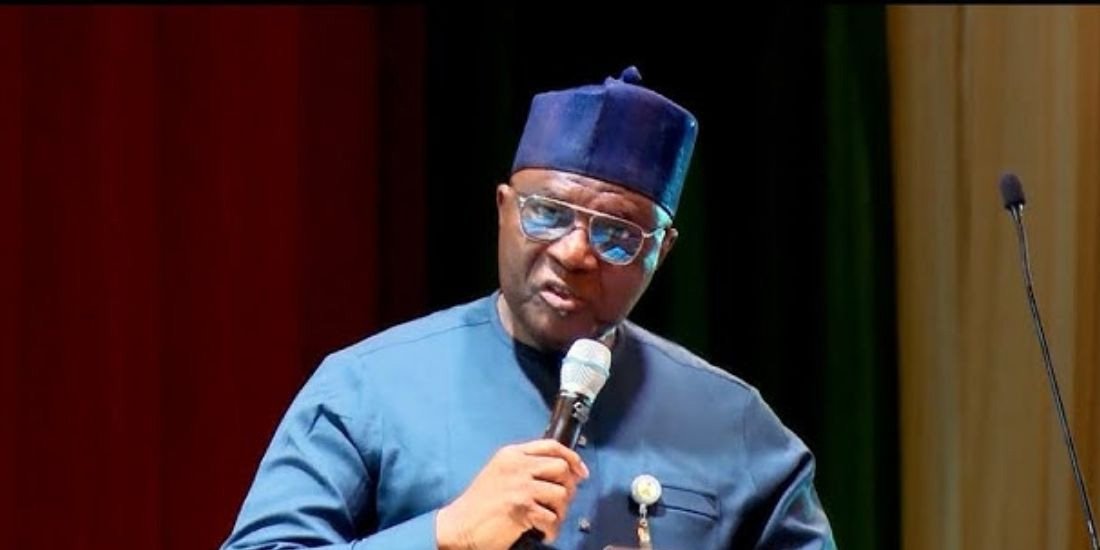
Special Adviser to President Bola Tinubu on Information and Strategy, Bayo Onanuga, has criticised former Vice-President Atiku Abubakar over his renewed promise to restore petrol subsidy, describing the position as inconsistent and politically motivated.
Onanuga, in a statement, said Atiku’s recent comments had raised questions about whether the former vice-president had a coherent economic policy or was seeking to exploit the hardship Nigerians are experiencing.
He noted that within one week, Atiku and his aides had offered different explanations of how an Atiku administration would handle petrol subsidy.
According to Onanuga, Atiku’s spokesperson, Paul Ibe, initially said the former vice-president would restore subsidy if elected and later phase it out as Nigerians and businesses recovered.
He said another aide, Phrank Shaibu, subsequently described Ibe’s statement as an “unauthorised and misleading characterisation” of Atiku’s position, explaining that the subsidy would remain until domestic refining increased, fuel supply stabilised and market competition produced affordable prices.
However, Onanuga said Atiku later intervened and reaffirmed that he would restore what he called a “targeted subsidy”, effectively contradicting the clarification issued by Shaibu.
“This is not merely a matter of semantics. It is a serious policy contradiction,” Onanuga said, questioning why Atiku’s aides had offered differing explanations if his position had remained unchanged.
He argued that Nigerians deserved clarity on the former vice-president’s proposed petroleum policy, including the cost of the subsidy, its funding mechanism, beneficiaries and conditions for its eventual termination.
Onanuga also challenged Atiku’s argument that restoring subsidy would significantly reduce the cost of living, noting that petrol prices were only one of several factors driving inflation and food prices.
He listed exchange rates, agricultural productivity, insecurity, transportation, storage, flooding, input costs and supply constraints among factors affecting food prices.
The presidential aide further questioned the economic basis of subsidising petrol alone, arguing that crude oil refining produces several other products besides petrol.
He noted that diesel, aviation fuel, kerosene, lubricants, petrochemical feedstocks, asphalt and other products also emerge from the refining process, with several of them already operating under market-based pricing.
Onanuga specifically recalled that diesel was deregulated in 2004 during the administration in which Atiku served as vice-president, while kerosene and aviation fuel subsequently underwent deregulation.
He therefore asked whether an Atiku administration would subsidise other petroleum products as well, particularly diesel, which is widely used to power generators and transport goods, and kerosene, which remains important to some low-income households.
“Will Atiku subsidise all these by-products of the barrel as well?” Onanuga asked, arguing that concentrating subsidy exclusively on petrol amounted to an incomplete approach to petroleum economics.
He accused the former vice-president of lacking clarity on his proposed subsidy framework and urged him to provide Nigerians with a detailed, costed and sustainable policy rather than what he described as political rhetoric.
“The economy is too serious for policy somersaults, incoherence, destructive populism and election gimmicks,” Onanuga said.
He maintained that the Tinubu administration’s removal of petrol subsidy had strengthened government revenues and contributed to efforts to stabilise the economy, while challenging Atiku to demonstrate how his proposed subsidy regime would achieve affordability without undermining government finances.