Sahara Power has called for stronger mobilization of sustainable investment and climate finance to accelerate Africa’s development, strengthen economic resilience and expand productive capacity across the continent.
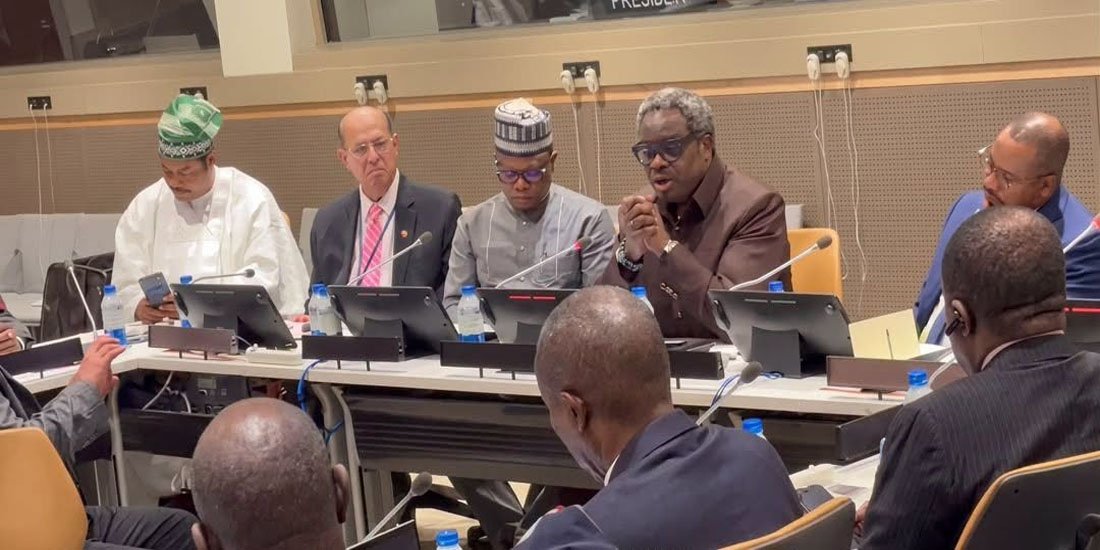
Group Managing Director of Sahara Power Enterprise Group, Kola Adesina, made the call at a United Nations General Assembly roundtable on Sustainable Global Investment, Economic Resilience and Climate Financing.
Adesina said Africa’s growth ambitions depended on building economies capable of withstanding economic, environmental and geopolitical shocks while continuing to generate jobs, infrastructure and industrial expansion.
He argued that sustainable investment, climate finance and economic resilience should be treated as connected priorities, particularly as the continent faces major deficits in electricity, transport, food security and employment.
Citing widely used development estimates, the company said almost 600 million people in Sub-Saharan Africa remain without access to electricity, while the continent’s annual infrastructure financing gap is estimated at between $68 billion and $108 billion.
Adesina said the immediate challenge was to expand Africa’s productive capacity through sustained investment in energy, infrastructure, industry, agriculture and enterprise development.
He also pointed to the scale of global investment pools, noting that foreign direct investment reached about $1.6 trillion in 2025 while assets linked to sustainable investment strategies had grown to approximately $16.7 trillion globally.
Climate finance, he said, was increasingly important because African economies are highly exposed to drought, flooding, extreme heat and other climate risks despite accounting for a relatively small share of global greenhouse-gas emissions.
Adesina cited estimates that African countries require about $277 billion annually to implement their climate commitments compared with climate-finance flows of roughly $30 billion a year.
He said bridging the gap would require innovative financing structures capable of supporting both mitigation and adaptation while also creating commercially viable assets and jobs.
Drawing on Sahara’s operations, Adesina highlighted investments in liquefied natural gas, liquefied petroleum gas, gas-to-power infrastructure and logistics, alongside the company’s stated net-zero ambition for 2060 through gas infrastructure, renewable-energy integration and nature-based solutions.
He also called for stronger project preparation, increased mobilization of African institutional capital, deeper local-currency financing markets and greater regional collaboration in energy, transport and logistics.
According to Adesina, the continent’s long-term opportunity lies in converting investment into productive capacity, dependable infrastructure, employment and economic growth that can withstand future shocks.