
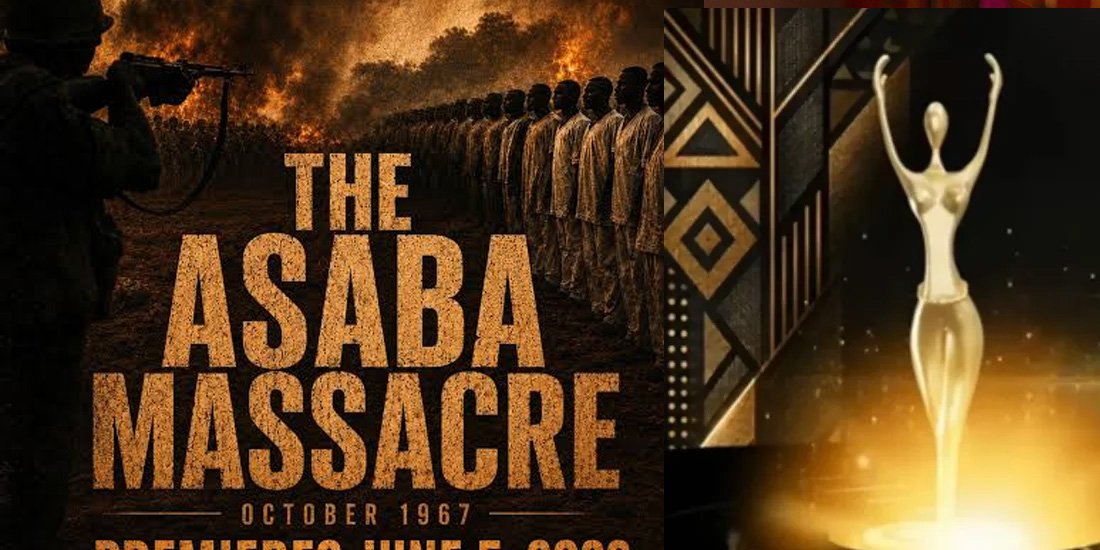
The documentary Asaba Massacre: October 1967, which chronicles the killing of civilians in Asaba during the Nigerian Civil War, has been nominated for Best Documentary at the 2026 African Movie Academy Awards (AMAA).
The awards institution announced the nomination in an audio-visual release on LinkedIn, according to the report.
The award ceremony is scheduled to hold in Lagos on November 15, 2026, when winners in the various categories will be announced.
The documentary was directed by historian and filmmaker Nze Ed Emeka Keazor, while Chief Chuck Nduka-Eze, the Isama Ajie of Asaba, served as executive producer.
The film focuses on the October 1967 mass execution of unarmed civilians in Asaba by Nigerian federal troops during the civil war.
Other nominees in the Best Documentary category include The Rhythm of Ancestors from Nigeria; Truck Mama from Kenya; Djeliya, Memory of Mandé from Burkina Faso; Chicken Ghetto and Ekitibiwa ky’olugbobo from Uganda; and The Greatest Soul on Earth from South Africa.
Nduka-Eze, who is also the convener of the Asaba Massacre Memorial Centre, expressed gratitude for the nomination and thanked Asaba indigenes and others who supported the documentary’s production and premiere.
He said he hoped the film would encourage greater understanding of the tragedy and promote tolerance, peace and reconciliation.
The Asagba of Asaba, Prof. Epiphany Chigbogu Azinge (SAN), who chaired a special session at the documentary’s premiere at the African Centre in London on October 26, 2025, commended Nduka-Eze for his efforts.
Azinge said the documentary could help advance the longstanding concerns of the Asaba people and encourage a national response to the tragedy.
He recalled that the killings claimed about 1,000 lives, describing the loss as a devastating blow that could have threatened the survival of the kingdom.
However, he praised the resilience of the Asaba people, saying they had drawn strength and unity from the painful experience rather than allowing it to destroy their community.
The premiere also featured an emotional account by Nduka-Eze of his mother’s death during the first wave of the massacre. According to the report, she was killed after confronting federal troops and urging them to stop the killing of unarmed civilians.
Nduka-Eze expressed hope that the Nigerian government would eventually apologise to the people of Asaba for the massacre.
The documentary’s nomination comes as preparations continue for activities marking the 60th anniversary of the tragedy in 2027.