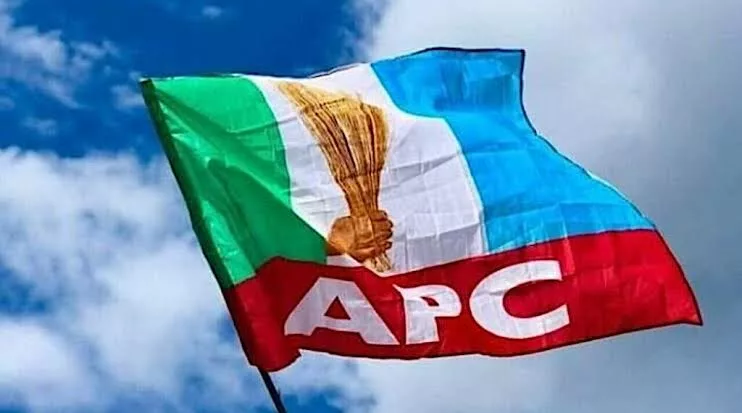
Nigeria’s ruling All Progressives Congress has wrapped up internal party voting for House of Representatives seats in all 360 federal constituencies, with the exercise throwing up a blend of commanding victories, unexpected eliminations, and serious procedural grievances that will reverberate as the party prepares for the 2027 general elections. The party had quietly moved the exercise from its originally announced date of Friday, May 15 to Saturday, May 16, offering no public explanation for the shift. Voting was carried out through a mix of direct balloting and consensus selection under the watch of INEC deployed monitors. On the eve of the exercise, President Bola Tinubu publicly called on all participants, delegates, aspirants, and party officials, to embrace the values of peaceful competition and genuine democratic practice.
Major Winners
House Speaker Tajudeen Abbas had no challengers in the Zaria Federal Constituency, where all 1,376 delegates spread across 13 wards cast their votes in his favour, positioning him for a potential fifth term in the Green Chamber. Deputy Speaker Benjamin Kalu sailed through his own primary without significant opposition, while Lagos Assembly Speaker Mudashiru Obasa similarly ran unopposed in the Agege Federal Constituency. James Faleke, who chairs the House Committee on Finance, came away with the Ikeja/Ojodu ticket, and former opposition heavyweight Ndudi Elumelu locked down the candidacy for Aniocha/Oshimili Federal Constituency in Delta State under the APC banner. A closely watched debut came from Yusuf Buhari, the late former President Muhammadu Buhari’s son, who entered the race for the Sandamu/Daura/Mai’adua seat in Katsina and emerged victorious with 6,386 votes, leaving his closest rival, Auwal Daura, whose father Lawal Musa Daura once headed the Department of State Services, with a distant 322 votes.
Shock Defeats
No loss carried more weight than that of Prof. Julius Ihonvbere, the House Majority Leader, who was denied a third term representing Owan Federal Constituency in Edo State. Former Mining Commissioner Hon. Andrew Ijegbai outpolled him decisively, accumulating 3,695 votes against Ihonvbere’s 1,005, in an outcome many within the party tied to an existing rotation agreement between Owan East and Owan West. Another Edo incumbent, Hon. Marcus Onobun, suffered a similar fate in the Esan West/Esan Central/Igueben Federal Constituency, where Emmanuel Esegbe dominated with 6,897 votes to Onobun’s 1,005. Imo State proved equally brutal for sitting lawmakers, with four incumbents, Matthew Nwogu, Miriam Onuoha, Harrison Nwadike, and Emeka Chinedu, each failing to retain their party tickets. The state also witnessed the high profile elimination of entertainment entrepreneur Paschal Okechukwu, widely known as “Cubana Chief Priest,” who could not convert his national popularity into delegate support for the Orsu/Orlu/Oru East seat.
Controversies and Protests
Grievances erupted in several states. In Ekiti, Ekiti South Federal Constituency II aspirant and State Assembly member Teju Okuyiga publicly invalidated the outcome of her primary, characterizing it as a manipulated exercise in which accreditation was not properly conducted, party collation procedures were bypassed in multiple wards, and figures were declared for polling units where no actual balloting took place. She petitioned the APC’s National Working Committee and the Presidency to intervene. In Kaduna, a formal protest letter bearing the signatures of former State House of Assembly Speaker Yusuf Zailani and former Senator Danjuma Laah was submitted to the party’s National Chairman. The signatories, organising under a coalition of aggrieved National Assembly aspirants, accused unidentified party powerbrokers of manipulating consensus arrangements to predetermine outcomes. In Katsina, Mani/Bindawa aspirant Ahmed Saleh Junior alleged that security operatives from the DSS arrested and held him throughout election day, only freeing him once results had already been announced. In Niger State, proceedings in the Gurara/Tafa/Suleja and Shiroro federal constituencies broke down amid accusations that preferred candidates were being installed without proper delegate input. Adamawa State saw results rejected on the spot by losing aspirants in several constituencies, and Ondo State’s party leadership responded by setting up a dedicated appeal panel at its Akure secretariat to process formal complaints.
Model Conduct
A number of states drew favorable assessments. The APC’s national committee overseeing Edo State commended the decentralized approach adopted there, where field officials were posted directly to each constituency rather than funneling results through a single state level collation point, a method the committee’s chairman described as a benchmark for credible internal elections. In the North West, Jigawa State received the highest praise from the zonal monitoring team, having achieved consensus across nine of its eleven federal constituencies at the outset, with competitive balloting required in only the remaining four. The zonal team’s leader confirmed full compliance with party rules. Ebonyi’s Governor Francis Nwifuru also vouched for the smooth running of the exercise in his state, noting that party members conducted themselves in keeping with democratic norms.
Disqualifications
Before the primaries began, the APC barred 14 prospective contestants from Ondo, Bauchi, Ebonyi, Kogi, and Rivers states from participating, citing failures at the party’s formal screening stage. Four of those disqualified were sitting members of the House: Iduma Igariwey from Ebonyi, and Anderson Allison, Awaji-Inombek Abiante, and Boma Goodhead from Rivers State.
Looking Ahead
The overall picture from the House primaries is one of a party in flux, with its national leadership intact but its grassroots capable of producing results that defy conventional hierarchies. With Senate, governorship, and presidential primaries still on the calendar, the APC must now work to reconcile aggrieved factions, address the flood of petitions heading to its appeal committees, and bind its candidates into a cohesive force for a general election that all political indicators suggest will be fiercely contested.