Senior Advocate of Nigeria, Olisa Agbakoba, has warned that Nigeria may be losing between N15 trillion and N20 trillion annually due to systemic revenue leakages and weak fiscal accountability.
Agbakoba made the disclosure in a policy paper released by Olisa Agbakoba Legal in Lagos, where the firm called for urgent constitutional reforms to ensure full remittance of government revenues into the Federation Account.
The report, titled “The Federation Account of Nigeria and Infinite Possibilities: A Framework for Full Remittance and Fiscal Accountability,” argued that the country’s fiscal difficulties stem largely from the failure to fully implement Section 162(1) of the 1999 Constitution, which mandates that all revenues collected by the Federal Government be paid into the Federation Account.
According to the report, Nigeria’s federation revenues rose from N16.8 trillion in 2023 to N31.9 trillion in 2024, with projections indicating continued growth. Despite this increase, the country’s public debt reportedly climbed to N159.27 trillion by the end of 2025.
The paper noted that debt servicing consumed 78 per cent of federal revenue in 2023 and 69 per cent in 2024, figures it described as far above sustainable levels for developing economies.
Agbakoba’s firm blamed the situation on what it called “structural leakages,” alleging that a significant portion of government earnings never reaches the Federation Account.
Citing the World Bank’s 2025 Nigeria Development Update, the report stated that more than 39 per cent of gross federation revenues — estimated at over N14 trillion — was deducted before remittance in 2025 alone.
The report identified NNPC Limited as a major contributor to the revenue gap, alleging under-remittance and lack of transparency in the management of oil revenues.
According to the paper, the company remitted about N600 billion out of N1.1 trillion due in 2024, while retaining the balance to settle legacy obligations.
The report also criticised the structure of the national oil company, arguing that allowing the same institution to act as producer, seller, cost calculator and remitter creates a conflict of interest that weakens accountability.
It further raised concerns over crude-for-loan arrangements, revealing that about 213,000 barrels of Nigeria’s daily crude oil production had been tied to debt repayment agreements, including the $3.3 billion Project Gazelle facility with Afreximbank.
According to the report, many of the agreements bypass the Federation Account, with revenues applied directly to offshore debt servicing.
While acknowledging Executive Order No. 9 signed by President Bola Ahmed Tinubu in February 2026 to halt some pre-remittance deductions under the Petroleum Industry Act, the paper described the move as a positive but temporary measure.
The report called for constitutional amendments mandating that all revenues be remitted into the Federation Account in full before any deductions are made, with subsequent disbursements subjected to legislative approval and oversight.
Agbakoba argued that adopting a “gross remittance” model could significantly boost distributable revenue, reduce dependence on borrowing and improve transparency in public finance management.
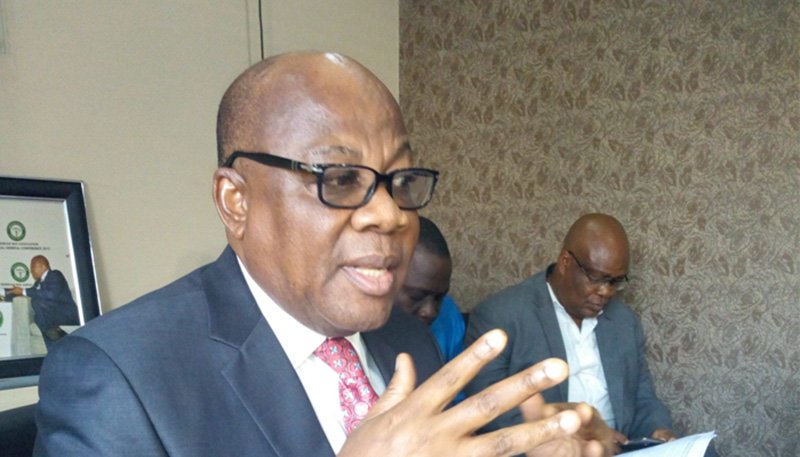
Speaking during the presentation of the report, Agbakoba blamed Nigeria’s governance challenges on what he described as poor constitutional knowledge among political leaders.
He said many public office holders lacked a basic understanding of the Constitution, adding that political discussions in the country often focused more on electioneering than governance and policy substance.
According to him, constitutional competence should become a major criterion in assessing political aspirants ahead of the 2027 general elections.
“It does not matter who becomes president, as long as the person understands the Constitution,” Agbakoba said.
He urged Nigerians and the media to subject political aspirants to stricter scrutiny, particularly on their understanding of constitutional provisions relating to fiscal accountability and governance.