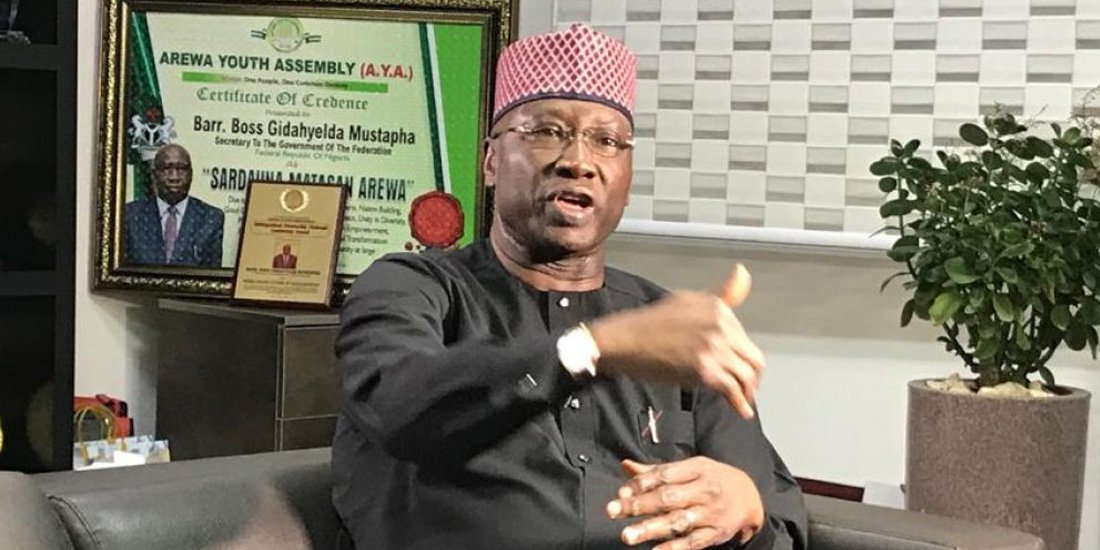
Former Secretary to the Government of the Federation, Boss Mustapha, has called for a comprehensive review of public servants’ salaries to reflect current economic realities, improve workers’ welfare and help tackle corruption in the public service.
Mustapha said the government needed to address disparities in remuneration among Permanent Secretaries, directors, ministers, directors-general and heads of government agencies.
He made the call while delivering the keynote address at a colloquium and the unveiling of the journal of the Council of Retired Federal Permanent Secretaries and Heads of the Civil Service of the Federation (CORFEPS) in Abuja.
The event, held at the Rotunda of Tafawa Balewa House, Ministry of Foreign Affairs, marked the beginning of CORFEPS Week 2026. It was themed “Navigating the Headwinds of Governance: Centrality of the Civil Service.”
Mustapha urged the National Salaries, Incomes and Wages Commission to work with the Federal Civil Service and the Office of the Head of the Civil Service of the Federation to establish a fairer and more sustainable remuneration framework.
He questioned the rationale behind assigning public servants responsibility for managing huge government budgets while paying them what he described as inadequate salaries.
“The National Salaries, Incomes and Wages Commission has an important role in remuneration options. I sometimes feel a little bit embarrassed when I see budget estimates that come out of successive governments over and over, and they are running into trillions of naira and the people that are supposed to manage those trillions of naira earn peanuts,” he said.
Mustapha also criticised what he described as abnormal situations in which some agency heads earn more than ministers and Permanent Secretaries combined.
He argued that a more balanced remuneration system could improve morale, strengthen accountability and encourage greater productivity among public servants.
Citing Singapore’s remuneration system, Mustapha referred to the reported annual salaries of the country’s prime minister and United States President Donald Trump to illustrate differences in public-sector pay structures.