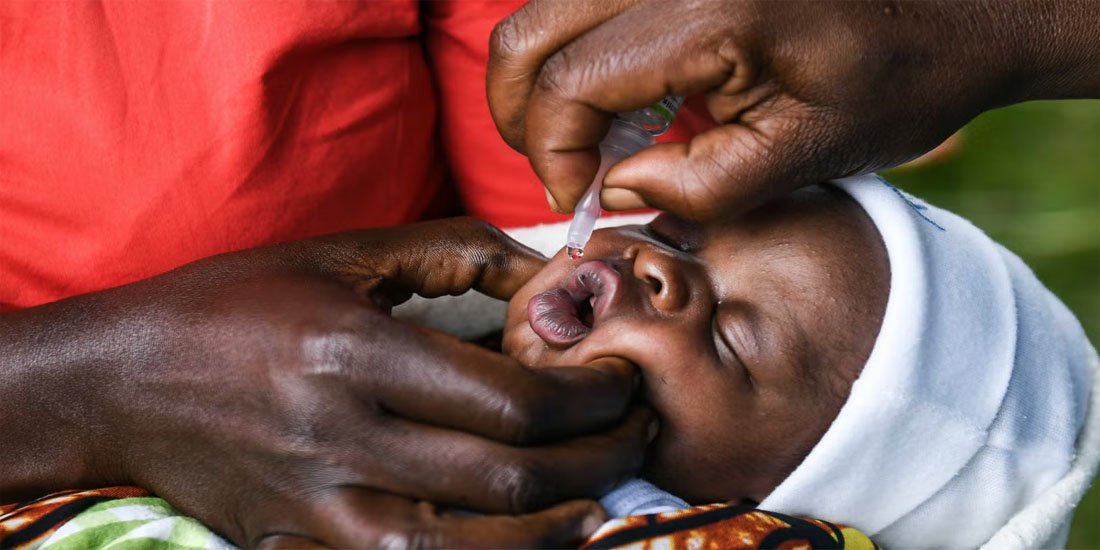
More than 168 million children across 22 African countries received at least one dose of polio vaccine between January and September 2026, according to the World Health Organization, which has warned that financing shortages could jeopardize efforts to stop transmission.
In a World Polio Day message, WHO Regional Director for Africa Mohamed Janabi said the vaccinations were delivered through 55 campaign rounds. He credited health workers, families and community leaders for sustaining the effort despite insecurity, displacement and difficult terrain.
Janabi identified the Lake Chad Basin and the Democratic Republic of the Congo as areas requiring continued attention. He said additional campaigns needed to respond to a type 2 poliovirus outbreak in the DRC lacked funding, while detection of type 1 poliovirus in Madagascar underscored the danger of renewed transmission.
Independent assessments this year confirmed the closure of type 2 outbreaks in Burundi, Ghana, Guinea-Bissau, the Republic of the Congo and Uganda, he said. Although the WHO African Region was certified free of indigenous wild poliovirus in 2020, outbreaks involving other poliovirus strains continue to demand vaccination and surveillance.
Janabi said coordinated campaigns in Angola, the DRC and Namibia reached more than 10 million children in March. Regional laboratories tested over 100,000 polio samples in 2025, with more than 90 per cent processed within agreed timelines. He highlighted the accreditation of a laboratory in Maiduguri and new sequencing methods as advances that could speed outbreak detection.
The WHO official called for stronger routine immunization, sustained domestic funding and predictable international support. He also cited a 2026–2035 regional framework intended to preserve polio expertise and integrate surveillance and response capabilities into broader health systems.
Health authorities stress that receiving one vaccine dose during a campaign is not the same as completing the full recommended immunization schedule.