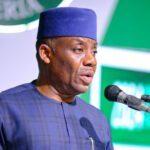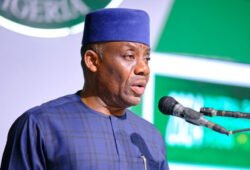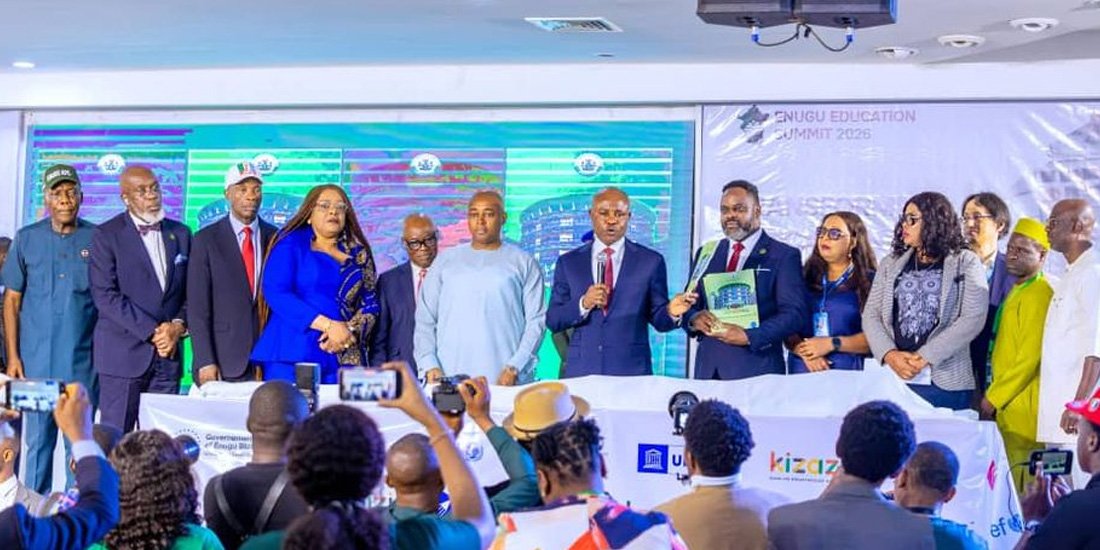
The governor says education must receive sustained funding and announces a policy framework intended to guide the state over the next decade.
Enugu State Governor Peter Mbah has called for a national emergency response to Nigeria’s education challenges, saying the country must treat school funding, teacher development and learning outcomes as urgent economic priorities.
Mbah spoke at the 2026 Enugu Education Summit, where he unveiled the Enugu State Education Policy. He argued that national prosperity depended on whether children acquired the knowledge and practical capabilities required to participate in a changing economy.
The governor said the declaration he was proposing must be reflected in budgets, infrastructure, standards and cooperation among governments, communities, development organizations, and the private sector, rather than remain a political slogan.
He linked poor educational outcomes to persistent poverty, unemployment and weak industrial competitiveness. In his view, building roads or factories without training the people needed to maintain and operate them would limit the value of those investments.
Mbah said his administration had allocated 33 per cent of the state’s annual budget to education for three consecutive years and was developing 268 Smart Green Schools and more than 7,000 classrooms with modern learning tools. Those figures were presented as the administration’s reported investments and programme commitments.
He described the newly unveiled education policy as a framework for the next six to ten years, saying it would guide reforms already under way rather than introduce a disconnected set of projects.
Development partners praised the state’s direction. UNICEF’s representative, speaking through its Enugu field office, highlighted investment in foundational learning, teacher development and digital literacy and said the agency had supported preparation of the Enugu Education Sector Plan 2026–2035.
UNESCO commended the Smart Green Schools initiative, the Centre for Experiential Learning and Innovation and plans to recruit more than 6,000 teachers. The British Council also expressed support for improvements in learning quality and classroom delivery.
Enugu Commissioner for Education Ndubueze Mbah said the policy would provide continuity and direction for the state’s reforms. The event concluded with a tour of an innovation studio displaying work by students from the Smart Green Schools.
The governor’s central argument was that Nigeria would pay a greater long-term price for inadequate education than for the investment required to improve it.