ActionAid Nigeria has warned that the country’s growing debt burden could weaken its ability to finance climate adaptation and essential public services, with women, girls and children likely to bear a disproportionate share of the consequences.
The organisation raised the concern in Abuja at a press conference held with the Euphrates Climate Foundation under the Renewed Women’s Voice and Leadership Project Nigeria.
The briefing followed the release of ActionAid International’s report, ‘Debt Fuels the Climate Crisis: How the Finance Flows’, which said many climate-vulnerable countries were spending far more on debt repayments than on climate action.
ActionAid said Nigeria’s debt-service obligations were projected to consume more than half of government revenue in 2026, potentially constraining resources available for flood prevention, resilient agriculture, healthcare, education, renewable energy and other protective measures.
The organisation linked the fiscal pressure to Nigeria’s continuing exposure to flooding, changing rainfall patterns, rising temperatures, pressure on agricultural production and environmental degradation in oil-producing communities.
It argued that for rural households dependent on farming and fishing, environmental shocks can quickly translate into lost income, higher food prices and deeper poverty.
ActionAid illustrated the human impact with the account of a 59-year-old Niger Delta farmer identified as Finegirl, who described changes in fishing and farming conditions associated with pollution and environmental degradation.
The organisation said women and girls often absorb additional burdens when climate shocks destroy livelihoods or public spending declines, including longer journeys for water, reduced food consumption, additional unpaid care work and greater risk of girls leaving school when household income falls.
It added that children and young people face longer-term consequences through disruptions to education, health and future employment opportunities.
ActionAid also pointed to Nigeria’s electricity deficit, saying a large share of the population remains without reliable power despite the country’s position as a major fossil-fuel producer.
The group called for more domestic public financing for climate adaptation and resilience, including sustainable agriculture, renewable energy, flood prevention and locally led projects.
It also urged government to manage public debt more transparently and sustainably so that debt servicing does not crowd out healthcare, education, social protection and climate resilience.
ActionAid demanded stronger public tracking of climate funds, meaningful participation by affected communities and climate budgets that take account of gender and disability.
The organisation further called for greater support for women-led green enterprises and jobs, including access to skills, technology, finance and markets in renewable energy, agroecology, recycling and sustainable agriculture.
At the international level, ActionAid Nigeria joined calls for restructuring or cancellation of unsustainable debt, more grant-based climate finance and reforms to the global debt system.
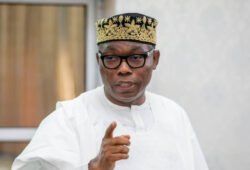
Country Director Andrew Mamedu said climate justice should ultimately be judged by its effect on ordinary people facing environmental and economic pressures, arguing that vulnerable countries should not be forced to accumulate more debt in order to respond to climate change.