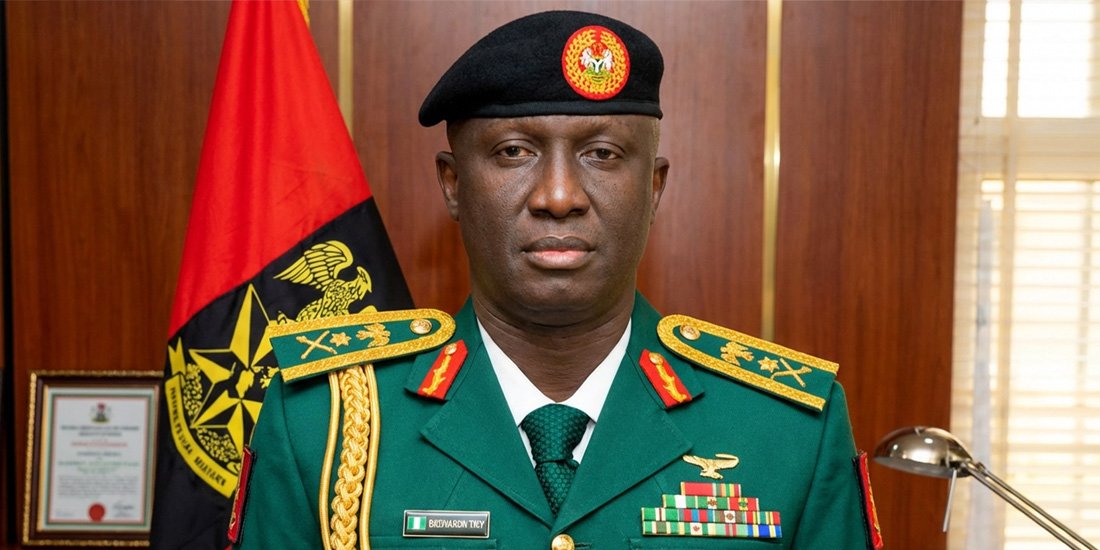
A new book on the leadership approach of Chief of Army Staff Waidi Shaibu argues that the Nigerian Army is increasingly relying on mission command to improve battlefield flexibility and operational effectiveness.
The book, titled “The Shaibu Doctrine: Mission Command and the Remaking of Nigeria’s Army at War,” was unveiled in Abuja.
Lead author A.K. Etta Peters said the work was intended to stimulate debate about military leadership, doctrine and the future development of the Armed Forces.
Mission command gives subordinate commanders clear objectives while allowing them greater discretion over how those objectives are achieved in rapidly changing operational environments.
The authors argue that the approach has improved troop morale, accelerated decision-making and strengthened civil-military relations.
Those assessments reflect the authors’ analysis and are not independent battlefield evaluations.
Peters said the book sought to preserve operational lessons and provide a strategic reference for policymakers, military professionals, scholars and cadets.
Co-author M.S. Abubakar described Nigeria’s fight against insurgency as asymmetric warfare in which hostile actors often operate within civilian environments.
He argued that giving commanders more initiative on the ground was better suited to such a conflict than overly centralized decision-making.
The authors said the approach represented a departure from some previous methods and claimed that the Army had regained ground against insurgent groups.
The book aligns its analysis with President Bola Tinubu’s Renewed Hope Agenda and includes a foreword by the President, according to the authors.
Sunday Adejoh of the Nigerian Defense Academy also co-authored the work.
The publication adds to a growing body of military literature focused on adapting Nigerian doctrine to prolonged counter-insurgency and internal-security operations.