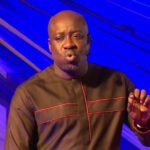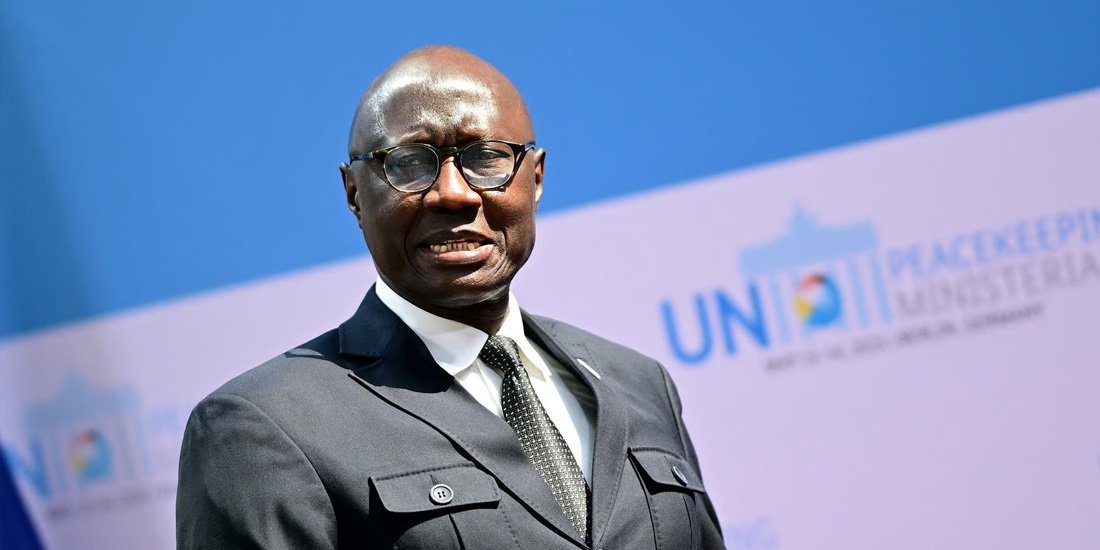
The new President of the ECOWAS Commission, General Birame Diop, has pledged to intensify efforts to rebuild West African unity and reopen meaningful engagement with Burkina Faso, Mali and Niger, which withdrew from the regional bloc.
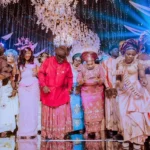
Diop made the commitment on Monday in Abuja during the formal handover ceremony from the outgoing ECOWAS Commission President, Dr Omar Alieu Touray.
His assumption of office comes at a critical period for the Economic Community of West African States, which is facing one of the most significant challenges to regional integration since its establishment.
Burkina Faso, Mali and Niger formally exited ECOWAS following prolonged tensions over military rule, sanctions and the bloc’s position on constitutional governance.
However, Diop said the withdrawal had not changed the geographical, economic and security realities connecting the three countries with the remaining ECOWAS member states.
“We have no other choice, because our brothers, our neighbours, our comrades have left us, but geography remains the same,” he said.
The new ECOWAS chief noted that the regional bloc and the Alliance of Sahel States (AES), comprising Burkina Faso, Mali and Niger, share approximately 5,250 kilometres of borders, with millions of people continuing to move, trade and interact across them.
He said challenges such as terrorism, organised transnational crime, irregular migration and environmental threats do not recognise political boundaries, making cooperation between the two blocs essential.
“So, we have no other choice than to work in a solidary, concerted manner for the interest of both spaces,” Diop said.
The ECOWAS Commission president also described the regional organisation as being “at a crossroads”, urging member states and its institutions to overcome their differences and restore confidence in the integration project.
He called for a united commission capable of responding effectively to the security and socioeconomic challenges confronting West Africa.
“We must have a commission that is engaged, a commission that is solidary, a commission that looks in the same direction,” Diop said.
His call for renewed regional unity received support from Nigeria, with the Minister of State for Foreign Affairs, Ambassador Sola Enikanolaiye, urging the new ECOWAS leadership to deepen engagement with the AES countries.
Representing President Bola Ahmed Tinubu, Enikanolaiye described Burkina Faso, Mali and Niger as “our brothers and sisters in our shared region and with common challenges and aspirations.”
The minister said ECOWAS must evolve into an “ECOWAS of citizens and not of governments”, arguing that regional integration would have limited meaning if ordinary West Africans continued to face barriers to movement, trade, employment and security.
He also stressed the need for greater accountability in the management of ECOWAS resources, noting Nigeria’s substantial financial contributions to the organisation.
“For Nigeria, ECOWAS must continue to justify the huge investments and sacrifices that have been made, not just by the government and people of Nigeria, including the payment of community levy, but also by other member states in the sub-region to sustain the organisation,” he said.
Diop will also inherit the challenge of resolving the political crisis in Guinea-Bissau. He disclosed that ECOWAS leaders had designated Senegal as facilitator following their recent meeting in Lungi and said the commission would work closely with Dakar to find a resolution.
The new ECOWAS leadership is expected to use the organisation’s Vision 2050 as a framework for rebuilding regional cohesion. Diop identified institutional efficiency, stronger unity, innovative financing and the implementation of more than 50 existing ECOWAS programmes among his priorities.
Meanwhile, the outgoing Commission President, Touray, defended the achievements of his four-year tenure, saying he assumed office during a period marked by military coups, terrorism, violent extremism, humanitarian crises and economic pressures.
He highlighted several major regional infrastructure and integration projects, including the African Atlantic Gas Pipeline, Abidjan-Lagos Corridor Highway, electricity interconnection projects and regional trade and transport corridors.
Touray also cited preparations for the proposed launch of the ECO single currency in 2027 and disclosed that the West Africa Rice Investment Roundtable generated an investment pipeline of about $1.54 billion, including $1.47 billion in firm commitments.
He said his administration completed the new ECOWAS headquarters complex in Abuja, supported by China, as well as the ECOWAS Logistics Depot for peace and support operations in Sierra Leone.
Touray said one of the most sensitive challenges faced during his tenure was the withdrawal of Burkina Faso, Mali and Niger, followed by the closure and transfer of ECOWAS assets and offices in the three countries.
He urged his successor to remain focused on the citizens who are ultimately at the heart of the regional integration project.
“Our citizens do not experience ECOWAS through communiqués and protocols. They experience ECOWAS when they cross borders without unnecessary obstacles, when they trade with neighbouring countries, when they find employment and their children receive opportunities, when their communities are secure, and when they can move freely across our region,” Touray said.
As he handed over the leadership of the commission, Touray left Diop with the message: “Unity, Continuity, and Hope.”
He added: “Our borders may divide our territories, but they do not divide our destiny.”