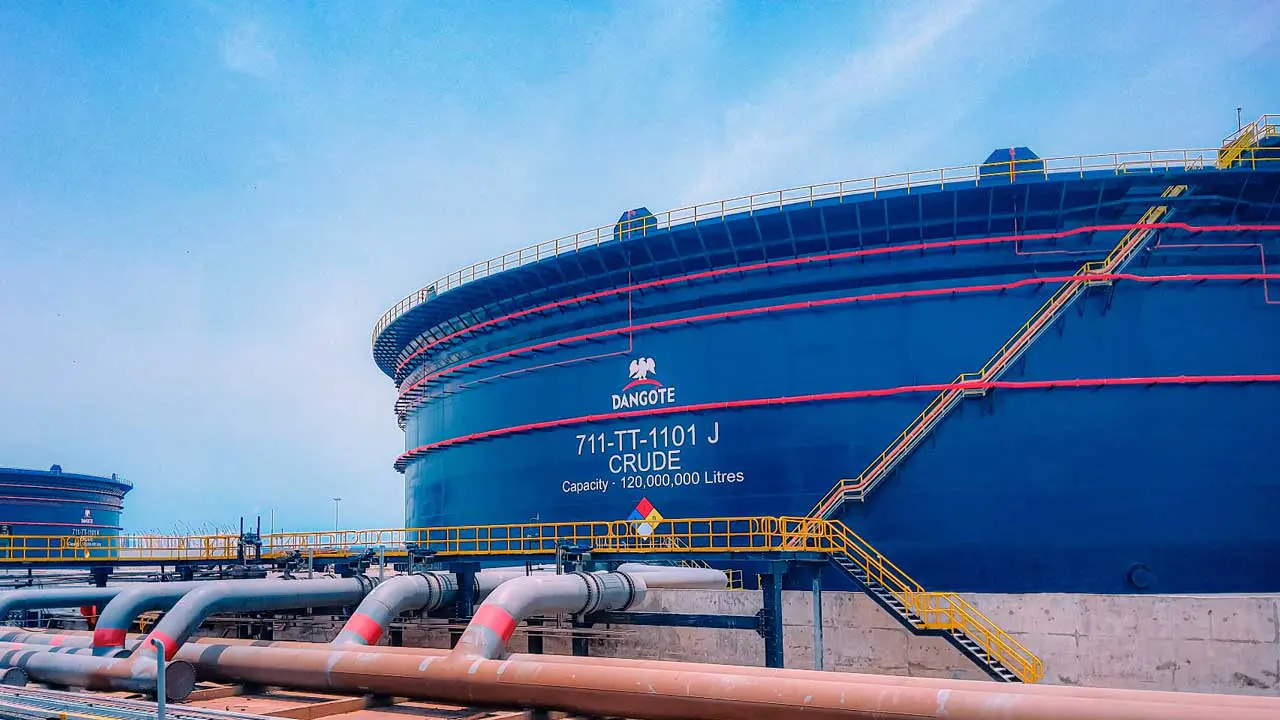
Petrol supply from Dangote Petroleum Refinery fell sharply in July 2026 while imports increased, according to new data from the Nigerian Midstream and Downstream Petroleum Regulatory Authority.
Average daily petrol supply from the refinery declined from 32.5 million litres in June to 25.8 million litres in July.
That represented a month on month reduction of about 21 per cent.
Petrol imports rose from 18.1 million litres per day to 19.7 million litres, an increase of about nine per cent.
Overall petrol receipts fell from 50.6 million litres per day in June to 45.5 million litres in July.
Despite the lower supply, petrol stock sufficiency improved from 19.7 days to 22.4 days.
The level remained below the regulatory minimum benchmark of 30 days.
The figures indicate that Nigeria relied somewhat more heavily on imported petrol in July than in June.
However, imports remained substantially below their level a year earlier.
In July 2025, domestic refineries supplied about 16.5 million litres per day, while imports accounted for roughly 36.1 million litres.
By July 2026, domestic supply had risen significantly year on year while imports had fallen sharply.
The Dangote refinery operated at an average capacity utilisation of 71.09 per cent during July.
It produced about 25.9 million litres of petrol per day and supplied about 25.8 million litres to the domestic market.
The refinery also produced diesel and aviation fuel, with a significant portion of those products exported.
Recorded petrol consumption dropped from 47.4 million litres per day in June to 35.7 million litres in July.
NMDPRA said consumption was measured by volumes trucked into the domestic market.
The lower withdrawals helped improve stock sufficiency despite reduced supply.
Diesel supply increased significantly during the month because imports resumed after being absent in June.
Domestic diesel supply, however, declined slightly.
LPG supply rose, while aviation fuel receipts fell.
Crude oil receipts by domestic refineries also declined from about 632,000 barrels per day in June to 585,000 barrels per day in July.
Domestic gas supply also fell during the month.
The figures show that while domestic refining has significantly reduced Nigeria’s dependence on imported petrol over the past year, monthly supply remains sensitive to changes in refinery output and domestic demand.