US President Donald Trump has said there are currently no talks taking place with Iran, while maintaining that the Strait of Hormuz remains open to maritime traffic, a position that sharply contrasts with Tehran’s insistence that the strategic waterway remains closed.
The conflicting claims underscore the deepening diplomatic deadlock between Washington and Tehran as efforts to reach a broader agreement aimed at ending months of conflict appear to have stalled.
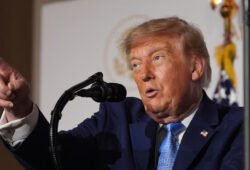
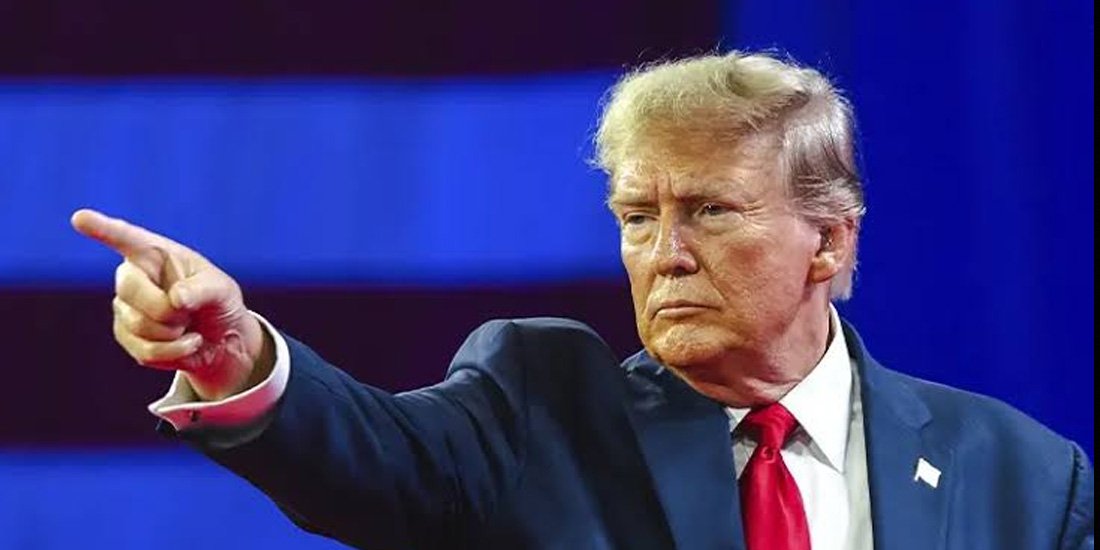
In a post on Truth Social on Tuesday, Trump dismissed reports of ongoing negotiations with Iran.
“There are no talks or conversations going on, or scheduled, with the Islamic Republic of Iran,” Trump wrote.
The US president also asserted that navigation through the Strait of Hormuz had resumed normally.
“The Naval Blockade remains in full force and effect. The Hormuz Strait is open and operating. All water mines have been removed or detonated,” he added.
Trump’s comments appeared to contradict statements made a day earlier by his son-in-law and special envoy, Jared Kushner, who reportedly said discussions with Iran were continuing and had become more active than ever.
The prolonged standoff has continued to fuel uncertainty in global markets, with oil prices climbing amid concerns over energy supplies and disruption to one of the world’s most important shipping routes.
Shipping Disruptions Continue
Despite Washington’s assertions that conditions in the Gulf have improved, reports of maritime security incidents continued to emerge.
The United Arab Emirates said it detected two ballistic missiles launched from Iran, marking the first such incident reported since a May attack on Fujairah Port.
According to the UAE Defence Ministry, the missiles were believed to have been aimed at maritime traffic before falling into the sea. Iran rejected the allegation, with Foreign Ministry spokesman Esmaeil Baghaei describing the claims as “baseless”.
The UAE also announced the suspension of trade activities, commercial exchanges and financial transactions with Iran, citing growing concerns over regional instability and its impact on international security.
Further adding to concerns, the United Kingdom Maritime Trade Operations reported that a vessel transiting the Strait of Hormuz was struck by an unidentified projectile on Tuesday. The incident reportedly damaged the ship’s engine room and caused one crew casualty, while Omani authorities moved to assist the remaining crew members.
Iran Maintains Position On Strait
Iranian officials continue to insist that the Strait of Hormuz will remain closed until Washington fulfills conditions contained in an interim agreement reached in June.
Speaking before parliament, senior Iranian negotiator Mohammad Baqer Qalibaf said Tehran was demanding the removal of sanctions on Iranian oil exports, the release of frozen Iranian assets, an end to the blockade of Iranian ports and a halt to military operations.
The remarks came after the expiration of a 60-day deadline set under a memorandum of understanding signed on June 17, which aimed to establish a framework for broader negotiations covering Iran’s nuclear programme and US sanctions.
The agreement ultimately collapsed amid disagreements over control and security arrangements in the Strait of Hormuz, a key global energy corridor through which roughly one-fifth of the world’s oil and liquefied natural gas supplies traditionally pass.
Iran Signals Openness To Dialogue
Despite the escalating tensions, Iranian officials have signaled that diplomacy remains an option.
Mohammad Mokhber, an adviser to Iran’s Supreme Leader, said Tehran remained open to discussions with the United States but rejected any suggestion that negotiations should be viewed as capitulation.
According to Iranian media reports, Mokhber stated that economic sanctions and military pressure would not alter Iran’s position, adding that the country would continue to defend its security and national interests while avoiding a broader war.
However, reports indicate that Iranian leaders remain concerned about the economic effects of the conflict, including rising hardship, domestic discontent and mounting pressure on the country’s economy.
Oil Markets React To Uncertainty
The continued uncertainty surrounding the conflict and the status of the Strait of Hormuz has kept global energy markets on edge.
Benchmark Brent crude prices, which surged to as high as $126 per barrel during the height of the conflict, remained elevated despite recent fluctuations. Futures settled slightly higher on Tuesday at just above $91 per barrel.
US officials have also warned that additional economic measures could be imposed on Tehran if diplomatic efforts fail to produce a lasting resolution.
“There are many levers the president can crank harder in the weeks and months ahead,” a US administration official said, signaling the possibility of further sanctions and economic pressure on Iran.
As tensions persist and negotiations remain uncertain, the situation continues to be closely watched by governments, energy markets and the international shipping industry.