Four years after raising Nigeria’s largest corporate bond by a power generation company, Geregu Power Plc has defaulted on its debt obligations, sending fresh concerns through the country’s capital market.
The N40.09 billion senior unsecured bond was recently classified by FMDQ Securities Exchange as being in “credit default” after the company failed to meet its eighth semi-annual coupon payment and fourth scheduled principal repayment.
Of the total bond value, N6.03 billion was due and remained unpaid as of July 28, 2026, according to Faruk Yusuf of Segun Sulaiman & Co. The missed payment marks the first default since the bond was issued in 2022.
How the bond began
Geregu issued the N40.09 billion bond on July 28, 2022, at a fixed coupon rate of 14.50 per cent and with a seven-year tenor running until July 28, 2029.
The bond was the first tranche of a N100 billion multi-instrument debt programme and was, at the time, the largest corporate bond issued by a Nigerian power generation company.
The offer, which was oversubscribed, was intended to finance the acquisition of the 434-megawatt Geregu 1 power plant.
At the time, Geregu was controlled by Amperion Power Distribution Company, which held about 99.9 per cent of the company. Amperion was controlled by businessman Femi Otedola, who also chaired Geregu’s board.
Geregu subsequently listed on the Nigerian Exchange’s Main Board by introduction in October 2022, becoming the first power generation company to gain admission to the main board.
Expansion plans and Geregu II bid
In 2023, Geregu obtained a $4 million bid bond in favour of the Bureau of Public Enterprises as part of its bid to acquire Geregu II.
However, there was no public confirmation that the final award of the Geregu II project was made to Geregu Power.
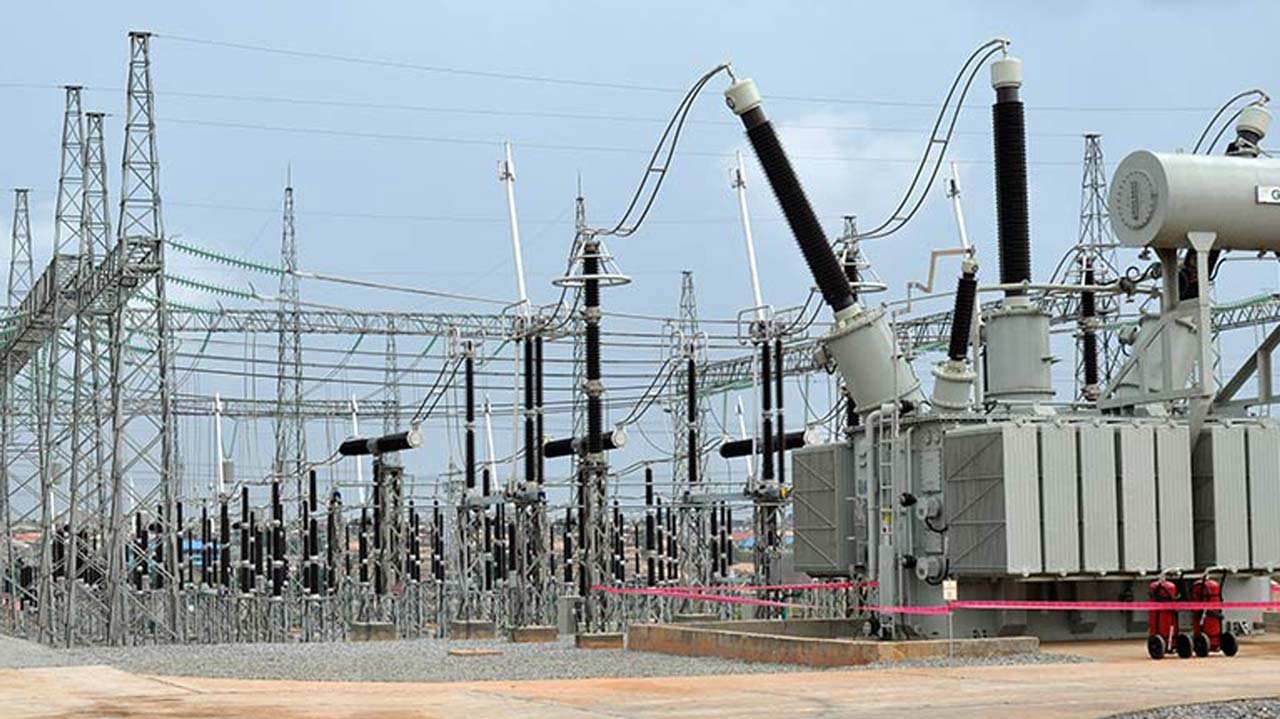
Geregu II is a 434MW gas-fired open-cycle power plant located in Ajaokuta, Kogi State.
The company also pursued an ambitious expansion programme. In May 2024, Geregu and Siemens Energy signed a memorandum of understanding to develop plans that would potentially increase capacity at the Geregu 1 site from about 435MW to 1,200MW.
The proposed expansion included upgrading the existing plant, introducing combined-cycle operations and developing new generation facilities.
Ownership changes
A major shift occurred in December 2025 when MA’AM Energy Limited, a vehicle linked to former Zamfara State Governor Abdulaziz Yari, acquired a 95 per cent stake in Amperion Power Distribution.
The transaction, valued at about $750 million, gave MA’AM Energy indirect control of roughly 77 per cent of Geregu’s issued share capital.
The deal was financed by a consortium of Nigerian banks led by Zenith Bank.
Following the transaction, Otedola and Calvados Global Services exited, while several members of the previous board resigned. Otedola also stepped down as chairman.
Dividend payout amid ownership transition
In January 2026, Geregu’s reconstituted board approved its 2025 financial statements and recommended a dividend of N9 per share.
The proposed payout amounted to N22.5 billion, representing about 82.5 per cent of earnings based on 2.5 billion outstanding shares.
Shareholders subsequently approved the dividend at the company’s annual general meeting held virtually on June 30.
Yari, who indirectly controlled about 1.921 billion shares through MA’AM Energy’s interest in Amperion, emerged as the largest beneficiary, receiving an estimated N17.2 billion.
Turbine maintenance hits revenue
Geregu’s financial position came under further pressure in 2026 after the company embarked on a major maintenance programme for its gas turbines.
The overhaul, which the company said was aimed at preserving the plant’s long-term reliability and capacity, was estimated to cost about N61.47 billion.
However, taking generating capacity offline during the maintenance severely affected revenue.
Second-quarter revenue plunged to N419.1 million from N55.87 billion recorded in the corresponding quarter of 2025.
For the first half of 2026, revenue fell 78.7 per cent to N18.65 billion, while profit after tax dropped 88 per cent to N2.54 billion. Net profit margin also declined to 13.34 per cent from 23.23 per cent a year earlier.
The financial pressure came against the backdrop of a wider liquidity crisis in Nigeria’s power sector.
Power generating companies were reportedly owed about N6.8 trillion as of March 2026, while gas suppliers were owed approximately N3.3 trillion.
At the same time, gas-fired power plants were receiving less than half of their required fuel supplies, contributing to a decline in national electricity generation.
FMDQ declares bond in default
On August 9, 2026, FMDQ Securities Exchange updated the listing status of Geregu’s Series 1 bond, confirming that the company had missed both its eighth semi-annual coupon and fourth scheduled principal repayment.
The instrument was consequently classified as being in “credit default.”
The default occurred roughly midway through the bond’s seven-year tenor, rather than at maturity, making the development particularly significant for investors and rating agencies.
Geregu’s share price has also weakened significantly, falling 27.7 per cent year-to-date to N825.70 as of August 14, compared with N1,141.50 at the beginning of January.
Rating agencies divided
Credit rating agencies have taken different positions on Geregu’s financial outlook.
GCR Ratings retained the company’s national-scale long-term issuer rating at A(NG) with a stable outlook, arguing that generation and revenue could recover after completion of the maintenance programme.
Agusto & Co, however, withdrew its A- rating on both Geregu and the bond, citing the missed payments and concerns over the reliability of financial information available for assessing the company’s creditworthiness.
What triggered the default?
Questions have also emerged over the whereabouts of funds originally raised through the bond.
According to Yusuf, the bond proceeds were initially intended to finance the acquisition of another power plant. After that transaction failed, the unused funds were reportedly placed in an interest-bearing escrow account to cover future coupon and principal payments.
Yusuf said documents exchanged during the December 2025 ownership transition indicated that the escrow funds were still intact.
However, when the new management attempted to access the funds to meet the N6.03 billion payment due on July 28, it allegedly discovered that the money had already been used by the previous owners.
The development has raised questions about the company’s financial management during the ownership transition.
Former special adviser to the Central Bank governor on infrastructure and industry, Ebipere Clark, also questioned whether Geregu’s strong profitability under its previous ownership adequately reflected amounts owed to it by the Nigerian Bulk Electricity Trading Plc.
Clark noted that gas expenses alone typically account for a significant portion of a thermal power generator’s monthly costs.
Government arrears may provide relief
Despite the challenges, Geregu is among the power generating companies expected to benefit from the Federal Government’s planned repayment of outstanding debts owed to the sector.
The company is reportedly among the generating companies awaiting a share of N500 billion in power-sector arrears, which forms part of a broader N4 trillion settlement programme being implemented through a sovereign-guaranteed bond arrangement involving NBET Finance Company.
Analysts believe the eventual release of the funds could provide some relief to Geregu’s liquidity position, although the timing of the payment remains outside the company’s control.
For now, Geregu’s bond default has transformed what was once regarded as one of Nigeria’s leading listed power-sector success stories into a major test of corporate governance, debt management and the resilience of the country’s electricity market.