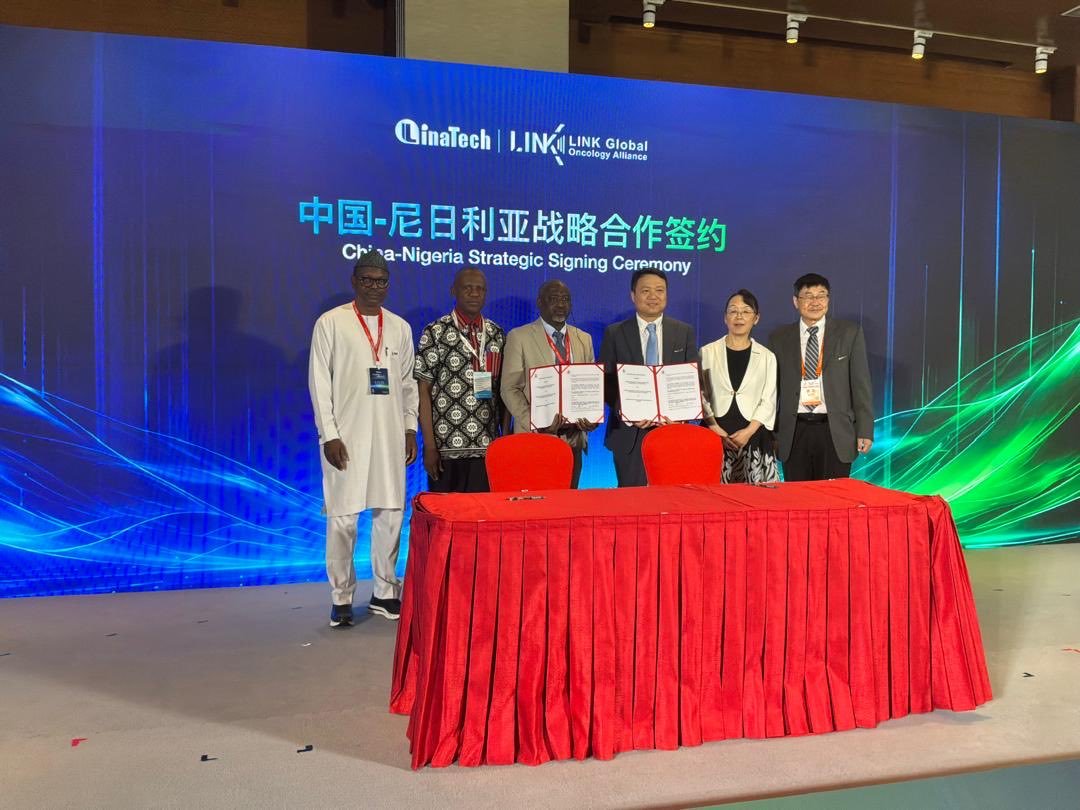
The Federal Government has signed agreements with China aimed at strengthening Nigeria’s radiotherapy workforce, technical capacity and access to quality cancer care.
The agreements were signed during the visit of the Minister of State for Health and Social Welfare, Dr Iziaq Adekunle Salako, to Beijing. They include a Memorandum of Understanding with the Chinese government and a separate strategic cooperation agreement with medical technology company LinaTech.
The partnerships will provide technical support for radiotherapy, joint research and development, academic exchanges and professional training. They also include plans for a designated clinical training centre in Nigeria, with the long-term goal of developing it into a West African hub for advanced radiotherapy training.
Under the arrangement, Nigerian radiation oncologists, medical physicists, radiotherapy technologists and biomedical engineers will also benefit from fellowship and specialised training opportunities in China.
The Federal Government is further pursuing institutional partnerships between Nigerian cancer centres, the National Institute for Cancer Research and Treatment (NICRAT) and selected tertiary hospitals and leading Chinese cancer institutions to strengthen clinical practice, research and technical expertise.
Salako stressed that investment in equipment must be matched with adequate human resources and technical support.
“Machines without people are monuments,” the minister said, emphasising the importance of skilled personnel, equipment maintenance, spare-parts availability and continuous technical support to sustain radiotherapy services.
The cooperation comes as Nigeria prepares to procure 35 additional linear accelerators between 2026 and 2028 as part of efforts to expand the country’s cancer treatment capacity.
The initiative is being implemented under the Federal Government’s broader health-sector reforms, including President Bola Ahmed Tinubu’s Renewed Hope Agenda and the Nigeria Health Sector Renewal Investment Initiative.
Nigeria’s engagement in Beijing also included the inauguration of the Radiotherapy Working Group of the China-Africa Hospital Alliance and the country’s confirmation as a founding African partner in the Link Global Oncology Alliance.
Speaking at China-Hospeq 2026, Salako identified further areas for Nigeria-China cooperation, including medical equipment, diagnostics, digital health, artificial intelligence, local manufacturing and health security.
“Nigeria has not come to Beijing to just observe innovation in oncology. We have come to help shape it, and to take it home,” he said.
The Federal Government said a joint work plan, with designated focal persons and quarterly milestones, would be developed to ensure the agreements translate into practical training, technical support and maintenance capacity across Nigeria’s radiotherapy network.
The initiative is expected to strengthen Nigeria’s cancer treatment infrastructure, improve access to radiotherapy and build domestic expertise needed to sustain investments in the sector.