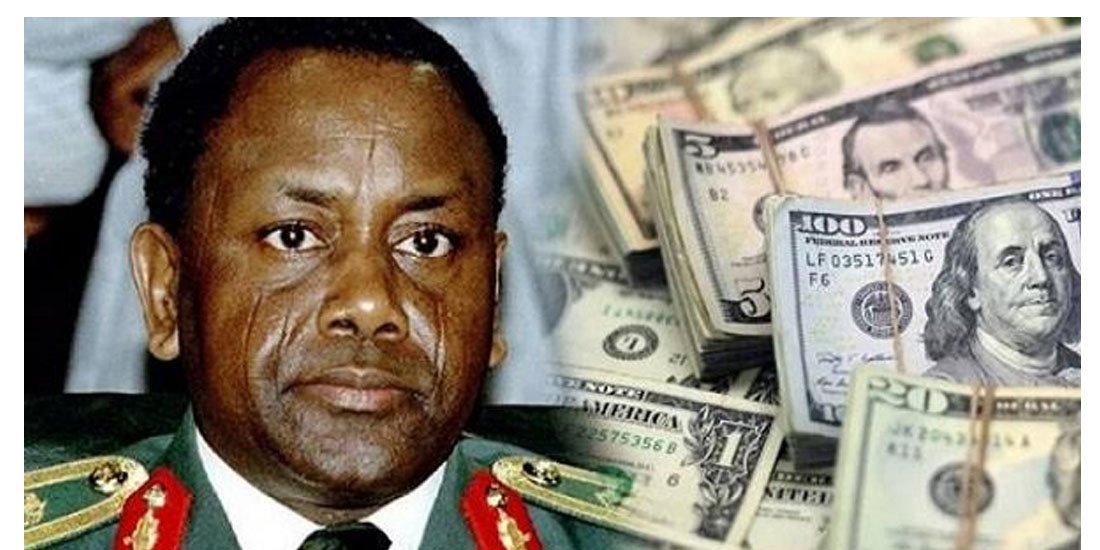
A fresh debate over the legacy of late former military ruler Sani Abacha has intensified following comments by former Head of State Abdulsalami Abubakar, who recently claimed that the widely reported “Abacha loot” was not stolen public funds but money allegedly set aside to protect Nigeria from possible international sanctions.
In an interview published by The Sun newspaper on June 26, 2026, Abdulsalami maintained that Abacha did not loot the nation’s treasury. According to him, the funds were deliberately reserved for Nigeria on the advice of former Libyan leader Muammar Gaddafi and former Benin Republic President Mathieu Kérékou to cushion the country against potential financial restrictions by the international community.
However, the position has drawn strong criticism, with legal and political analysts arguing that the claim contradicts official investigations, government records and court rulings spanning more than two decades.
Investigation That Led to Asset Recovery
Critics point out that shortly after assuming office in 1998, Abdulsalami himself established a Special Investigation Panel (SIP) to probe allegations of corruption during the Abacha administration.
The panel, headed by Deputy Commissioner of Police Peter Gana, reportedly uncovered extensive financial misconduct involving fraudulent security funding requests allegedly approved by Abacha. According to the panel’s findings, large sums of money were withdrawn from the Central Bank of Nigeria in foreign currencies and transferred through the National Security Adviser to members of the Abacha family and close associates.
The investigation also traced numerous properties in Nigeria and abroad allegedly acquired with the diverted funds.
Forfeiture Decree
Following the investigation, Abdulsalami’s administration enacted the Forfeiture of Assets (Certain Persons) Decree No. 53 of 1999, authorising the seizure of cash, properties and other assets linked to Abacha, his relatives and associates.
The decree stated that the listed funds and properties had been “acquired corruptly and illegally” and ordered their forfeiture to the Federal Government.
Recovered assets reportedly included more than $636 million, £75 million, 30 million Deutsche Marks, ₦547 million, shares in two Sierra Leonean refineries and numerous properties located across Lagos, Abuja, Kano and Zaria.
International Recoveries
Successive Nigerian administrations continued efforts to trace and recover Abacha-linked assets abroad.
Under former President Olusegun Obasanjo, Nigeria hired Swiss lawyer Enrico Monfrini to pursue international asset recovery, leading to the return of more than $1.2 billion.
The administrations of former Presidents Goodluck Jonathan and Muhammadu Buhari also secured additional recoveries from foreign jurisdictions.
During Buhari’s tenure, agreements were reached with the Swiss government to ensure that repatriated funds would be invested in development projects under international monitoring to promote transparency.
Court Decisions
The opinion notes that in legal proceedings conducted in Nigeria, Switzerland, France, the United Kingdom, the United States and Jersey, neither Abacha’s family nor associates successfully argued that the recovered funds were legitimate government savings.
Instead, several courts ordered forfeiture of assets linked to the late military ruler and his associates.
One notable case involved businessman Raj Bhojwani, who was convicted of money laundering in Jersey and ordered to forfeit $45 million to Nigeria.
France’s Planned Repatriation
The article also recalls that in 2023, France announced plans to return an additional $150 million in assets linked to Abacha.
According to French authorities, the funds would be repatriated for development projects benefiting Nigerians, in line with agreements reached with the Nigerian government.
Call for Retraction
The opinion concludes that Abdulsalami’s recent comments are inconsistent with actions taken during his own administration, particularly the establishment of the Special Investigation Panel and the signing of the 1999 Forfeiture Decree.
It argues that the former military ruler should withdraw his remarks, apologise to Nigerians and acknowledge the official records documenting the recovery of assets traced to the Abacha regime.