Nigeria Liquefied Natural Gas (NLNG) Limited has warned that Nigeria risks losing its competitiveness in the global liquefied natural gas (LNG) market unless urgent steps are taken to expand gas processing capacity and address persistent feedstock supply challenges.
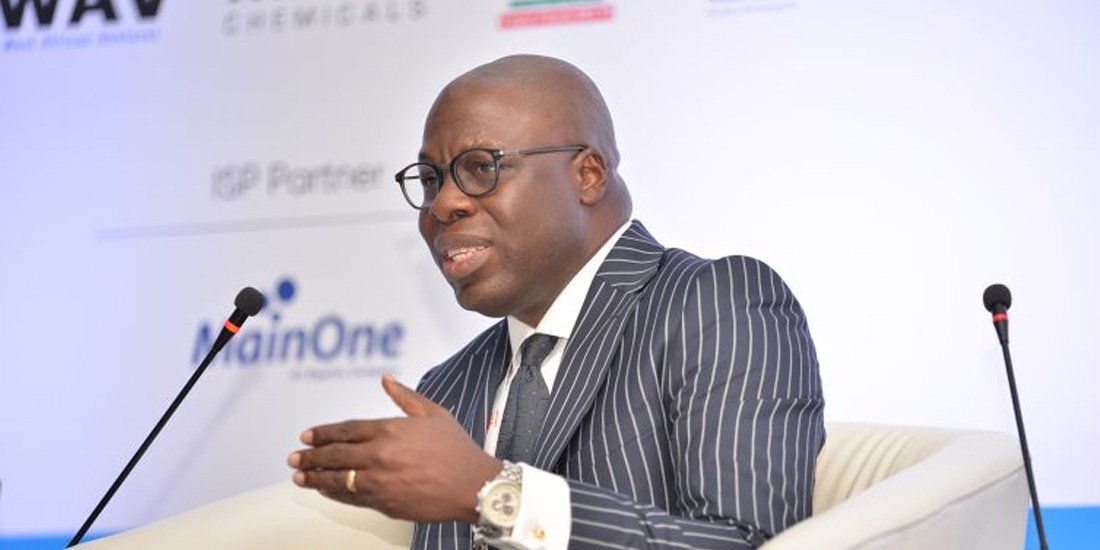
Managing Director and Chief Executive Officer of NLNG, Mr. Adeleye Falade, raised the concern during the company’s Facts and Figures Presentation in Lagos, revealing that Nigeria’s share of the global LNG market has declined from six per cent to five per cent and could fall as low as two per cent if current challenges persist.
According to Falade, Nigeria is gradually losing ground to countries that are expanding their LNG production capacity more aggressively despite having smaller gas reserves.
“Three or four years ago, NLNG held about six per cent of the global LNG market. Today, we are down to five per cent. If we do nothing, we could fall to three per cent or even two per cent. That is not our ambition. We want Nigeria to remain relevant in the global LNG market,” he said.
He noted that although Nigeria possesses over 215 trillion cubic feet of proven natural gas reserves, with an estimated additional 600 trillion cubic feet yet to be proven, the country’s liquefaction capacity remains limited to 22 million tonnes per annum (MTPA) through NLNG’s six-train facility on Bonny Island.
Falade contrasted Nigeria’s performance with that of competing LNG exporters, noting that Australia, with significantly smaller gas reserves, has built processing capacity of about 88 MTPA, while Malaysia also surpasses Nigeria despite having fewer gas reserves.
He warned that unless Nigeria accelerates investments in gas infrastructure and processing facilities, it risks losing billions of dollars in export earnings, foreign investment and strategic relevance in the global energy market.
To reverse the trend, NLNG is expanding its operations through the ongoing Train 7 project, which is expected to increase production capacity by 35 per cent, from 22 MTPA to 30 MTPA. The company has also commenced preliminary work on proposed Trains 8, 9 and 10 as part of its long-term growth strategy.
Falade, however, identified inadequate gas supply as a major obstacle to expansion, noting that the company has increasingly relied on third-party suppliers following the divestment of some international oil companies from onshore assets.
He disclosed that between 70 and 75 per cent of NLNG’s gas supply now comes from suppliers outside its shareholder companies and revealed that the company signed gas supply agreements with six third-party suppliers last year to strengthen feedstock availability.
Despite these efforts, Falade confirmed that the force majeure declared on the Bonny Island plant in 2022 due to flooding remains in effect, although discussions are ongoing on sustainable conditions for its withdrawal.
He urged government and industry stakeholders to accelerate upstream gas development, improve pipeline infrastructure and support investments capable of unlocking Nigeria’s vast gas resources.
Falade stressed that the next few years would be critical in determining whether Nigeria consolidates its position among the world’s leading LNG exporters or continues to lose market share to faster-growing competitors such as Qatar, Australia and the United States.