The Federal Government has reaffirmed its commitment to improving access to quality eye care services across Nigeria, unveiling plans to provide at least five million free pairs of spectacles and conduct 25,000 free cataract surgeries by the end of 2027 under the Effective Spectacle Coverage Initiative Nigeria (Jigi-Bola 2.0).
The initiative, a flagship programme under the Renewed Hope Health Connect agenda, is aimed at reducing preventable blindness and visual impairment, particularly among vulnerable and underserved populations.
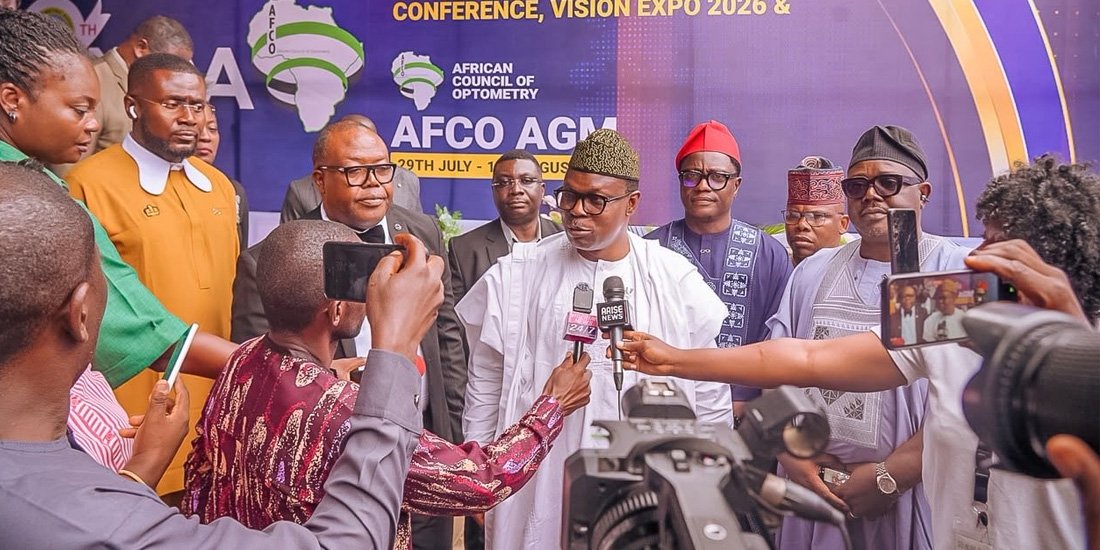
The Minister of State for Health and Social Welfare, Dr. Iziaq Adekunle Salako, announced the expansion while declaring open the 49th Annual National Scientific Conference of the Nigerian Optometric Association (NOA) and the African Council of Optometry (AFCO) Annual General Meeting in Abuja.
Addressing participants at the conference, themed “Optometrists in a Changing Africa: From Diversity to Unity,” Salako described eye health as a critical public health and development priority, noting that millions of Nigerians continue to suffer from preventable vision problems that affect their productivity, independence and quality of life.
He said the Jigi-Bola 2.0 programme reflects President Bola Tinubu’s determination to improve access to eye care by taking essential services directly to communities.
“The Jigi-Bola 2.0 programme is an iconic mobile eye care initiative that stands as a testament to Mr. President’s determination to reduce the heavy burden of eye problems in Nigeria by reaching vulnerable populations right where they live,” the minister said.
Salako disclosed that the programme has already screened nearly two million Nigerians and distributed more than 1.3 million free reading glasses, with approximately 66 per cent of beneficiaries receiving spectacles for the first time.
He explained that the initiative forms part of the implementation of the National Eye Health Strategic Development Plan (2024–2028), which seeks to strengthen integrated eye care services across primary, secondary and tertiary healthcare facilities nationwide.
The minister also highlighted other interventions by the Federal Ministry of Health and Social Welfare, including the launch of the Nigeria Glaucoma Guidelines and Toolkit to standardise the diagnosis, treatment and referral of glaucoma cases across the country.
According to him, ophthalmologists from all 36 states and the Federal Capital Territory have been trained to implement the new guidelines, while more than 2,220 Primary Health Care workers across 16 states have been equipped to conduct vision screening and make appropriate referrals under the Jigi-Bola 2.0 programme.
Salako commended Nigerian optometrists for their contributions to community eye health, describing them as indispensable partners in the fight against avoidable blindness through early detection, treatment and referral services.
He reaffirmed the Federal Government’s commitment to working closely with the Nigerian Optometric Association and other stakeholders to expand access to quality eye care services and advance universal eye health coverage in line with the Renewed Hope Agenda.