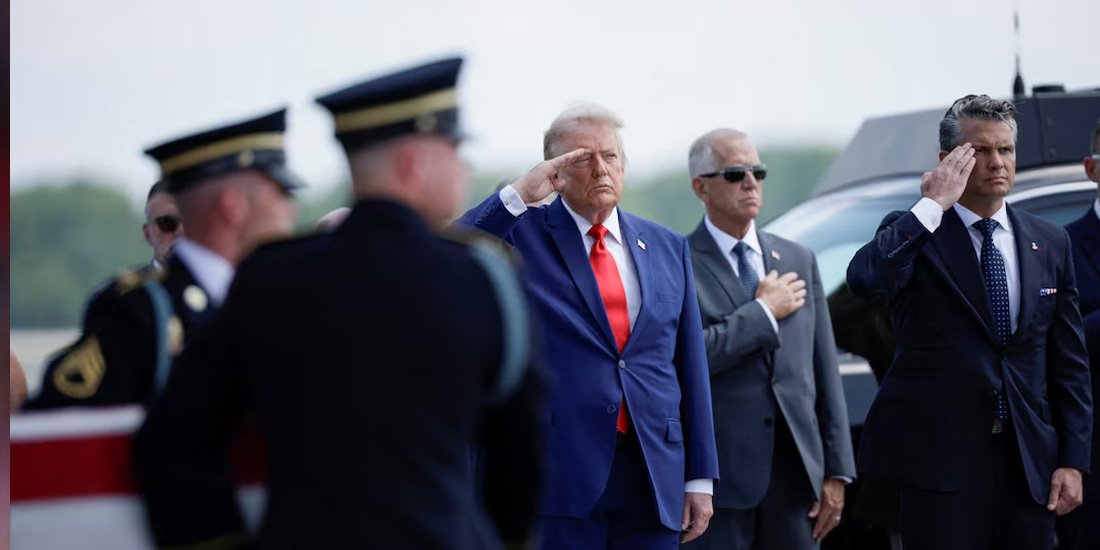
United States President Donald Trump attended a dignified transfer ceremony on Wednesday for four American service members killed during the ongoing conflict with Iran, as their remains were returned to the United States in flag-draped caskets.
The ceremony took place at Dover Air Force Base in Delaware, the military facility where the remains of US personnel who die during overseas operations are traditionally received.
The event came amid growing scrutiny of the Trump administration over the escalating conflict, which has resulted in mounting military casualties, rising financial costs and increasing political debate in Washington.
Since the war began in February, 18 American service members have been killed, while more than 450 troops have been injured. The conflict has also reportedly cost the United States an estimated $37.5 billion and contributed to rising global oil prices and heightened tensions across the Middle East.
The fallen service members were identified as First Lieutenant Tyler James Feehan, 25; Sergeant Angel S. Rampersad, 28; Private Isabella Gonzales, 19; and Sergeant Michael Emmanuel Swinton, 30.
According to the US Department of Defense, Feehan, Rampersad and Gonzales were killed when an Iranian missile struck their sleeping quarters at Muwaffaq Salti Air Base in Jordan, where they were serving with US Army air defence units.
Swinton died in Erbil, Iraq, during a controlled detonation involving an attack drone.
The Pentagon also disclosed that about 100 US service members had been injured since July 7, noting that approximately 96 per cent of those wounded had since returned to active duty.
The deaths of the four troops intensified bipartisan calls in Congress for greater clarity on the administration’s military strategy and long-term objectives in the conflict.
Meanwhile, a Reuters/Ipsos poll indicated that a majority of Americans expected the conflict with Iran to continue for an extended period, while public support for sustained military action remained limited.
The prolonged conflict also emerged as a key political issue ahead of November’s midterm elections, with rising fuel prices and increasing cost-of-living pressures posing fresh challenges for the Trump administration as Republicans sought to retain control of Congress.