The National Drug Law Enforcement Agency has declared suspected drug kingpin Nnamuka Uchenna, alias Odogwu, and three associates, Emmanuella Iroka, Kingsley and Ekechi Chijioke, also known as Ekene Okwunaga, wanted over their alleged operation of a clandestine methamphetamine laboratory, while freezing bank accounts linked to the suspects containing a combined N9,840,873,566.66.
The declaration followed an order from Justice Iniekenimi Oweibo of the Federal High Court in Owerri, Imo State, after NDLEA filed an application in Suit No. FHC/OW/CS/22/2026 on July 3, 2026, stemming from the discovery of a clandestine laboratory at Isiozi, Umuaka, in Njaba local government area of Imo State on February 25, 2026, where 18.4 kilogrammes of methamphetamine and other items were recovered. Investigation and forensic analysis allegedly linked the four suspects, who have reportedly gone into hiding, to the laboratory and a wider drug syndicate. Beyond declaring them wanted, NDLEA secured interim forfeiture orders covering multi billion naira assets allegedly acquired by syndicate members, including a filling station, multi storey residential buildings and four SUVs bearing registration numbers RLU 148 AJ, KJA 563 FZ, BWR 249 DY and FST 208 HU.
NDLEA Chairman Buba Marwa commended the officers involved, calling the operation a clear demonstration of the agency’s determination to dismantle trafficking networks and attack the financial systems sustaining them. This latest operation reaffirms our unwavering commitment to tracking down drug kingpins and their collaborators, no matter how sophisticated their network or how long they attempt to evade justice, he said, arguing that freezing nearly N10 billion and forfeiting properties and luxury vehicles sends a strong warning to criminals seeking to launder drug proceeds through legitimate businesses, and pledged the agency would keep deploying financial and forensic intelligence to trace, freeze and forfeit assets tied to trafficking. I want to assure Nigerians that the Agency will not relent in going after the fleeing suspects and anyone else linked to this syndicate, he said, urging anyone with information on the wanted suspects’ whereabouts to contact the nearest NDLEA office or use its confidential reporting lines.
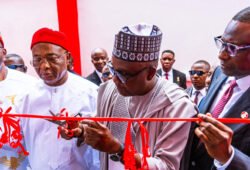
Separately, at a brief ceremony at NDLEA headquarters on Friday, July 17, 2026, Marwa signed a Memorandum of Understanding with the Nigerian Copyright Commission to jointly combat drug trafficking and piracy, a partnership he said reflects a shared reality even though the two agencies’ mandates might look unrelated on the surface. Our experience at the frontlines of drug law enforcement has shown us time and again that criminal networks rarely confine themselves to a single illicit enterprise, he said, the same syndicates that traffic in narcotics are often found dabbling in other forms of economic crime, including the piracy of intellectual works that rightfully belong to Nigeria’s creatives, our musicians, filmmakers, writers, and software developers, proceeds from one illegal trade frequently find their way into financing the other, this is the criminal value chain we must disrupt together. He said the two agencies will exchange intelligence, coordinate joint operations, build officer capacity and share technical resources, backed by a Joint Working Committee meeting regularly to ensure the agreement translates into real results, stressing the partnership is about more than law enforcement, it protects public health and social wellbeing while safeguarding the country’s creative talent from the theft piracy represents.
NCC Director General John Asein called the alliance a significant milestone in the growing culture of inter agency collaboration within Nigeria’s public service, arguing that large scale piracy, often wrongly dismissed as a minor or victimless offence, is in reality a highly organised, profitable criminal enterprise that deprives creators and investors of income, destroys jobs, discourages investment, reduces government revenue and weakens the creative economy’s foundations. International experience has demonstrated that organised copyright piracy is rarely an isolated criminal activity, he said, across several jurisdictions, the same criminal syndicates, logistics channels, financial networks and distribution systems used to traffic pirated goods have also been linked to other forms of transnational organised crime, including narcotics trafficking, money laundering, smuggling and cyber enabled offences, arguing this connection makes NDLEA NCC collaboration both necessary and timely, since the same clandestine supply chains, transportation routes, storage facilities and financial channels used for illicit drugs may equally move pirated books, films, music and software, with piracy proceeds potentially laundered into other criminal activity. By combining our respective mandates, expertise and intelligence capabilities, he said, we can more effectively identify criminal networks, trace illicit financial flows, disrupt illegal supply chains and dismantle the structures that sustain organised criminal enterprises, calling the partnership a chance for the Copyright Commission to draw on NDLEA’s internationally recognised expertise in intelligence led law enforcement, strategic investigation and financial intelligence.