The Federal Mortgage Bank of Nigeria (FMBN) has announced that it financed 6,911 housing units in 2025, representing a 300 per cent increase compared to the 2,165 housing units delivered in 2024.
The bank also disclosed that it is expanding access to affordable housing through strategic partnerships and innovative financing products targeted at low-income earners and workers in the informal sector.
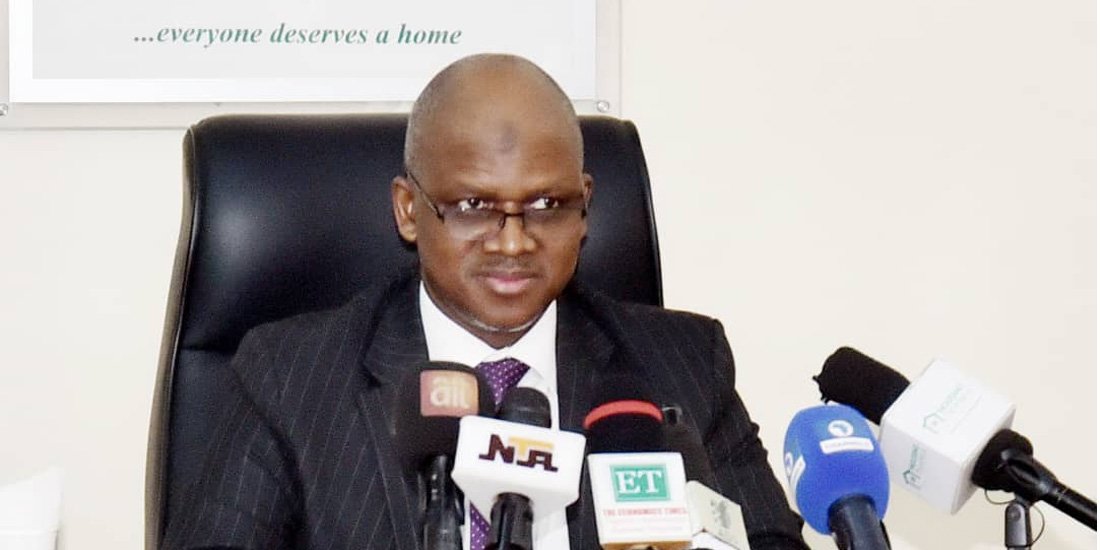
Managing Director and Chief Executive of FMBN, Shehu Osidi, made the disclosure in Abuja during the 2026 FMBN Day at the Africa International Housing Show (AIHS), where he emphasised the need for collaboration in addressing Nigeria’s housing deficit.
Speaking on the theme, “Leveraging Partnerships for Sustainable Affordable Housing for Low-Income and Informal Workers,” Osidi said government alone could not solve the country’s housing challenges, particularly for informal sector workers who constitute more than two-thirds of Nigeria’s workforce but remain largely excluded from conventional mortgage financing.
He noted that many workers in the informal sector face challenges such as irregular income, inadequate documentation, and inability to meet equity contribution requirements under traditional mortgage arrangements, making customised housing finance solutions essential.
According to him, FMBN’s achievements in the past year were driven by strong partnerships with the Federal Ministry of Housing and Urban Development, the National Assembly, the Central Bank of Nigeria (CBN), the Nigeria Deposit Insurance Corporation (NDIC), state governments, organised labour, developers, Primary Mortgage Banks, cooperative societies and development finance institutions.
Osidi revealed that project loan disbursements rose significantly from ₦31.5 billion in 2024 to ₦79 billion in 2025, describing the figure as one of the highest levels of construction financing ever recorded by the bank.
He said the investments had generated thousands of jobs for artisans, engineers, architects, quantity surveyors, suppliers, transporters and other stakeholders across the housing value chain.
The FMBN boss added that regular National Housing Fund (NHF) mortgage disbursements increased to ₦8.2 billion, representing a 38 per cent increase over the previous year.
He further disclosed that under the bank’s Rent-to-Own Scheme, 367 beneficiaries acquired homes valued at over ₦7.1 billion, while the Home Renovation Loan programme recorded its highest performance to date, with ₦13.8 billion disbursed to 15,290 beneficiaries, representing an 86 per cent increase from 2024.
Osidi also announced that NHF refund payments increased to ₦15.6 billion in 2025, benefiting 55,068 contributors, compared to 44,333 beneficiaries recorded in the previous year.
He said loan recoveries also witnessed remarkable improvement, rising from ₦14 billion in 2024 to ₦27.3 billion in 2025.
According to him, the bank is currently financing 3,139 housing units under President Bola Tinubu’s Renewed Hope Housing Programme, including ₦27 billion for the Ibeju-Lekki housing project in Lagos, ₦19.9 billion for the Karsana project in Abuja, ₦10 billion for Port Harcourt and ₦7.8 billion for Enugu.
Osidi said confidence in the National Housing Fund Scheme continues to grow, citing the decision of the Oyo State Government to rejoin the scheme after 27 years and the signing of a Memorandum of Agreement by the Kano State Government to return after more than two decades outside the programme.
He further announced the introduction of new mortgage products aimed at expanding financial inclusion, including a Non-Interest Mortgage Product, a Diaspora NHF Mortgage, and a Rent Assistance Loan.
In addition, he disclosed that FMBN is finalising a partnership with the Federal Government Staff Housing Loans Board to provide multiple housing finance options for federal civil servants, covering home ownership, renovation, rent support and incremental housing development.
Osidi stressed that sustainable affordable housing can only be achieved through stronger collaboration among governments, financial institutions, developers, investors, labour unions, cooperative societies and other stakeholders.
He reaffirmed the bank’s commitment to making affordable housing accessible not only to workers in formal employment but also to artisans, traders, farmers, transport operators, small business owners and other self-employed Nigerians.
“Nigeria’s housing deficit continues to affect millions of citizens, with the burden falling disproportionately on low-income earners and informal sector workers,” he said.
“These Nigerians contribute immensely to national productivity but remain the most financially excluded from formal housing finance systems. They deserve mortgage products designed around their realities rather than conventional banking assumptions.”
Responding on behalf of stakeholders, Osidi reiterated that partnerships remain the most sustainable pathway to delivering affordable housing at scale, adding that FMBN would continue to develop innovative financing models capable of addressing the housing needs of millions of Nigerians.