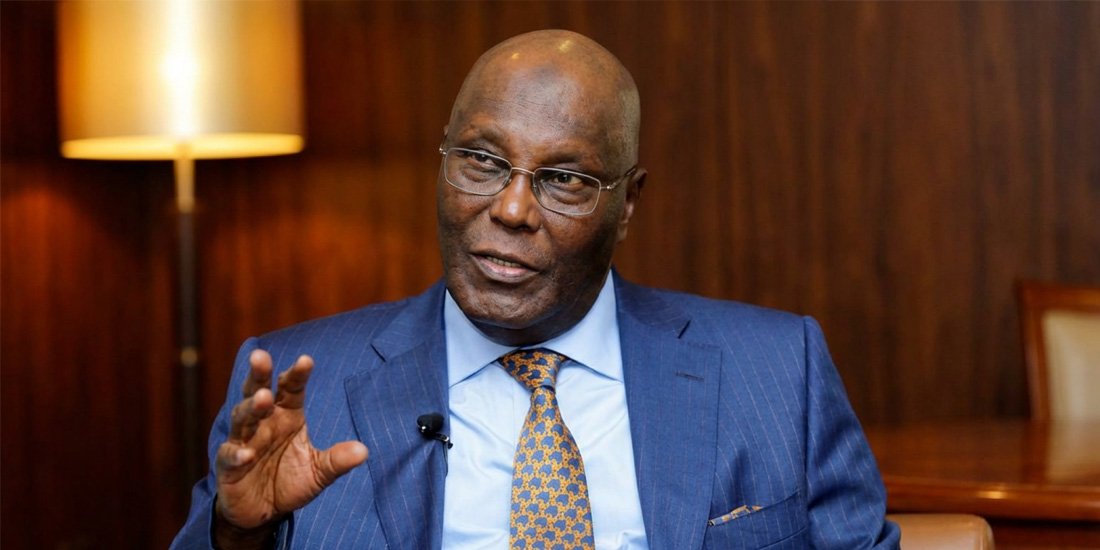
Former Vice President and African Democratic Congress (ADC) presidential candidate, Atiku Abubakar, has criticised the Federal Government over the reported approval of a uniform ₦50,000 examination fee for the West African Examinations Council (WAEC) and the National Examinations Council (NECO) beginning in 2027, describing the policy as a move that would price millions of Nigerian children out of education.
In a statement issued by his Senior Special Assistant on Public Communication, Phrank Shaibu, Atiku also condemned the recent increase in fees for Federal Unity Colleges, arguing that the decisions were economically insensitive and inconsistent with the government’s constitutional responsibility to make education accessible to all Nigerians.
According to the former vice president, the latest fee increases come at a time when many families are grappling with record inflation, rising food prices, increased transportation costs, higher electricity tariffs, stagnant incomes and widespread unemployment.
He said education remains the greatest instrument of social mobility and should not become a privilege reserved for the wealthy.
“A government that genuinely believes in the future of its people does not erect financial barriers between children and education. It removes them. Education is not a privilege reserved for the wealthy; it is the birthright of every Nigerian child,” Atiku said.
The ADC presidential candidate warned that the fee hikes could worsen Nigeria’s education crisis, noting that the country already has one of the world’s largest populations of out-of-school children.
He said estimates indicate that between 10.5 million and 15 million Nigerian children and youths are currently out of school, adding that government policies should focus on expanding access to education rather than introducing measures that could increase the number.
According to Atiku, the higher fees for Unity Colleges and the proposed WAEC and NECO examination charges would disproportionately affect children from low- and middle-income families, many of whom are already struggling to meet basic living expenses.
He argued that the consequences of limiting access to education extend beyond the classroom, warning that children denied education are more vulnerable to poverty, unemployment, child labour, crime, drug abuse and insecurity.
The former vice president further described the proposed examination fee increase as a major obstacle to tertiary education, noting that many academically qualified students from poor backgrounds may be unable to afford the qualifying examinations required for university admission.
He also criticised what he described as inadequate investment in public universities, saying the country’s tertiary institutions currently admit only between 500,000 and 700,000 students annually despite more than two million applicants seeking admission each year.
Atiku maintained that rather than expanding educational infrastructure and increasing admission capacity, the government was introducing policies that would further restrict access to education.
He also questioned the administration’s promotion of the Nigerian Education Loan Fund (NELFUND), arguing that education loans offer little benefit to students who cannot afford secondary school fees or examination costs in the first place.
According to him, genuine education reform should prioritise affordable primary and secondary education, improved school infrastructure, increased university capacity and measures to ensure that poverty does not prevent any child from accessing education.
Calling for an immediate policy reversal, Atiku urged President Bola Tinubu to suspend the increase in Unity School fees and the proposed ₦50,000 WAEC and NECO examination fee, while convening a stakeholders’ dialogue on sustainable funding for public education.
He also called on the Federal Government to invest more in public schools, recruit qualified teachers, expand tertiary education infrastructure and ensure that no Nigerian child is denied access to education because of financial hardship.
Atiku said the ADC remains committed to making education more affordable and accessible, promising that an ADC-led administration would reverse policies that place education beyond the reach of ordinary Nigerian families.