The Dangote Group has unveiled an ambitious expansion plan that will raise its total refining capacity across Africa to 2.1 million barrels per day (bpd), while also deepening its footprint on the continent through new investments and strategic partnerships.
The expansion will see the Group’s refining capacity grow to 1.4 million bpd in Nigeria, complemented by a proposed 700,000 bpd refinery in Kenya to serve the East African market.
The company also announced plans to invest an additional $46 billion between 2026 and 2028 across its refining, cement and fertiliser businesses as part of a broader strategy to drive industrialisation and economic integration across Africa.
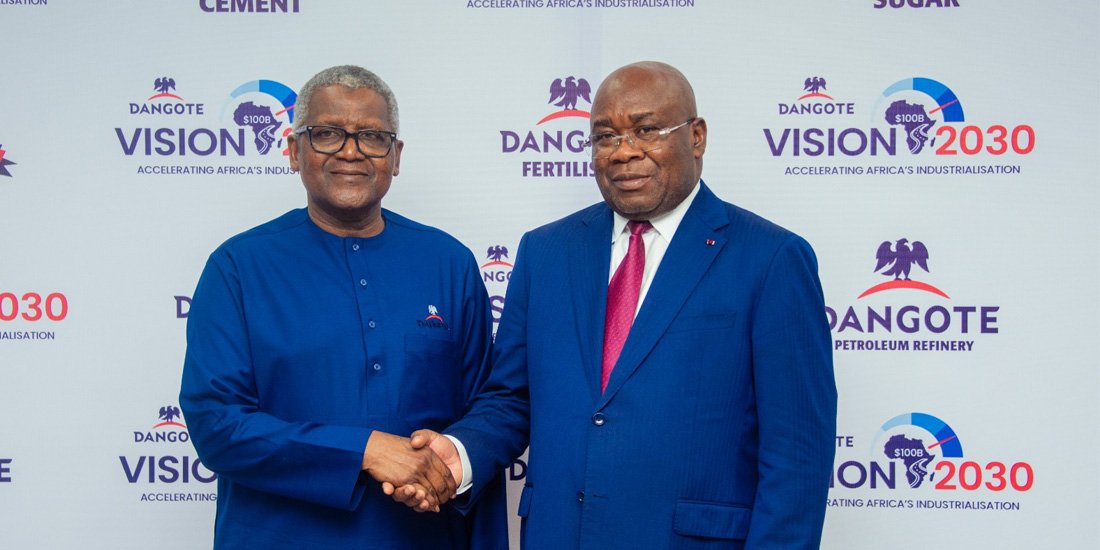
The announcement came as the Republic of the Congo’s national oil company, Société Nationale des Pétroles du Congo (SNPC), began discussions with Dangote Petroleum Refinery & Petrochemicals on a strategic partnership aimed at improving the supply of refined petroleum products and strengthening regional energy cooperation.
Leading a Congolese delegation on a visit to the Dangote Refinery in Lagos, SNPC Managing Director, Maixent Raoul Ominga, described the facility as a landmark achievement for Africa and expressed his country’s interest in forging a long-term partnership with the company.
“We have visited this remarkable refinery, which represents a major industrial achievement for Africa. The Republic of the Congo has refining capacity, and we are keen to explore strategic cooperation that will strengthen the supply of refined petroleum products while creating value for both organisations,” Ominga said.
According to him, discussions focused on potential collaboration in refining operations, petroleum product supply, energy security, industrial development and knowledge sharing.
Ominga praised the Dangote Group for demonstrating that African companies can successfully finance, build and operate world-class industrial infrastructure. He also commended the company’s investments in the Republic of the Congo, particularly in the cement sector, saying they have contributed to expanding local production and improving access to construction materials.
President and Chief Executive of Dangote Industries Limited, Aliko Dangote, reaffirmed the company’s commitment to Africa’s economic transformation through strategic investments and regional partnerships.
“We are for Africa, not just Nigeria. Tell us what you need, and we will see how we can work together,” Dangote said.
He noted that the Dangote Refinery has set a new benchmark for fuel quality on the continent by producing petroleum products that meet international standards, reducing Africa’s dependence on imported refined products and improving access to cleaner fuels.
Providing further insight into the company’s long-term strategy, Group Vice President, Oil and Gas, Devakumar Edwin, disclosed that the planned expansion would increase Dangote’s overall refining capacity to 2.1 million barrels per day through operations in Nigeria and the proposed refinery in Kenya.
Edwin also revealed that the Group intends to commit $46 billion in fresh investments between 2026 and 2028 across its core businesses, including refining, cement and fertiliser, to support industrial growth and economic development across the continent.
The meeting highlighted a growing commitment by both Dangote Industries and SNPC to strengthen Africa’s energy value chain, enhance regional cooperation and promote self-sufficiency in refined petroleum products.
Among those present at the meeting were Group Executive Director, Commercial, Oil and Gas, Dangote Industries Limited, Fatima Aliko Dangote; Adviser to the President of the Republic of the Congo, Peggy Ndongo; and advisers to the SNPC Managing Director, Aymar Ebiou and Norbert Mabiala.
The planned partnership is expected to deepen energy collaboration between Nigeria and the Republic of the Congo while supporting the broader objectives of the African Continental Free Trade Area (AfCFTA) by encouraging greater intra-African trade and industrial integration.