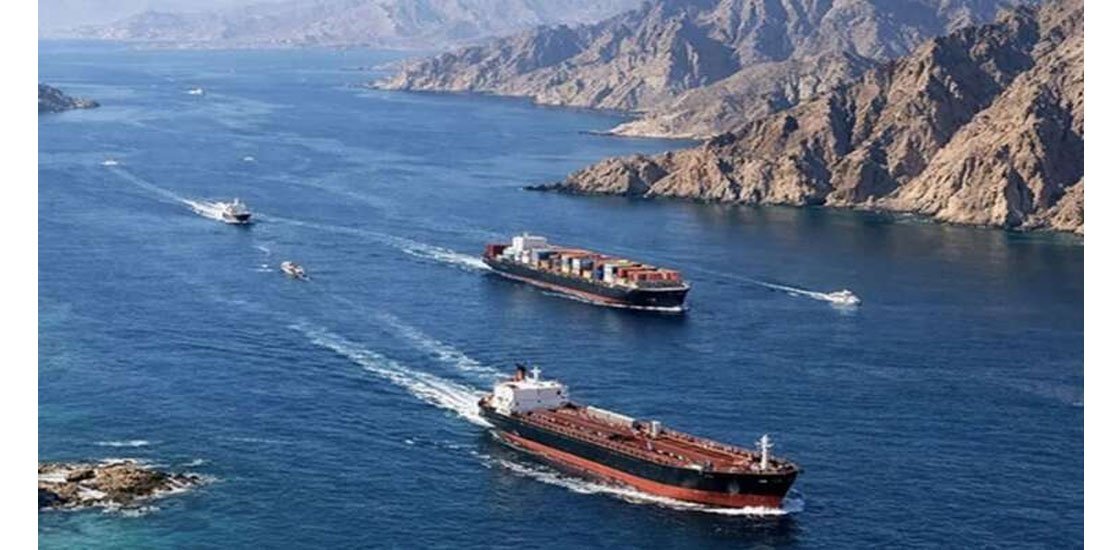
Tehran — Iran has reaffirmed its authority over the Strait of Hormuz, warning that any attempt to circumvent its preferred shipping routes could trigger further regional tensions, even as reports suggest Tehran and Washington are preparing for renewed diplomatic talks.
According to Axios, the United States and Iran have agreed to halt direct attacks and meet in Doha, Qatar, on Tuesday to resolve their dispute over the strategically vital Strait of Hormuz, one of the world’s most important oil shipping lanes.
Iranian Foreign Minister Abbas Araghchi maintained that responsibility for managing navigation through the strait rests exclusively with Tehran. He cautioned that any effort by foreign powers or commercial vessels to bypass Iran’s designated routes would result in “tension and escalation.”
The reported diplomatic breakthrough comes only days after both countries exchanged military strikes despite signing a Memorandum of Understanding (MoU) aimed at ending hostilities across multiple fronts.
US and Iran Exchange Fresh Strikes
The latest escalation followed US airstrikes on Iran’s Qeshm Island and the coastal cities of Sirik and Bandar-e Lengeh after Washington accused Tehran of targeting commercial shipping in the Strait of Hormuz.
Iran responded by launching missiles and drones against US military positions in Bahrain and Kuwait, arguing that the vessels involved had violated its navigation rules and accusing Washington of breaching the peace agreement.
The reported ceasefire and planned Doha talks are viewed as an attempt to prevent the conflict from spiralling further and to restore stability to one of the world’s busiest maritime trade routes.
New Jersey Governor Questions Trump’s War Strategy
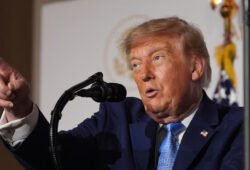
In the United States, New Jersey Governor Mikie Sherrill sharply criticized President Donald Trump’s handling of the conflict, saying the administration has failed to clearly define its objectives.
“The administration’s objectives have shifted repeatedly. The costs have soared. And we all deserve a clear explanation of what the Trump Administration thinks it is actually achieving to make America safer,” Sherrill wrote in a series of social media posts.
She argued that the administration’s stated goals have evolved from dismantling Iran’s missile programme to ending its nuclear ambitions, pursuing regime change, and reopening the Strait of Hormuz.
“To date, he has accomplished none of these goals,” she said, noting that the waterway had remained open before the conflict escalated.
Regional Tensions Persist
Despite reports of renewed diplomacy, tensions remain high across the Middle East.
Iran’s Supreme Leader, Mojtaba Khamenei, has called for the prosecution of US and Israeli leaders over what he described as war crimes committed against Iran over the past two years.
In Lebanon, Parliament Speaker Nabih Berri rejected a proposed trilateral framework agreement involving Lebanon, Israel and the United States, insisting it fails to safeguard Lebanon’s national interests and “will not be implemented.”
Meanwhile, violence continued elsewhere in the region. Israeli military operations reportedly killed four Palestinians in Gaza, while Syria condemned Israeli incursions into the provinces of Quneitra and Deraa, warning that the operations risk further escalating regional instability.
Outlook
The planned talks in Doha could represent the first significant diplomatic effort to ease tensions since the latest round of hostilities erupted. However, with both sides continuing to trade accusations over responsibility for recent attacks and the security of the Strait of Hormuz, analysts caution that achieving a lasting agreement will remain a difficult challenge.