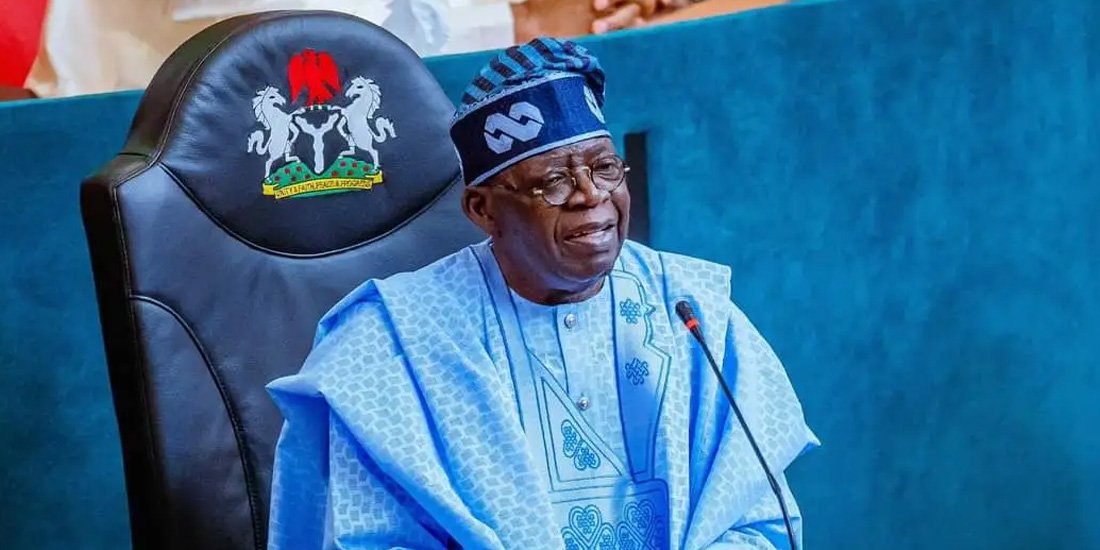
President Bola Tinubu has reaffirmed Nigeria’s commitment to eliminating substance abuse and illicit drug trafficking through innovative, evidence-based interventions, describing the drug menace as a major threat to public health, national security and national development.
The President said the impact of drug abuse extends beyond individual users, disrupting families, schools, workplaces and communities while fueling insecurity across the country.
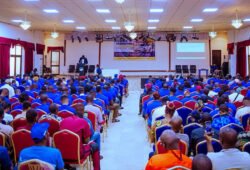
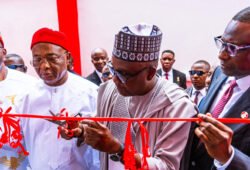
Tinubu made the pledge in Abuja during the grand finale of activities marking the 2026 International Day Against Drug Abuse and Illicit Trafficking. He was represented by the Attorney General of the Federation and Minister of Justice, Prince Lateef Fagbemi (SAN).
The event also saw the Chairman and Chief Executive Officer of the National Drug Law Enforcement Agency (NDLEA), Brigadier-General Mohammed Buba Marwa (retd.), disclose that the agency seized over 5.3 million kilograms of illicit drugs valued at more than N1.5 trillion within the last 18 months.
Similarly, the National Human Rights Commission (NHRC) expressed concern over the growing incidence of drug abuse and illicit trafficking, warning that the trend poses significant threats to public health, human dignity, national security and sustainable development.
Speaking on this year’s theme, “The World Drug Problem: Persisting Issues, New Challenges, Innovative Responses,” Tinubu said his administration was tackling the challenge through a coordinated and multi-dimensional strategy.
According to him, the Renewed Hope Agenda is focused on addressing the root causes of drug abuse by expanding access to education, promoting skills acquisition, supporting entrepreneurship, creating employment opportunities and implementing social intervention programmes targeted at vulnerable groups.
“My administration remains committed to creating an environment in which young Nigerians can thrive and succeed,” the President said.
Tinubu stressed that efforts to reduce drug demand must be complemented by stronger measures to disrupt supply through enhanced border security, improved surveillance at airports, seaports and land borders, better intelligence gathering and closer collaboration with regional and international law enforcement agencies.
He noted that the increasingly sophisticated nature of global drug trafficking requires governments to adopt technology-driven and data-backed approaches.
“We must continue to strengthen our capacity to collect, analyse and apply data so that emerging trends are identified early, interventions are properly evaluated and strategic decisions are informed by facts,” he said.
The President added that strengthening forensic laboratories, improving technological capabilities and supporting scientific research would enhance Nigeria’s ability to detect emerging drugs and precursor chemicals.
He also called for sustained support for the country’s criminal justice system, saying law enforcement agencies, investigators, prosecutors and the judiciary all have critical roles to play in dismantling criminal networks and ensuring offenders are brought to justice.
Tinubu commended the leadership and personnel of the NDLEA for what he described as remarkable achievements in reducing both drug supply and demand.
He said the agency’s professionalism, courage and commitment had earned Nigeria recognition within Africa and across the international community.
The President urged civil society organisations, development partners and citizens to strengthen collaboration in building safer, healthier and drug-free communities.
Earlier, NDLEA Chairman, Brigadier-General Marwa, said Nigeria remains resolute in confronting what he described as one of the greatest threats to public health, social stability and national security.
He said the agency had recorded significant operational successes over the past year through intelligence-led operations that dismantled major drug syndicates and intercepted illicit substances across airports, seaports, land borders and remote communities.
Marwa highlighted the successful dismantling of the notorious Amadi Simon drug cartel through intelligence-sharing with the United States Drug Enforcement Administration (US-DEA) and law enforcement agencies in Greece, France and Switzerland.
He also disclosed that the NDLEA disrupted a sophisticated cross-continental methamphetamine trafficking network, leading to the arrest of a 63-year-old Nigerian drug kingpin, Innocent Anochili, alongside three Mexican nationals and six Nigerian accomplices.
According to him, the agency also uncovered and dismantled an industrial-scale clandestine methamphetamine laboratory hidden in a forest at Tapa Village in Ibarapa North Local Government Area of Oyo State, where a Mexican national and four others were arrested.
Marwa said the agency’s sustained five-year offensive against drug trafficking had resulted in the arrest of 234 drug barons coordinating major criminal networks across the country.
Providing details of the agency’s recent achievements, he disclosed that within the last 18 months, the NDLEA arrested 29,262 suspects, seized 5,305,484.88 kilograms of assorted illicit drugs worth over N1.5 trillion and secured the conviction of 5,225 offenders.
“These numbers represent more than just data; they represent millions of lives saved, billions of naira in criminal wealth confiscated and a future reclaimed for our youths,” he said.
Marwa, however, maintained that enforcement alone would not end the drug crisis.
He said the agency had intensified its Drug Demand Reduction initiatives through its War Against Drug Abuse (WADA) campaign, conducting 6,645 drug prevention and awareness programmes in schools, places of worship, workplaces, markets, motor parks, correctional centres and communities nationwide.
According to him, the campaign has equipped nearly five million Nigerians with the knowledge and life skills needed to resist drug abuse.