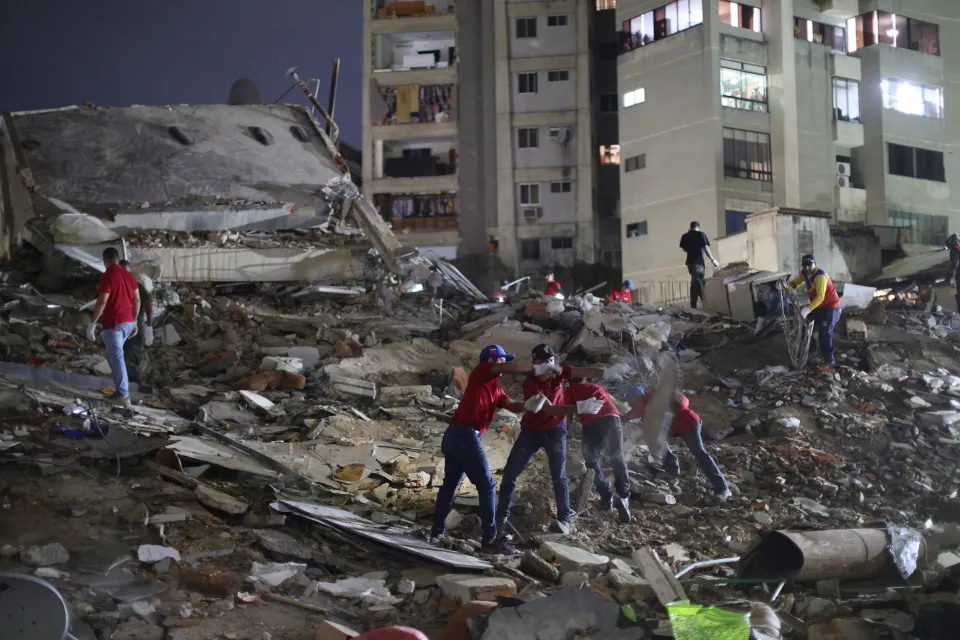
Acting President Delcy Rodríguez has declared the hard-hit coastal state of La Guaira a “disaster zone” as search and rescue operations continue.
At least 164 people have been killed and 971 injured after powerful earthquakes struck Venezuela, with 30 aftershocks recorded in the aftermath. Rescue teams are combing through collapsed buildings as the full scale of the disaster remains unknown.
La Guaira: A Region Struck Before
The worst-affected area is La Guaira, one of Venezuela’s smallest yet most economically vital states. Nestled along the northern Caribbean coast just miles from the capital Caracas, the region is home to Simón Bolívar International Airport and one of the country’s two major ports.
Images and videos on social media show widespread devastation — a grim echo of December 1999, when catastrophic landslides killed thousands in the same area. The enormous rocks from those slides still scar the landscape today, a reminder that La Guaira never fully recovered from that earlier tragedy.
Aid Mobilises as UN Warns of Deepening Crisis
International relief efforts are underway. The Venezuelan Red Cross confirmed it is “operational and responding,” though the organisation warns the “full human impact” is not yet known. Priority needs include search and rescue, emergency shelter, healthcare, clean water, and sanitation.
The United Nations is preparing a rapid response team to support its existing Venezuela operation. UN humanitarian chief Tom Fletcher warned the disaster “risks deepening existing vulnerabilities” — noting that eight million Venezuelans were already in need of humanitarian assistance before the earthquakes struck. He called for a “massive collective effort” to back the government-led response.
A $200 million reconstruction fund has been established through the International Monetary Fund to help rebuild damaged homes and infrastructure.
Communications Disrupted, Hampering Relief
Internet connectivity dropped to just 59% of normal capacity immediately after the earthquakes, recovering partially to around 77% hours later, according to monitoring group NetBlocks. The disruption — caused by power cuts and infrastructure damage — is hampering rescue coordination and limiting information coming out of the affected areas.
The UN’s Independent International Fact-Finding Mission on Venezuela has urged the country’s telecommunications regulator to “fully unblock access to social media and all media outlets,” warning that “access to information will be a matter of life and death.” Venezuela currently ranks 159th out of 180 countries in the 2026 Reporters Without Borders Press Freedom Index.
Why Did This Happen?
Northern Venezuela sits on the boundary of the Caribbean and South American tectonic plates. As these plates grind against each other over time, stress builds up at points where they become “stuck.” When that stress finally releases, the result is the violent jolt of energy felt as an earthquake — a geological reality that places the region at persistent seismic risk