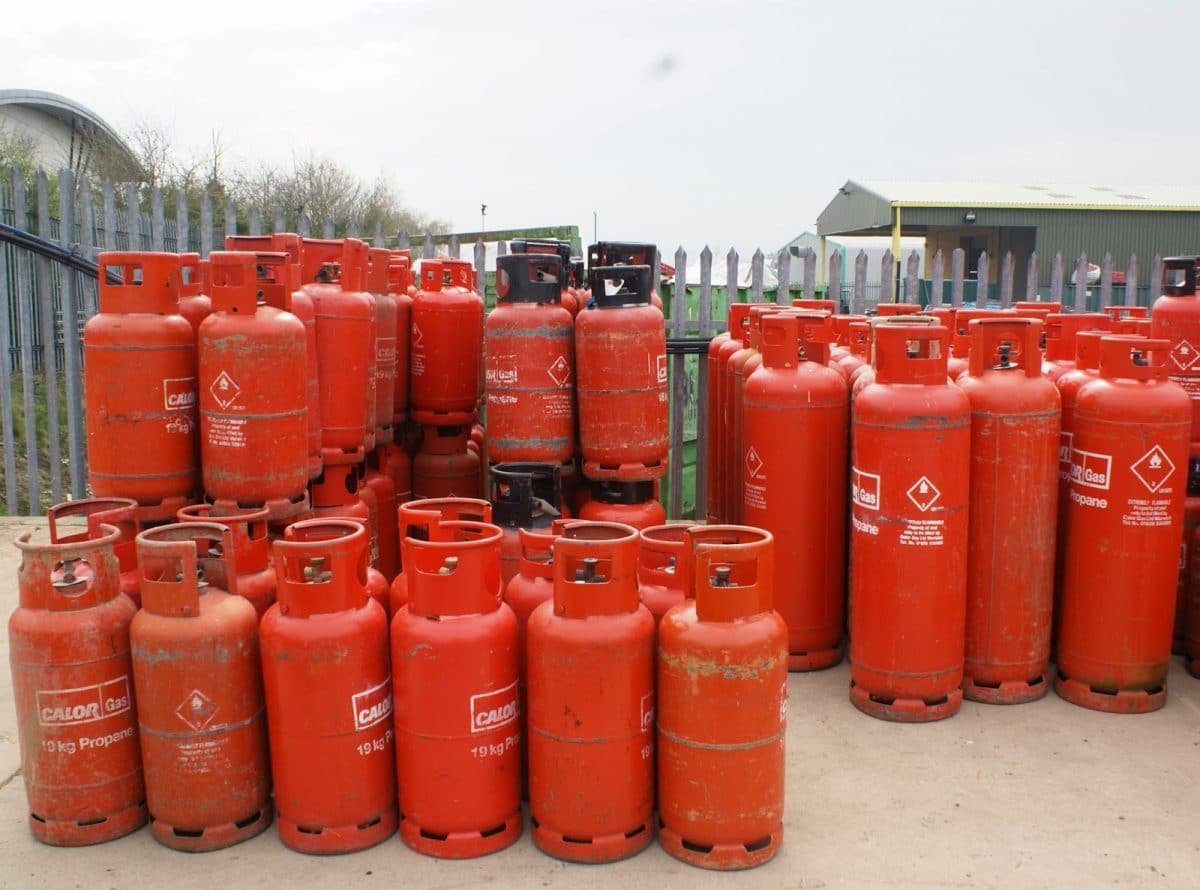
The federal government has attributed the sharp rise in liquefied petroleum gas prices across Nigeria to foreign exchange volatility, escalating logistics costs, infrastructure bottlenecks, and movements in international LPG prices rather than any breakdown of policy, while disclosing that a new supply source was expected to enter the market in July that would materially boost availability.
Minister of State for Petroleum Resources responsible for Gas Ekperikpe Ekpo said the government’s policy of prioritizing domestically produced LPG for local consumption had already strengthened supply, reduced import dependence, and improved market resilience, and that the NMDPRA had been directed to intensify engagement with producers and marketers to sustain supply and enhance stability. He said marketers had committed to increasing import volumes as a complement to domestic output and confirmed that no producer was diverting LPG designated for the domestic market.
Production data from the Nigerian Upstream Petroleum Regulatory Commission showed gas output reached 7.93 billion cubic feet per day in May 2026, a 0.63 percent year-on-year increase from May 2025, with non-associated gas at 3.98bcf/d slightly outpacing associated gas at 3.96bcf/d, reflecting the maturation of dedicated gas field development. Domestic sales rose to 2.18bcf/d from 2.03bcf/d, representing 26.6 percent of total utilization, while gas flaring fell to 0.57bcf/d as the government maintained its commitment to ending routine flaring by 2030.