The Nigeria Labour Congress (NLC) and the Trade Union Congress (TUC) have announced plans to commence negotiations with the Federal Government on a fresh national minimum wage, insisting that Nigerian workers can no longer cope with the country’s rising cost of living.
The labour centres said the current wage structure has been overtaken by economic realities, as soaring inflation continues to erode workers’ purchasing power and deepen hardship across the country.
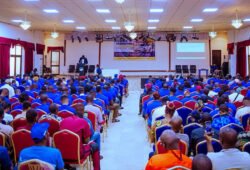
Speaking through a joint address delivered at the 114th International Labour Conference in Geneva on Monday, the unions called for the introduction of a “genuine living wage” that reflects prevailing economic conditions. They also rejected any move to tax the minimum wage or impose additional financial burdens on low-income earners.
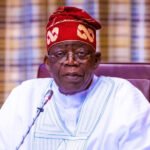
Nigeria’s current minimum wage of N70,000 was signed into law on July 18, 2024, following an agreement between organised labour and the Federal Government. President Bola Tinubu officially announced the wage on July 19, while implementation commenced on July 29, 2024.
Although the wage agreement initially provided for reviews every three years, the Federal Government revised the framework in January 2025, reducing the review cycle to two years and effectively making 2026 the next review period.
With the review window approaching, the NLC and TUC said they would formally engage the government ahead of the July 2026 deadline to avoid the prolonged delays that characterised previous wage negotiations.
“The current Act expires early next year, and we have announced that renegotiation will commence by July 2026 to avoid the painful delays of the past. As soon as we leave here, we shall write again to the government demanding the commencement of the process for renegotiating the national minimum wage,” the unions stated.
According to the labour leaders, workers are facing severe economic pressure driven by inflation, currency depreciation, and rising costs of food, transportation, housing, healthcare, and other essential services.
They argued that official economic statistics fail to capture the realities confronting millions of households and warned that taxing the minimum wage would further worsen poverty and hardship.
“We demand nothing less than a genuine living wage that reflects today’s harsh economic realities. We also demand immediate relief measures by governments at all levels until a new minimum wage is signed into law. We reject outright any attempt to tax the minimum wage or impose further burdens on the poor,” the unions declared.
The labour movement stressed that the forthcoming negotiations must focus on preserving workers’ real incomes rather than merely increasing wages nominally, noting that inflation has steadily diminished the value of earnings across the country.
The unions also urged federal and state governments to implement temporary relief measures while negotiations are ongoing, warning that prolonged delays could trigger industrial unrest.
Beyond wage issues, organised labour used the international platform to draw attention to broader national challenges, including insecurity, unemployment, and worsening poverty.
The unions said persistent insecurity in several parts of the country has made commuting unsafe for many workers, with killings, kidnappings, and displacement disrupting livelihoods and economic activities.
They claimed that nearly 2,000 people were killed in the first quarter of the year, while millions have been displaced by violence, resulting in the destruction of communities and businesses.
According to the labour leaders, the deteriorating security situation could force workers to remain indoors for safety reasons, creating tensions that extend beyond traditional labour disputes if urgent action is not taken.
The NLC and TUC further expressed concern over rising poverty levels, stating that about 65 per cent of Nigerians—estimated at roughly 150 million people—are living in multidimensional poverty due to inflation, unemployment, and declining purchasing power.
While acknowledging ongoing economic reforms, the unions argued that the measures have yet to translate into meaningful improvements in the living conditions of ordinary Nigerians.
Looking ahead to the 2027 general elections, the labour movement disclosed that it is preparing a charter of demands to guide its engagement with political actors and determine its support for candidates.
The unions said only politicians who demonstrate commitment to improving security, strengthening public services, implementing wage reforms, and protecting workers’ rights would earn organised labour’s backing.
They also raised concerns over what they described as interference in union affairs by some state governments, accusing them of undermining democratically elected labour leadership structures.
The labour leaders vowed to resist any attempt to weaken the independence of trade unions or impose external control on labour organisations.
As preparations begin for the 2026 wage review, organised labour maintained that securing a wage structure that reflects economic realities and protects workers from further income erosion remains its top priority.
According to the unions, the outcome of the negotiations will determine whether Nigerian workers finally receive a true living wage or continue to grapple with worsening economic hardship.