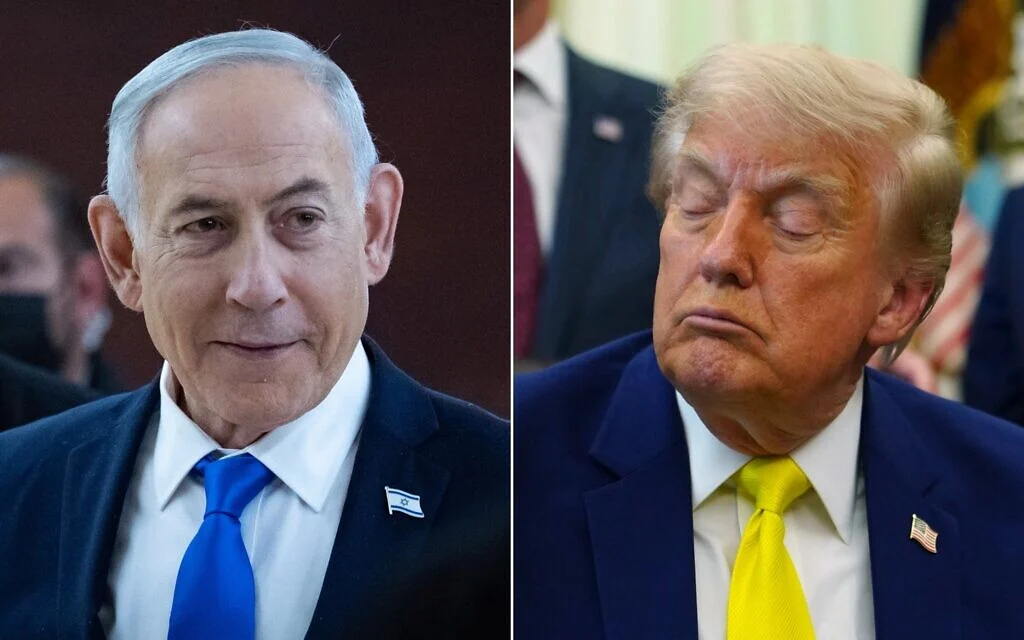
Israeli Prime Minister Benjamin Netanyahu is facing growing political pressure following US President Donald Trump’s push for a ceasefire agreement with Iran, a deal that appears to place Israel in a difficult strategic and political position.
Notably, Netanyahu has remained publicly silent on the emerging agreement. His only public reference to Trump in recent days was a birthday message posted on X on Sunday marking the US president’s 80th birthday.
Since then, the Israeli leader has avoided commenting on the ceasefire framework, despite criticism from members of his own government. Some Israeli officials have reportedly described the deal as “bad for Israel and the entire free world” and warned that it fails to guarantee the country’s security.
The situation highlights a familiar challenge for Netanyahu, who often finds himself balancing relations with Washington against pressure from his political base at home.
Trump has signalled that he considers the conflict with Iran effectively over and appears eager to extend de-escalation efforts to the broader region, including the ongoing hostilities between Israel and Hezbollah along the Lebanese border.
According to reports, Trump urged Israel to halt military operations in Lebanon and called on Hezbollah to cease attacks on Israel. He also downplayed recent Hezbollah rocket fire into northern Israel, describing the projectiles as “very small and meaningless.”
The comments have put Netanyahu under additional pressure. While members of his governing coalition have demanded a forceful military response to Hezbollah’s attacks, Trump has reportedly urged restraint.
Analysts believe Lebanon may form part of the wider US-Iran ceasefire arrangement, although the details of the agreement have not been made public. As Israel is not a direct party to the deal, uncertainty remains over what obligations or expectations may be attached to it.
On Monday, Israel’s defence minister reiterated that Israeli forces would not withdraw from positions currently held in southern Lebanon, signalling potential differences between Israeli policy and Washington’s broader diplomatic objectives.
The evolving situation reflects a significant shift in regional dynamics. What began more than three months ago as a coordinated effort involving both the United States and Israel now appears to be entering a new phase, driven largely by diplomatic negotiations.
For Netanyahu, the challenge may be managing a deal that he cannot openly endorse without risking backlash from his supporters, yet may find difficult to oppose given Trump’s influence and Israel’s close ties with Washington.
As the ceasefire framework takes shape, the Israeli prime minister faces the delicate task of balancing domestic political demands with the realities of a changing regional landscape.