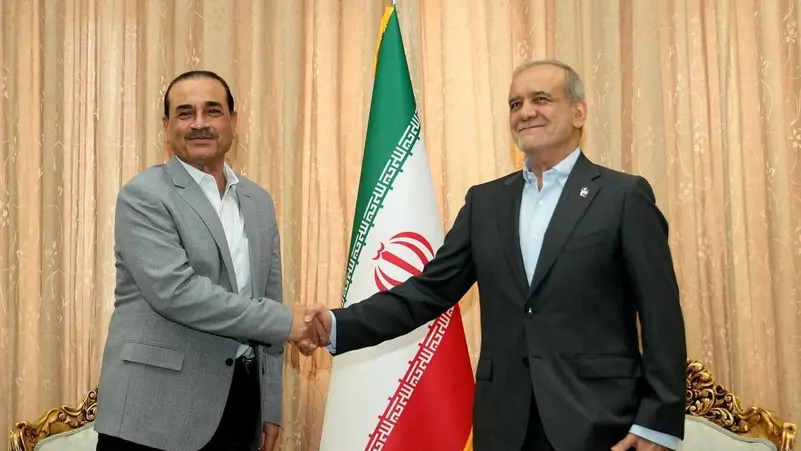
Iran’s Foreign Minister, Seyed Abbas Araghchi, has said a deal aimed at ending hostilities between Iran and the United States is close to completion and would include the reopening of the strategically important Strait of Hormuz, a move that could ease tensions in global energy markets.
Speaking on state television on Friday, Araghchi said the proposed agreement also provides for the lifting of a US blockade on Iran, while negotiations over Tehran’s nuclear programme would begin at a later stage.
US officials have confirmed key aspects of the proposed arrangement, stressing that economic relief for Iran would be tied to the country’s compliance with agreed commitments.
The conflict began on February 28 when US and Israeli forces launched strikes across Iran. Tehran responded with attacks on Israel and US-aligned Gulf states and effectively shut down the Strait of Hormuz, a critical maritime route through which roughly one-fifth of the world’s oil and liquefied natural gas supplies pass.
Although a ceasefire was reached in April, sporadic exchanges of fire have continued, including two rounds of retaliatory strikes earlier this week.
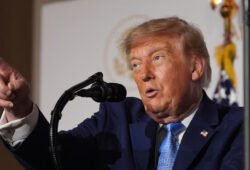
US President Donald Trump revealed on Thursday that he had cancelled planned military attacks against Iran, citing what he described as a breakthrough in negotiations.
“We just made a great settlement,” Trump said, adding that a final agreement could be signed soon.
Iranian media later published details of an alleged 14-point agreement, though Trump dismissed the reports, insisting they did not accurately reflect the terms under discussion.
Pakistan, which has played a key mediating role alongside Qatar, also indicated that progress had been made. Pakistani Prime Minister Shehbaz Sharif announced that a Memorandum of Understanding (MOU) between Washington and Tehran had been agreed upon and was awaiting finalisation.
Araghchi acknowledged that debate continues within Iran’s Supreme National Security Council regarding the latest terms.
“There are supporters and opponents of the agreement,” he said, adding that no final collective decision had yet been reached. “For now, we must wait. If approved, the agreement will be signed remotely.”
Israel is not participating in the current negotiations, which are focused on extending the ceasefire and paving the way for broader talks on sensitive issues, including Iran’s nuclear programme.
Western governments have long accused Iran of pursuing nuclear weapons capabilities, allegations Tehran consistently denies, maintaining that its nuclear activities are intended solely for peaceful energy generation and scientific research.
According to US officials, the agreement would provide for the immediate reopening of the Strait of Hormuz in exchange for the removal of restrictions on Iranian shipping.
The next phase would involve a 60-day negotiation period focused on Iran’s stockpile of enriched uranium. US officials said the material would ultimately be destroyed and removed from the country, although the technical details remain under discussion.
Washington also rejected reports suggesting Iran would receive immediate financial benefits. Instead, officials said sanctions relief and the possible unfreezing of Iranian assets would occur gradually and only after verified implementation of agreed measures.
The proposed agreement further requires Iran to cease support for regional proxy groups, including Hezbollah and other allied organisations across the Middle East.
US officials emphasised that the arrangement would be based on verifiable actions rather than trust.
“Iran will receive economic benefits only when implementation of its commitments can be confirmed,” one official said.
Despite growing optimism among the United States, Iran, Pakistan and Qatar, officials on all sides have cautioned that negotiations are not yet complete. Similar agreements have appeared close to fruition in recent months before collapsing during the final stages.
Nevertheless, both Washington and Tehran have expressed greater confidence than in previous rounds of talks.
Araghchi said he expected the final stages of negotiations to conclude shortly.
“As soon as the final stages of our negotiations are completed, this agreement will be signed and announced,” he said. “This could happen in the coming days. I am very hopeful.”
He noted that lifting the US naval blockade of Iran remains the first priority outlined in the MOU.
Regarding the Strait of Hormuz, Araghchi indicated that future management of the vital waterway would differ from previous arrangements. Since restricting access to the passage, Iran has demanded transit fees from vessels, while the US has insisted on unrestricted navigation.
The foreign minister also said the memorandum envisages an end to hostilities between Israel and Hezbollah in Lebanon, although previous US reports suggested Lebanon may not be formally included in the agreement.
Israel has repeatedly warned that it will continue military action against Hezbollah if attacks on northern Israeli communities persist.