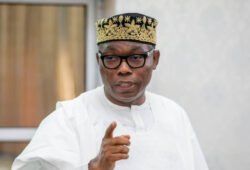
Political economist and former presidential candidate Professor Kingsley Moghalu has called for a root-and-branch rethinking of Nigeria’s governance architecture, arguing that the country had exhausted the capacity of its current constitutional framework to solve the overlapping problems of insecurity, poverty, institutional weakness, and regional marginalization that defined its experience as a state and that only a new constitutional order built around genuine regional autonomy could unlock Nigeria’s potential while managing its diversity.
Moghalu, speaking in a television interview, said the constitution Nigeria lived under was a document imposed by military administration rather than negotiated among the country’s peoples, and that this fundamental deficit in its legitimacy had produced a governance structure that neither reflected the country’s ethnic and regional complexity nor distributed power and resources in ways that incentivized the kind of local ownership and innovation that development required.
He proposed transforming Nigeria’s six geopolitical zones into formal governing regions that would become the primary units of a restructured federal system, with the existing 36 states reduced to the status of provinces within those regions. The change, he said, would address one of the central dysfunctions of the current arrangement, the proliferation of states that lacked the population, resource base, and institutional capacity to be genuinely self-sustaining, by creating larger units capable of generating economies of scale and leveraging the comparative advantages that each region genuinely possessed.
Resource control was central to his vision. He argued that natural resources should vest in the regions where they were found rather than flowing to a central government that distributed them according to political calculations removed from the communities bearing the costs of extraction. This shift, he said, would not only produce a fairer distribution of resource wealth but would also create powerful incentives for regions to develop those resources efficiently, invest in value addition rather than raw export, and diversify their economic bases in ways that central government management had consistently failed to encourage.
On security, Moghalu called for the establishment of regional police forces operating alongside a restructured federal force, saying the attempt to police a country of Nigeria’s size and diversity from a single centralized command structure had been demonstrated to fail and would continue to fail regardless of how many resources were poured into it. He acknowledged the risk of regional forces being abused by regional political authorities and said constitutional safeguards would be essential to prevent that outcome, but maintained that the alternative of continuing with a demonstrably ineffective centralized model was worse.
He also renewed his longstanding advocacy for the temporary deployment of foreign military contractors to assist in rolling back the territorial gains of insurgent groups, citing the results achieved under similar arrangements during the Jonathan administration. He was careful to frame this as a temporary measure to buy time for structural reforms rather than a permanent solution, saying the deeper answer to terrorism in Nigeria required institutional reconstruction that would take years.
His warning about the nature of the terrorist threat was pointed. He said the violence confronting Nigeria was not a localized insurgency driven by domestic grievances alone but part of a global jihadist movement operating across the Sahel with external financing, ideological networks, and strategic coordination that gave it resilience far beyond what purely domestic security responses had managed to contain.