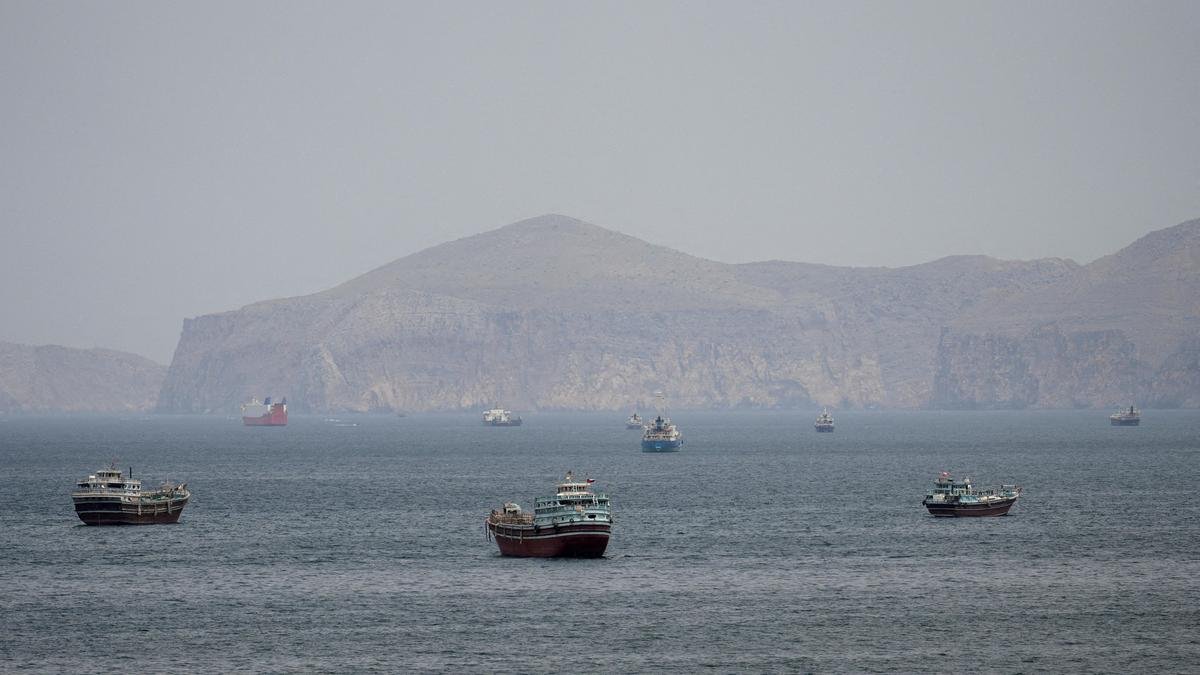
The United States has announced that it shot down two Iranian drones near the strategic Strait of Hormuz, marking the latest escalation in a conflict that reached its 100th day on Sunday with no immediate prospect of resolution.
According to the U.S. Central Command (CENTCOM), the drones posed a threat to international maritime traffic in the vital waterway, a key route for global oil and gas shipments. The development came hours after the U.S. military reported destroying four additional Iranian drones and several coastal surveillance radar installations.
The incident underscores the growing instability in the Gulf region despite ongoing diplomatic efforts aimed at ending hostilities. Weeks of indirect negotiations, punctuated by threats and intermittent military exchanges, have so far failed to secure a lasting agreement or restore confidence in the security of the Strait of Hormuz.
The latest confrontation followed Iranian missile attacks targeting Bahrain and Kuwait on Saturday. CENTCOM said Iran launched seven ballistic missiles toward the two Gulf nations, with six intercepted and one falling short of its target. Iran’s Revolutionary Guards confirmed carrying out missile strikes against what they described as “enemy bases in the area.”
The attacks drew strong condemnation from Gulf states. Bahrain, home to the headquarters of the U.S. Fifth Fleet, described the missile launches as a “blatant aggression,” while Kuwait warned that the strikes represented a dangerous escalation of regional tensions.
Residents in both countries reported hearing explosions linked to air defense operations. In Bahrain’s capital, Manama, air raid sirens sounded as multiple blasts were heard across the city. In Kuwait, explosions were reported near the international airport, where a previous strike earlier in the week had claimed a life.
Iran’s Foreign Ministry condemned the recent U.S. military actions, describing them as “flagrant violations” and accusing Washington of provocative and hostile conduct.
Efforts to transform an April 8 ceasefire into a broader peace settlement have repeatedly stalled, raising concerns about the conflict’s impact on regional stability, global energy markets and international diplomacy.
Iranian officials continue to push for the release of billions of dollars in frozen assets as part of any future agreement. Mohsen Rezaei, a military adviser to Iran’s Supreme Leader, said negotiations had reached a deadlock and called for the release of approximately $24 billion in Iranian funds held abroad.
Meanwhile, U.S. officials have indicated that frozen Iranian assets could instead be directed toward supporting Gulf allies affected by attacks linked to the conflict.
The crisis has also intensified diplomatic activity across the region. Lebanon, which became involved in the broader conflict after Hezbollah launched attacks against Israel earlier this year, has urged Iran to refrain from interfering in its domestic affairs.
Lebanese Army Commander Rodolphe Haykal travelled to Pakistan over the weekend as Islamabad continued mediation efforts between Washington and Tehran. Pakistan’s Interior Minister Mohsin Naqvi also visited Iran for talks with Foreign Minister Abbas Araghchi.
Despite ongoing diplomatic engagement, violence continues in Lebanon. Lebanese authorities reported that three soldiers were killed in an Israeli strike in southern Lebanon on Saturday. Israel said it was reviewing the incident and maintained that its military operations are directed against Hezbollah rather than Lebanese government forces.
Lebanon’s Health Ministry also reported civilian casualties from Israeli strikes in the south, while the Israeli military confirmed the deaths of two of its soldiers.
A ceasefire announced in April has failed to halt hostilities in Lebanon, and a more recent truce proposal was rejected by Hezbollah, further complicating peace efforts.
The tensions have also spilled into the sporting arena ahead of the FIFA World Cup. Iran has accused the United States of discriminating against members of its national football delegation after visas were reportedly denied to several administrative and management officials.
While Iranian players and coaching staff were granted entry permits, Iranian authorities criticized the refusal of visas for other members of the delegation. Iranian officials have called on FIFA to intervene, describing the move as political interference in sport.
Reports also indicate that Iranian team officials were informed that, under the conditions of their visas, the squad would be required to enter and leave the United States on the same day as their scheduled matches.
As diplomatic efforts continue, the latest military exchanges highlight the fragile state of regional security and the growing challenges facing negotiators seeking to prevent a broader conflict across the Middle East.