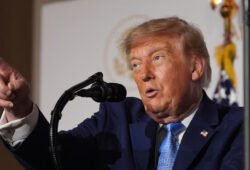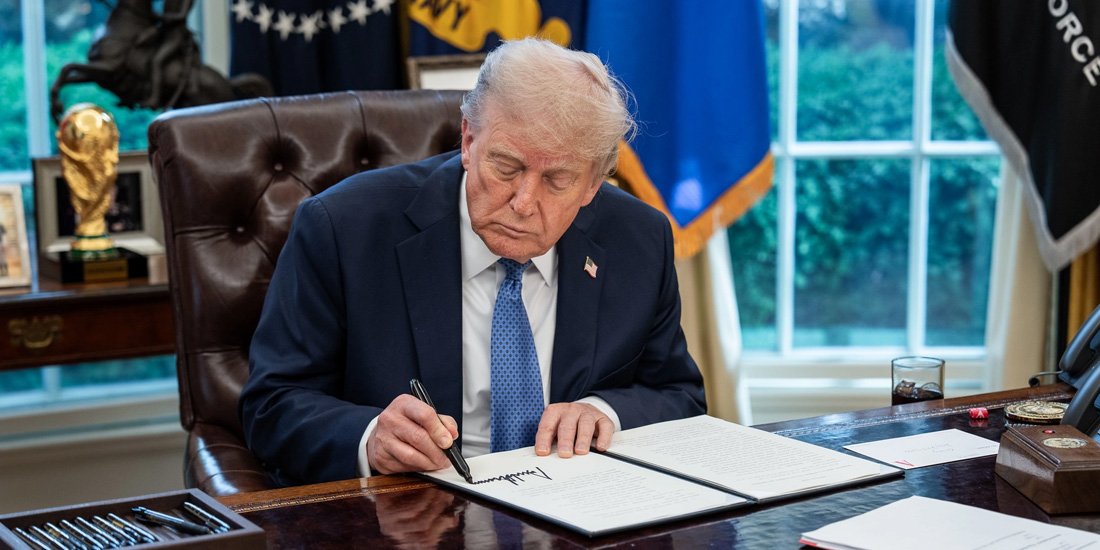
US President Donald Trump has signed an executive order establishing a voluntary framework that will allow major artificial intelligence developers to share their most advanced models with the federal government before public release.
Under the policy, companies such as OpenAI, Google and Anthropic may provide government agencies access to cutting-edge AI systems for up to 30 days prior to commercial deployment.
The White House said the measure is aimed at strengthening national security and improving cybersecurity preparedness as AI systems become increasingly powerful and widely deployed.
The decision was partly driven by concerns surrounding Anthropic’s “Mythos” model, which the company has reportedly withheld from public release due to its potential to identify vulnerabilities in critical systems, including those used by banks, hospitals and government networks.
The 30-day review window represents a compromise between earlier proposals that suggested up to 90 days of government access and industry calls for a shorter 14-day period.
Reactions from the technology sector were largely supportive.
OpenAI chief executive Sam Altman said the order “gets the balance right,” adding that the United States should continue leading in AI development while ensuring systems remain secure.
Google’s head of public affairs, Kent Walker, described the initiative as an “important step forward” that would help cybersecurity defenders access advanced tools to protect critical infrastructure.
Anthropic also welcomed the move, calling it a positive step toward strengthening US leadership in artificial intelligence, despite previous tensions with the administration.
The order further directs the Treasury Department, the National Security Agency and the Cybersecurity and Infrastructure Security Agency (CISA) to establish an “AI cybersecurity clearinghouse” in collaboration with industry stakeholders. The platform is intended to identify software vulnerabilities and coordinate responses across critical sectors.
The announcement follows weeks of internal debate within the administration. Reports indicated that Silicon Valley investor and White House AI adviser David Sacks had initially raised concerns that the measure could slow innovation and weaken the United States’ competitiveness against China.
Sacks has previously argued that reducing regulatory barriers is essential for maintaining US leadership in artificial intelligence.
The new executive order replaces a 2023 AI framework introduced under former President Joe Biden, which required companies to share safety testing results with federal agencies. That policy was widely viewed as a light regulatory approach but was criticised by some experts as insufficient.
Unlike the European Union’s AI Act, which imposes binding obligations on high-risk AI systems including safety testing and transparency requirements, the US approach remains voluntary and industry-led.
AI safety advocates offered cautious support. Anthony Aguirre, chief executive of the Future of Life Institute, said the order was “a step in the right direction” but warned that voluntary measures alone may not be enough to manage risks from increasingly powerful systems.
He called for stronger government authority to block the release of AI systems deemed to pose national security risks.