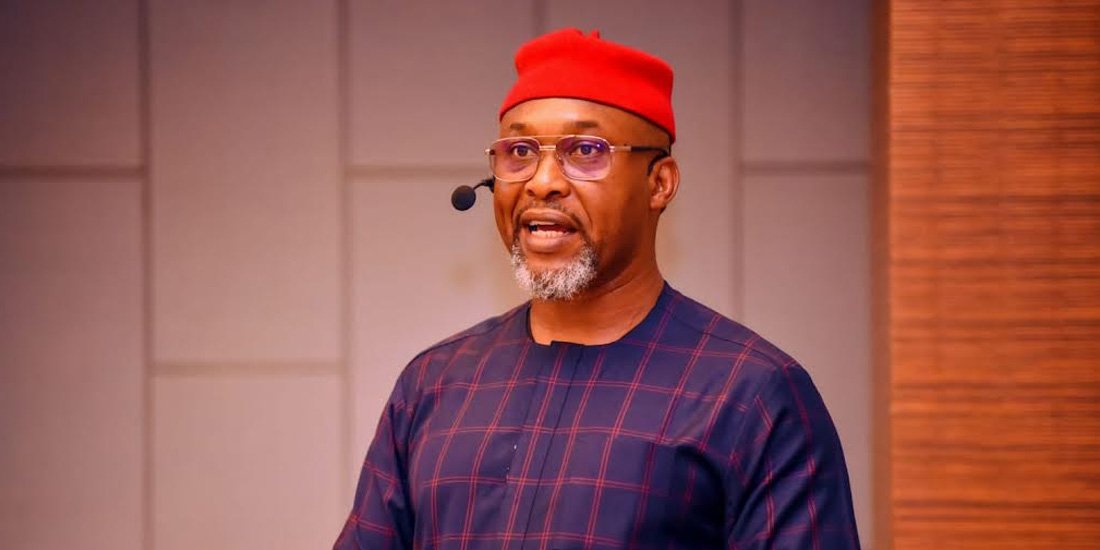
Nigeria’s combined public spending on education across all levels of government amounted to just 2.14 percent of the country’s projected 2026 gross domestic product, far below the UNESCO-recommended benchmark of four to six percent for developing countries, former Aviation Minister Osita Chidoka has warned, describing the figure as a national emergency that decades of democratic governance had failed to reverse.
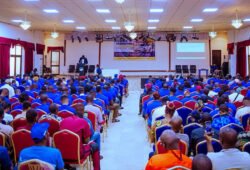
Chidoka, Chancellor of the Athena Centre for Policy and Leadership, presented the analysis at the 70th Anniversary Gala of the Ekulu Primary School Alumni Association in Enugu. The figure was compiled by the Athena Centre by consolidating federal education spending, allocations by the Universal Basic Education Commission and TETFund, and education budgets from all 36 states and the Federal Capital Territory, producing a combined total of approximately 9.49 trillion naira against Nigeria’s projected 2026 GDP of 442.8 trillion naira.
He said Nigeria lagged significantly behind comparable economies on this measure. South Africa allocated 6.7 percent of GDP to education, Brazil 5.6 percent, Kenya 4.8 percent, India 4.1 percent, and Ghana 3.4 percent.
The analysis identified Anambra State as the federation’s highest education spender, allocating 46.9 percent of its 2026 budget to the sector, followed by Enugu at 32.2 percent. Despite Lagos State’s substantial overall education expenditure in absolute terms, only 5.6 percent of its total budget was directed to the sector. The report noted that Enugu’s education budget in dollar terms was now approximately twice that of Lagos, a dramatic reversal from 2000 when Lagos spent more than six times what Enugu allocated.
Chidoka traced the roots of the crisis to the structural adjustment era between 1986 and 1999, during which a professor’s monthly salary reportedly fell from about 1,000 dollars in 1985 to just 137 dollars by 1997 and Lagos State’s real per-pupil spending declined from 281 dollars in 1980 to 22 dollars in 1990. He argued that the greater failure was the refusal of successive governments after Nigeria’s return to democracy in 1999 to reverse this decline despite improved economic conditions.
He challenged the Ekulu Alumni Association to undertake three measurable projects over the next three years: the creation of a data-driven learning dashboard to monitor student outcomes, the establishment of a teacher development and recognition fund, and the integration of the school into Nigeria’s digital education infrastructure through collaboration with the Nigerian Research and Education Network.